


Long term storage is the planned safekeeping of retail fixtures and components between store programs or during a pause in their use. For multi-location retailers, an effective plan connects inventory, protection, access, and future store demand instead of treating storage as unused space.
Plan a custom retail fixture program with S-CUBE
A storage plan should preserve useful options. Fixtures may be held for a phased rollout, remodel, seasonal reset, or a decision about reuse. Without a clear record and purpose, even serviceable components can become hard to identify, retrieve, or match to the stores that need them.
Before assigning space, write down why the inventory is being held. Is there a planned date or rollout wave? Is the stock a contingency for replacement needs? Is its future use still under review? The answer determines how quickly it must be accessible, how detailed its records need to be, and when someone should reassess it.
A useful test is whether a colleague who did not pack the inventory could answer three questions from the record: what is it, where is it, and what should happen next? If not, improve the record or label before the items are put away.
Start with an item-level inventory, not a broad count of “fixtures.” A retail program may include display cases, cash wraps, shelving, gondola components, point-of-purchase displays, and hardware. Materials such as wood, metal, acrylic, and glass may call for different handling and separation. Record what each group contains and which parts belong together.
For each item or group, note a clear name, quantity, dimensions when known, material or finish, condition, and the store format or program it supports. Photographs can help distinguish similar components. For modular assemblies, record whether they are stored assembled or as separate parts. A component reference such as a glass shelf for a showcase illustrates why a generic “shelf” description may not be enough; confirm actual compatibility against the project specification.
Give each inventory group a status such as approved for reuse, awaiting review, or retire. These are planning labels, not a substitute for inspection. Assign a decision owner and date to items awaiting review so temporary uncertainty does not become indefinite storage.
Record dependencies as well. A panel or shelf may only fit a particular standard, base, or display configuration. Keep those relationships visible, and avoid treating a partial assembly as a complete fixture. This helps a later planner avoid committing stock that cannot meet the intended store plan.
When there are many items, create a parent record for the fixture set and child records for the parts that can be separated or replaced. For example, identify a display unit, its shelves, brackets, and hardware as related but countable components. If a store requests one replacement shelf, the record can show whether it is available without implying that a full display is ready to ship.
Compare approaches against access, condition, and expected use. Space availability matters, but it should not be the sole criterion. Confirm actual facility practices and handling requirements with the team responsible for the inventory.
| Approach | Best fit | Planning steps | Trade-off |
|---|---|---|---|
| Dedicated organized area | Items tied to an active or scheduled program | Map locations and maintain item records | Requires ongoing ownership and organization |
| Grouped pallet or lot | Similar parts held for a known use | Label groups and maintain access to key items | Retrieval may require moving other inventory |
| Separated protective storage | Fragile, finished, or mixed-material components | Document handling and separation instructions | May use more space and require closer tracking |
| Review-and-release area | Items whose future is undecided | Set a decision owner and review date | Without follow-up, stock can remain indefinitely |
These are planning categories, not universal warehouse specifications. For example, a retailer holding a complete fixture set for a scheduled wave may prioritize grouped access by destination, while a small set of finished or fragile parts may need separation and closer inspection. Select the arrangement that reflects the item's characteristics and the next action it must support.
A practical selection sequence is to mark items with a known near-term destination first, then identify fragile or finish-sensitive components, and finally group low-priority or undecided inventory for scheduled review. This sequence keeps urgent stock visible while preserving a clear path for items that need more investigation.
Protection begins with the item itself. Identify finished faces, exposed edges, glass or acrylic elements, removable hardware, and parts that could shift during movement. Set packaging and separation instructions accordingly, and make them available to anyone handling the stock.
As a practical example, metal shelves and glass shelves may serve a similar display purpose but should not be treated as interchangeable. Keep each part tied to its program and position. Before sending a replacement to a store, confirm that the component is complete, in suitable condition, and consistent with the approved configuration.
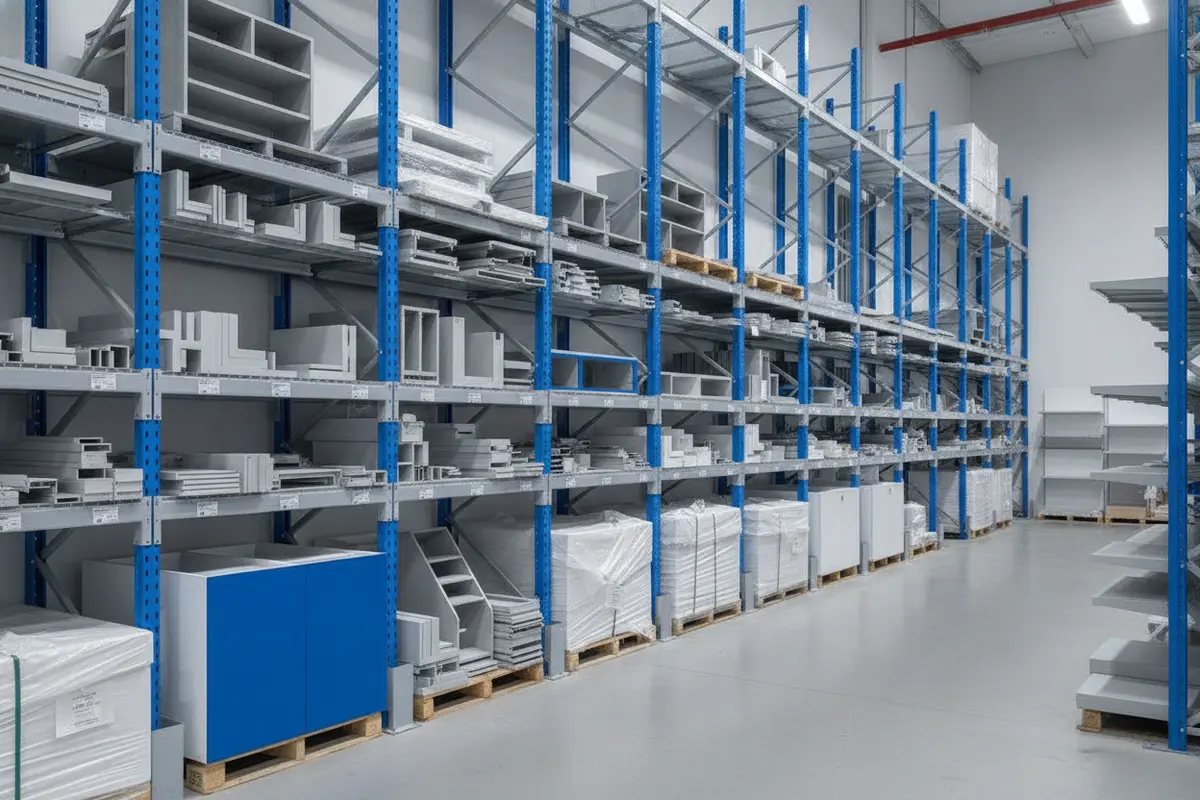
Storage conditions and handling rules depend on the facility and item. The U.S. Occupational Safety and Health Administration is a starting point for workplace safety information. Apply the requirements and facility procedures relevant to the people handling and moving the inventory.
Use a short handoff checklist so the person receiving stock does not have to infer how it was packed. Include the group identifier, piece count, handling notes, location, and any known exceptions. If a box or pallet contains mixed components, list them clearly rather than using a general label such as “fixture parts.”
Before a group is put away, compare the physical count with the inventory record. Note any difference immediately, take a condition photo when useful, and identify who will resolve the discrepancy. Doing this at the handoff is easier than trying to reconstruct what happened months later.
Storage supports a retail program only when authorized teams can locate the right material and update its status. Establish one reference record and define who maintains it. A spreadsheet may suit a small, stable inventory; a larger program may need records connected to purchasing, project management, or warehouse workflows. Consistent fields and ownership matter more than a particular software choice.
At a minimum, record:
Define how a team requests retrieval and how the record is reconciled after shipment. Before a rollout, check counts against the store list and approved fixture plan. After dispatch, record what shipped, what remains, and any damage or substitutions. This prevents the next planning cycle from relying on outdated counts.
A useful check has three parts. First, verify that the item and its location match the record. Second, confirm quantity and visible condition, noting missing hardware or uncertainty. Third, update the status and assign a follow-up action if the component needs inspection or a reuse decision. For a multi-location program, record checks by group or wave so an unresolved item does not hold up unrelated stock.
Set the check interval around real decision points rather than relying only on a calendar reminder. A scheduled rollout, a change to the fixture specification, or a request for replacement stock can trigger a focused verification. A periodic inventory review still helps surface groups that have no active owner or future-use decision.
Plan storage and rollout together. A regional or national program may include a pilot, different store conditions, and deliveries in waves. Inventory held for later phases should be identifiable by destination and timing. Do not assume every location can use the same configuration without checking its approved plan.
Suppose a program has two rollout waves and the stored inventory contains enough components for only one. A total stock count can hide the shortage. Mapping each component to the wave and store format exposes the gap early, allowing the project team to assess replacement, modification, or a new custom solution. A gondola starter fixture is an example of a standard component, but a product listing alone does not establish suitability for a specific layout. Validate all requirements against the actual retail environment and project specification.
Use a simple demand-to-stock worksheet to make the comparison concrete. Add one row per item group, then note the quantity needed for each wave, the verified quantity available, and the gap or surplus. Keep uncertain-condition pieces out of the available total until they have been checked. This prevents a nominal count from being mistaken for rollout-ready supply.
A concise brief gives operations, merchandising, and project teams a shared basis for decisions. It should make assumptions visible and name the person who will resolve open questions.
For a custom program, include store types and known variations. A fixture that works in one format may not suit another location's footprint or merchandising requirements. Mark unresolved assumptions clearly so a storage decision is not mistaken for approval to reuse.
A short review can keep these errors from accumulating. Bring the inventory owner and rollout planner together when program dates, store formats, or fixture specifications change. Update the decision and record rather than carrying forward an assumption that no longer fits.
Long term storage should include an exit decision, not only an entry process. At each review, compare the inventory's documented purpose with the current program outlook. Ask whether the item has a named future use, whether it matches current requirements, whether its condition is understood, and whether a responsible team can act on it.
If the answer is unclear, set a specific next step: inspect, confirm dimensions, check compatibility, or obtain a decision from the program owner. If no likely use remains, route the item through the retailer's established disposition process rather than letting it remain untracked. Do not make a reuse decision from appearance alone; verify the specification and receiving-store needs.
A review record can be brief: decision, reason, owner, and due date. “Keep” should identify the expected program or condition that would trigger use. “Review” should name the missing information and next action. “Release” should point to the organization's established disposition process. These notes make the decision understandable to the next person who manages the inventory.
Before implementation, review the plan as a handoff between the teams who own the fixtures, manage the facility, and schedule stores. Confirm that records identify the actual components, handling instructions are practical, and retrieval is compatible with rollout timing. Make sure the review date is assigned to a named owner, not just a shared inbox or general department.
For a custom fixture program, connect storage decisions to design, engineering, manufacturing, logistics, and installation requirements as applicable. S-CUBE's custom retail fixture program page is a relevant next step for retailers planning fixtures across locations.
Discuss a multi-location fixture program with S-CUBE
It means holding fixtures or components between periods of use with a plan for identification, protection, access, and review. The method depends on the items and their intended future use.
Set a review date based on the program schedule and likelihood of use. Review sooner when rollout timing, store formats, or fixture specifications change.
Possibly, but confirm condition, dimensions, configuration, and fit with that store's approved plan. Similar appearance alone does not establish compatibility.
Record description, quantity, program association, storage location, condition, status, and responsible owner. Add dimensions, photographs, and handling notes when they support accurate identification and retrieval.
Start planning a custom retail fixture program
Long term storage works best when it remains connected to the retail program it supports. Clear records, appropriate protection, and scheduled review help teams make informed decisions about retrieval, reuse, and future rollout needs.