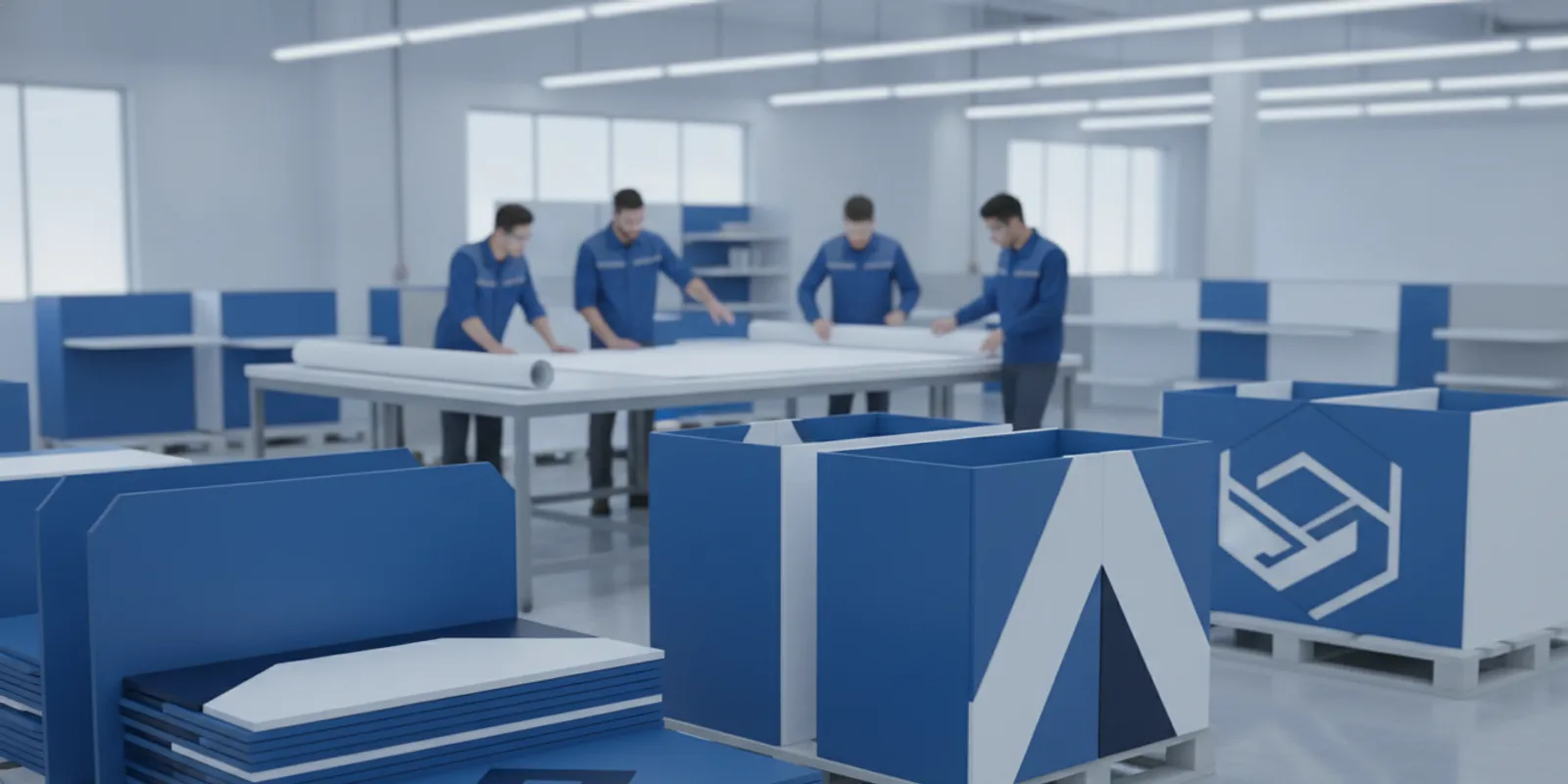


Choosing a retail display manufacturer is not only a question of who can produce an attractive fixture. For a pilot, refresh, or multi-location rollout, the better question is whether a manufacturer can repeat the right result at the required volume, on the required schedule, with clear ownership from design through delivery. This scorecard gives retail and procurement teams a practical way to test that fit before awarding a program.
Plan your custom retail fixture program
A manufacturer should be able to explain how it will turn your merchandising intent into a repeatable physical program. That explanation should cover more than a portfolio. Ask for evidence of production capacity, engineering control, prototype review, quality checks, freight planning, and location-by-location execution.
Start by defining the program you are actually buying. A single prototype, a 20-store pilot, and a 500-location rollout place different demands on a supplier. The right partner for one may not be the right partner for another. Document the following before comparing manufacturers:
This information lets each candidate answer the same question. It also reduces the risk of selecting a supplier based on a rendering that does not represent the real production, logistics, or installation challenge.
Capacity is more than the size of a factory. It includes available production time, material access, labor planning, equipment, supplier coordination, warehousing, and the ability to protect your schedule when several programs run at once.
Ask the retail display manufacturer to map your expected demand against its actual process. A useful answer identifies the work centers involved, the production rate for each major component, the planned buffer, and the point at which a constraint could affect delivery. Look for specifics rather than broad assurances.
Capacity should be evaluated against your peak requirement, not only your average monthly volume. A supplier may be able to make a small sample quickly but struggle when every store needs multiple fixture types at the same time. Ask for a production and release plan that reflects your actual quantities and dates.
Engineering support is where a concept becomes a manufacturable, shippable, serviceable fixture. It should address materials, joining methods, tolerances, packaging, assembly, finish consistency, and change control. The engineering team should also identify design decisions that create unnecessary cost or risk.
Ask whether engineering is involved before the final quote. Early review can reveal that a material, hardware choice, or construction detail will create long lead times or difficult installation. It can also show where a design can be simplified without losing the intended presentation.
Request drawings or specifications that clearly define revision status. Every approved component should have an identifiable version, and every change should show who approved it, what changed, and which locations receive the new version. This matters when a program includes dozens of SKUs or several rollout waves.
Engineering should also consider the store team. A fixture that looks good in a rendering may create avoidable work if it arrives poorly protected, requires unusual tools, or has unclear assembly steps. Ask the manufacturer to describe how installation and service feedback returns to the design team.
A prototype is not simply a sample to approve visually. It is a controlled opportunity to test the parts of the program that could cause trouble later. The review should include the physical fixture, packaging, instructions, hardware, finish, labeling, and the proposed delivery or assembly process.
Before the prototype is built, agree on what will be tested. That may include:
Record prototype findings in a decision log. Separate changes that are required for safety, quality, or installation from preferences that can wait. Then require a final approval sample or documented production release. This prevents informal comments from becoming conflicting instructions during manufacturing.
Quality is easier to manage when it is built into the process rather than checked only at the end. A strong retail display manufacturer should explain how it controls incoming materials, in-process work, finished components, packaging, and shipment release.
Ask for a quality plan tied to the parts of your program that matter most. It should identify inspection points, acceptance criteria, sampling or inspection methods, and the response when a unit does not meet the requirement. For finishes, agree on approved references and the acceptable range of variation. For assembled components, define the fit, alignment, and function that must be confirmed.
Traceability is important when stores receive different waves or revisions. Labels should help the project team identify the item, location, quantity, and revision without opening every package. Photos of packed pallets or completed units can also support release decisions, but they should supplement—not replace—defined inspections.
Ask how nonconforming product is contained. The supplier should be able to explain who decides whether an issue is corrected, reworked, replaced, or accepted with approval. A clear corrective-action process is especially important when a small defect could repeat across hundreds of locations.
A fixture program can be manufactured correctly and still fail at the store if freight, storage, or delivery sequencing is not planned. Evaluate logistics as part of the manufacturer selection, not as a handoff after production.
Ask the supplier to show the path from finished goods to each location. The plan should cover packaging, pallet configuration, labeling, carrier coordination, delivery appointments, damage reporting, and the ownership of exceptions. If stores have different receiving limits, document those constraints early.
Domestic warehousing can help a program stage inventory between rollout waves, consolidate shipments, and respond to location changes. It may also support direct-to-store delivery when a central distribution center is not the best route. The right question is not whether a supplier has a warehouse. It is whether its inventory and distribution process matches your rollout calendar.
Review how the manufacturer handles partial shipments and shortages. A missing bracket or accessory can delay an otherwise complete installation. Packaging lists, kit control, and final shipment verification should make it possible to identify a shortfall before a crew arrives at the store.
For context, retail teams should also examine how product placement and display arrangements affect commercial decisions. The Government Accountability Office discussion of display fees illustrates why display location can have business implications beyond the physical fixture itself. Use that broader context when aligning merchandising, procurement, and store operations.
Repeatability means more than making the same SKU twice. It means delivering the same approved experience across locations while managing local constraints, rollout timing, replenishment, and controlled changes.
Ask the retail display manufacturer how it will create a master specification and use it throughout the program. The answer should include a bill of materials, approved finishes, packaging requirements, assembly instructions, inspection points, and a revision process. If local variations are needed, identify them as deliberate options rather than allowing them to appear informally.
A pilot should test the complete operating model. Choose locations that expose meaningful conditions, such as different receiving processes or store footprints. Measure more than appearance. Track delivery completeness, damage, assembly time, installation questions, rework, missing hardware, and the time needed to close issues.
Then convert the pilot findings into a rollout release. Freeze what is working, assign owners for open issues, and state which changes apply to which wave. This creates a practical bridge between a successful prototype and reliable production at scale.
Use a weighted scorecard rather than a single overall impression. The weights should reflect the program’s real risks. For a tight launch, schedule and logistics may carry more weight. For a complex branded environment, engineering, finish control, and change management may matter more.
| Evaluation area | Evidence to request | Strong program-fit signal | Risk signal |
|---|---|---|---|
| Manufacturing capacity | Production map, volume plan, material strategy | Capacity is tied to your quantities and rollout waves | Only general claims about scale or speed |
| Engineering support | Drawings, specifications, revision process | Design risks and manufacturability are reviewed early | Engineering begins after commercial approval |
| Prototyping | Prototype test plan and decision log | Physical, packaging, assembly, and delivery tests are defined | Approval depends only on a rendering or finish sample |
| Quality systems | Inspection plan, acceptance criteria, corrective action | Issues are contained, traced, and resolved before release | Quality is described as a final visual check |
| Domestic logistics | Warehouse, freight, labeling, appointment plan | Ownership continues through store delivery and exceptions | Freight is treated as the buyer’s problem |
| Repeatability | Master specification, pilot metrics, rollout controls | Approved standards and changes are managed across waves | Each location is handled as an isolated order |
Score each area from one to five and write a short explanation for every score. Require evidence for the highest scores. A supplier that cannot provide a requested document may still be capable, but the gap should be visible in the commercial and implementation risk review.
Not every program requires a fully custom fixture. A modular or retail-ready option may fit a short timeline, a limited pilot, or a repeatable merchandising need. A custom program may be appropriate when the brand, footprint, product mix, or rollout requirements call for a specific solution.
Compare the options against the same program criteria. Review the retail shelving and gondola options available through Specialty Store Services when a standard format may address part of the requirement. For smaller merchandising zones, examine counter display formats or floor and countertop displays as reference points.
The goal is not to force every need into one format. It is to decide where customization creates enough value to justify additional engineering and lead-time requirements, and where a proven standard can reduce complexity. A manufacturer that can discuss both paths objectively is more useful than one that presents only its preferred solution.
Use the final review to test ownership and communication. Ask each candidate to answer these questions in writing:
Strong answers should be specific enough to become part of the statement of work. If a response cannot be assigned to an owner, date, document, or measurable checkpoint, treat it as an open risk rather than a commitment.
Talk with a team about your fixture rollout
Program fit is the most important factor. The manufacturer should have a credible plan for your volume, design complexity, schedule, quality requirements, and store delivery model—not merely a strong portfolio.
For a custom or high-volume program, a controlled prototype review is usually valuable. Use it to test construction, finish, packaging, assembly, and store handling, then document the decisions before production release.
Give each candidate the same program assumptions and score the same areas: capacity, engineering, prototyping, quality, logistics, and repeatability. Require evidence and record the reason behind each score.
A retail-ready fixture may be a better fit when the merchandising requirement is standard, the timeline is short, or the program needs a proven format. Compare it with custom work against the same schedule, cost, and rollout requirements.
Review delivery completeness, damage, assembly, installation questions, quality issues, and open changes. Convert the findings into a controlled rollout release before expanding to additional locations.
A disciplined scorecard helps your team choose a retail display manufacturer based on evidence, ownership, and repeatability, so the finished fixture supports the program from first prototype through the final store.
Subscribe for expert insights on fixture design, materials, and modern retail environments.