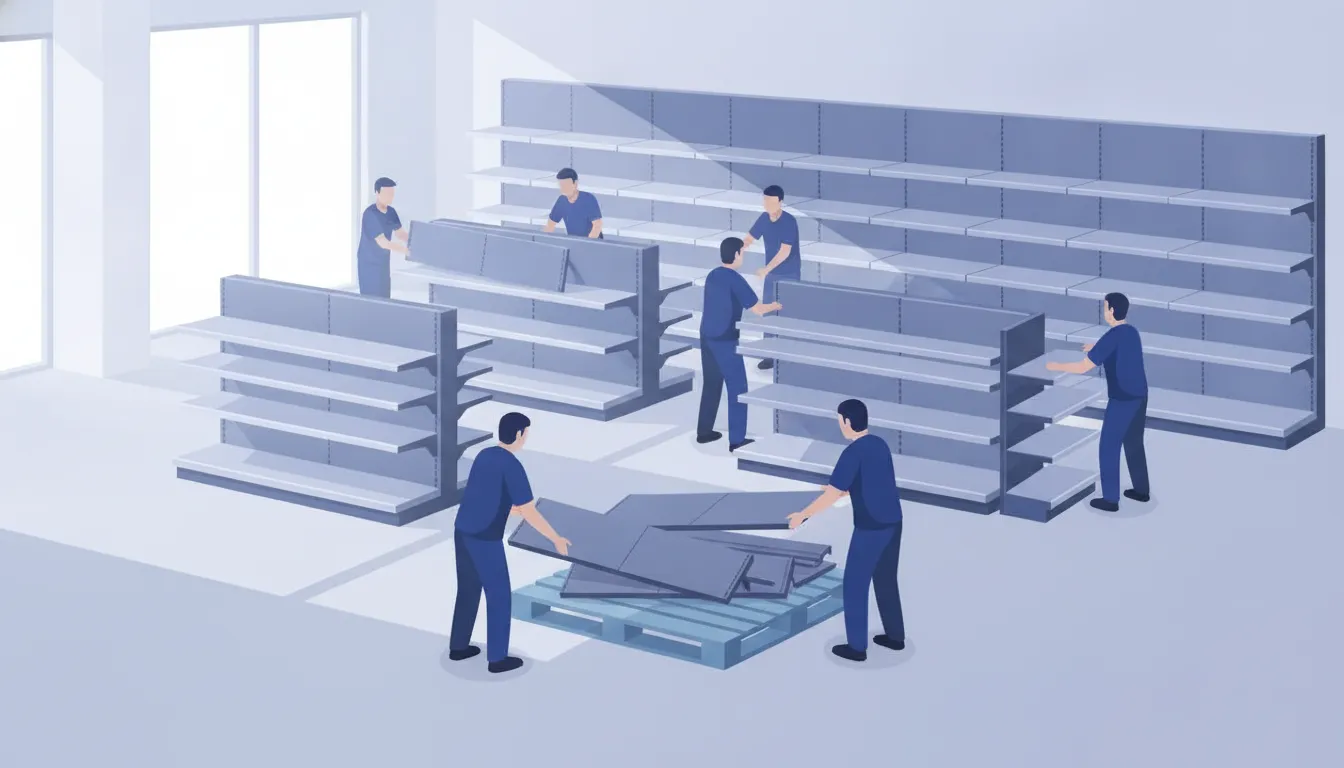


Retail fixtures rarely reach end-of-life because they are unusable. Store closures, remodels, rebrands, and changing merchandising programs can leave sound shelving, gondolas, racking, and displays without a place in the next store plan. Treating those assets as waste too early can increase disposal costs and erase opportunities for reuse.
Ready to reduce waste across your store program? Explore custom retail fixtures from S-CUBE designed for durability, modularity, and easier recovery at end of life.
Fixture recycling is the planned recovery of retail store fixtures through reuse, donation, resale, material separation, and responsible recycling rather than immediate landfill disposal. The most effective approach starts before removal, with an inventory of components, material specifications, and a deconstruction plan. EPA guidance notes that visible, accessible connections and mechanical fasteners can make disassembly and material recovery easier: EPA best practices.
For retail and procurement teams, the practical question is not simply where old fixtures go. It is how to identify what can be redeployed, prepare mixed materials for the right recovery channel, and design future programs for a longer useful life. That starts with understanding the value of responsible recovery and the waste it can prevent.
Fixture recycling is the planned recovery, reuse, refurbishment, or material processing of retail store equipment at the end of its useful life. Instead of sending racking, gondolas, shelving, displays, counters, and related components directly to a dumpster. Retailers assess what can be redeployed, donated, resold, or separated into viable recycling streams.
That distinction matters during remodels, rebrands, store closures, and multi-location rollouts. A fixture is not automatically waste because it no longer fits one store concept. Its condition, materials, dimensions, and modularity may give it value elsewhere.
Retailers operate at a scale where end-of-life decisions quickly become environmental and financial decisions. The National Retail Association of Australia reports that nearly 150,000 tonnes of store equipment are sent to landfill across Australia each year. While that figure is specific to Australia, it illustrates the volume created when fixture programs treat every replacement as disposable.
Fixtures also tend to combine materials. Metal uprights, wire components, laminate panels, solid wood, glass, plastics, lighting, and hardware may all appear in one installation. Those materials can be difficult to recover if they are demolished together, contaminated, or mixed into a general waste stream. Deconstruction, by contrast, can salvage usable materials and significantly reduce disposal waste, according to the U.S. Environmental Protection Agency. The EPA's guidance on deconstruction and recycling recommends planning for recovery rather than waiting until removal day.
A written policy gives facilities, procurement, store operations, and contractors a shared decision path. Teams can inventory assets before teardown, identify components suitable for another location, and direct the remainder to appropriate processors. This reduces rushed disposal decisions and makes sustainability measurable within a store program.
Global Ardour, citing WRAP guidance, reports that up to 90% of old fixtures can be recyclable when managed correctly. The same guidance indicates that a fixture recycling policy can reduce landfill costs by as much as 30%. Actual results depend on fixture condition, material mix, local vendors, transportation, and labor, so retailers should treat these figures as potential benchmarks rather than guarantees.
For S-CUBE buyers, the practical takeaway is to evaluate end-of-life recovery when a fixture program is designed, not after demolition has begun. Durable, adaptable fixtures can support more than one merchandising cycle, while clear records and controlled disassembly help preserve material value. That approach connects responsible disposal with better asset planning, lower waste exposure, and more disciplined retail execution.
Short answer: Responsible fixture recycling starts before removal. Document the installation, separate materials, deconstruct instead of demolishing where practical, identify donation or reuse options, and send remaining metal, wood, and plastics to appropriate recycling streams. This approach helps a retail team protect usable assets, reduce disposal volume, and give vendors the information they need to handle the materials correctly.
A disposal plan is most effective when it is built into the store program rather than improvised during demolition. For future rollouts, ask fixture partners about durable, modular construction and disassembly access. Those choices can make fixture recycling, refurbishment, and redeployment more practical at the next remodel.
In brief: Retail fixture waste usually comes from predictable changes in the store lifecycle, including closures, relocations, rebrands, remodels, and frequent merchandising resets. When fixtures are designed as short-term, single-use components. Each change can send usable materials to a landfill instead of into another store program, refurbishment cycle, or fixture recycling stream.
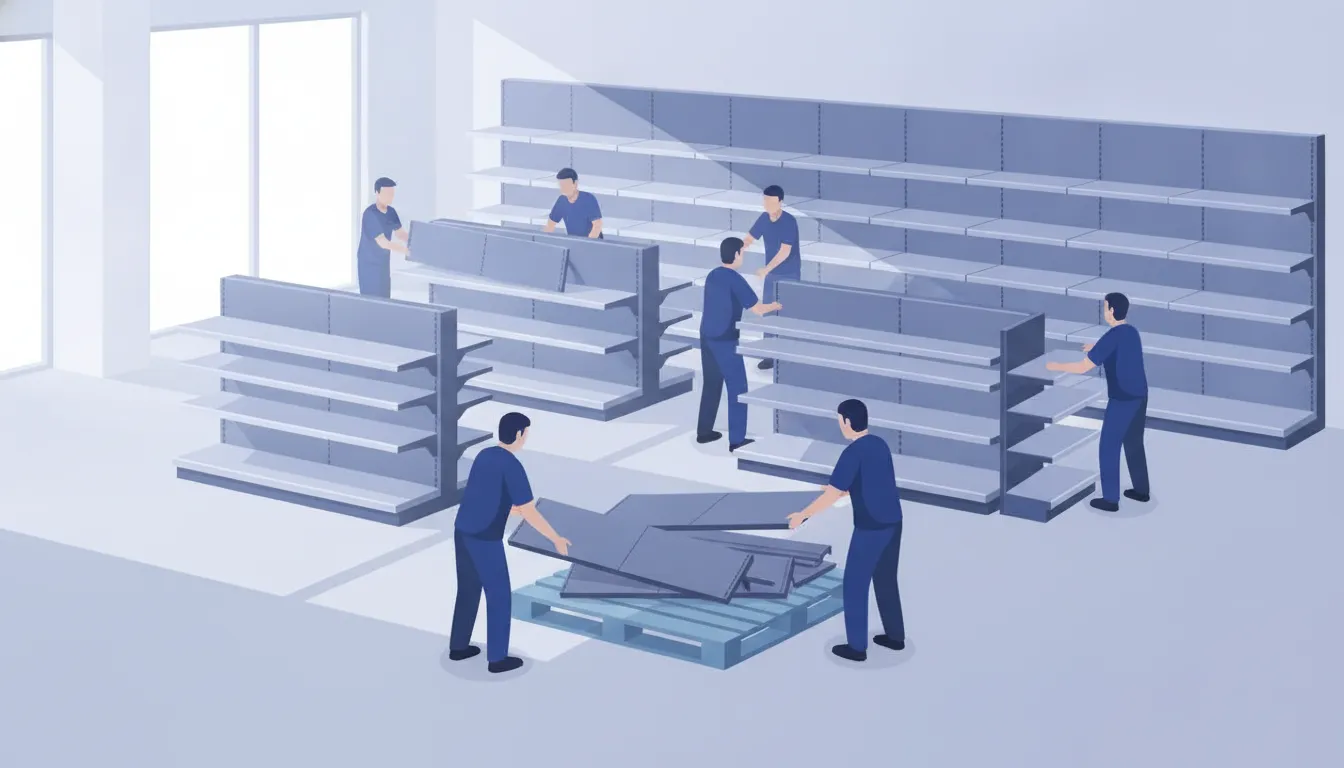
Store closings are one obvious driver. A retailer may have only a short window to clear shelving, counters, display units, and back-of-house equipment before a lease ends or a property changes hands. Relocations create a similar challenge, particularly when the new footprint has different dimensions, traffic patterns, or merchandising requirements. Fixtures that cannot be adapted to the next location are often treated as disposal items, even when their core structure remains serviceable.
Rebrands and remodels add another layer. A new visual identity may require different finishes, colors, lighting, or display proportions. The existing fixture package can then appear obsolete because it no longer matches the brand standard, not because it has failed structurally. Seasonal-concept churn creates smaller but more frequent waves of waste. Retailers may rotate promotional environments, temporary displays, and product-specific merchandising systems several times a year. Throwaway fixtures make those resets fast, but they also shorten the useful life of the materials involved.
Merchandising turnover is therefore a planning issue, not only a disposal issue. Before discarding a fixture, teams should evaluate whether it can be reused in another location, donated, refurbished, or separated for material recovery. The State of Oregon's procurement guidance specifically advises organizations to review donation, repurposing, and recycling options before putting furniture and related products in a dumpster. That end-of-life review is most effective when it begins before a store closing or remodel is underway.
The strongest waste reduction strategy starts earlier still, during fixture specification. Durable materials are more likely to retain recovery and reuse value after the initial retail lifecycle, while modular components can be reconfigured instead of discarded. Designing for the retail cycle means anticipating future layouts, campaigns, and locations. It also means documenting materials and connections so a future team can make an informed decision rather than defaulting to demolition.
S-CUBE approaches custom fixture planning with that longer lifecycle in mind. A durable, modular system may still require recycling at end of life, but it can reduce how often a retailer must replace the entire fixture package. That shift turns fixture recycling from a last-minute cleanup task into one part of a broader asset-management plan.
Quick answer: Reverse logistics keeps retail fixtures in use after a store closes, remodels, or changes its merchandising plan. Instead of sending every unit to a landfill, retailers can return, redeploy, refurbish, donate, sell, or recycle fixtures through a planned sequence. This approach makes fixture recycling part of a broader sustainable retail fixtures strategy.
The first step is to treat fixtures as recoverable assets, not disposable site contents. When a location is closing or being rebranded, catalog the shelving, counters, gondolas, display components, and hardware before removal. Record quantities, dimensions, condition, materials, and compatibility with other stores. That information helps the merchandising and procurement teams decide whether a fixture should move to another location, enter a secondary market, or be separated for material recovery.
Redeployment is often the highest-value option. A retailer may have another location with a similar footprint, seasonal merchandising need, or upcoming refresh that can use existing components. Modular systems are especially useful because standard components can be reconfigured across locations rather than discarded when one layout changes. A secondary market or donation partner can provide another route for clean, functional fixtures that no longer fit the original brand environment.
Refurbishment can extend that opportunity. A refurbishment program might include cleaning, refinishing, replacing worn hardware, repairing damaged panels, and updating finishes. Retailers should define inspection standards and establish a destination for each recovered unit before it leaves the store. That prevents usable inventory from sitting in temporary storage until it becomes damaged or obsolete.
Take-back programs can also connect retailers with manufacturers or specialized reuse vendors. The Oregon Department of Administrative Services describes take-back, donation, repurposing, and recycling options for used furniture, illustrating how procurement programs can move assets away from the dumpster. A take-back arrangement should clarify eligibility, transportation responsibility, capacity limits, lead times, documentation, and costs. It should not be assumed that every fixture manufacturer offers pickup or recycling, so confirm the service before writing it into a rollout plan.
When reuse is not practical, plan fixture recycling through a qualified processor. Retail fixtures commonly combine metal, plastic, wood, laminates, lighting, and fasteners. Which means mixed-material units may need to be deconstructed and sorted rather than placed in a single recycling bin. The EPA recommends planning for disassembly, accessible connections, durable materials, and modular components to improve recovery. Those design decisions support a circular economy in which materials remain useful for longer and future programs create less waste.
For new store programs, connect the recovery plan with the design brief. Durable, adaptable fixtures and well-planned point-of-purchase merchandising displays can support changing assortments without requiring a complete replacement cycle. When teams plan movement, refurbishment, and fixture recycling together, sustainability becomes an operating practice rather than a last-minute disposal decision.
In brief: Lower-waste fixture programs begin before installation. Durable materials, accessible mechanical connections, modular components, and disciplined value engineering can help retailers keep fixtures in service longer. Reconfigure them across locations, and recover more material when an asset finally reaches end of life.
S-CUBE approaches custom retail fixture manufacturing with that longer lifecycle in mind. Founded in 1987, the company brings more than 30 years of experience to the design, engineering, manufacturing, and rollout of fixtures for multi-location retailers. The objective is not to add complexity in the name of sustainability. It is to build practical fixtures that perform reliably, adapt to changing store requirements, and avoid becoming disposable after one program or remodel.
A fixture that fails early becomes a waste problem, even if its individual materials are technically recyclable. S-CUBE prioritizes robust design and construction so fixtures can remain useful through demanding retail environments and changing merchandising needs. The U.S. Environmental Protection Agency recommends using durable materials that are worth recovering for reuse or recycling, rather than treating every component as disposable. That principle supports recovery value at end of life: sound metal, wood, and other usable components are more likely to be reused, refurbished, or directed to an appropriate recycling stream.
End-of-life recovery becomes more difficult when a fixture is built as one inseparable assembly. Where the application allows, S-CUBE can support design-for-disassembly principles by favoring visible. Accessible connections and mechanical fasteners such as bolts, screws, and nails instead of relying on sealants or adhesives. These choices help separate materials during deconstruction and make repairs or component replacement more manageable. They also give store teams and contractors a clearer path than demolishing the entire unit.
Standardized, modular components allow a fixture program to respond to a new footprint, assortment, or brand presentation without discarding every existing element. Shelves, frames, panels, and related assemblies can be designed for reconfiguration across locations when dimensions and merchandising requirements permit. The EPA identifies standard-size modular components as a way to support adaptation, disassembly, and reuse. S-CUBE combines that practical flexibility with material discipline, minimizing unnecessary material types and making connections easier to identify. Fewer material combinations can simplify sorting and reduce logistical friction in fixture recycling.
Value engineering is not simply a search for the lowest initial price. S-CUBE's process can reduce project costs by 30% to 50% through thoughtful optimization of materials and production processes, while preserving the performance and visual standards the rollout requires. Done well, that balance prevents overbuilding, limits avoidable material use, and produces fixtures that deliver value throughout their service life. For retailers planning a new program, discussing durability, modularity, material recovery. And future reconfiguration during design is a more effective starting point than waiting until fixtures are headed for disposal.
A store program works best when fixture recycling is treated as a planned asset-management process, not a last-minute hauling decision. Procurement, merchandising, facilities, and logistics teams can define the path for each fixture before a remodel, rebrand, or closure creates time pressure. That preparation makes reuse and recovery easier to evaluate and can help control disposal costs.
| Recovery path | Best when | Material value | Effort |
|---|---|---|---|
| Redeploy to another store | Fixture fits another location or format. | Full fixture keeps its value. | Moderate. |
| Donate or sell | Nonprofit, resale, or secondary market can use it. | Recovers usable components. | Low to moderate. |
| Refurbish | Structure is sound but finishes or hardware need work. | Extends asset life by years. | High. |
| Recycle materials | Reuse is not practical. | Recovers metal, wood, and plastic streams. | Moderate to high. |
| Landfill | Only when recovery is not feasible. | Lost value and higher cost. | Low. |
This checklist turns fixture recycling into a repeatable store-program standard. It also gives design and procurement teams a clearer brief for future custom retail fixtures, where durability, modularity, and documented disassembly can support value beyond the first installation.
Planning a remodel or rollout? Contact S-CUBE about custom retail fixture design and manufacturing to plan durable fixtures with a clearer recovery path.
Start with an inventory of each fixture type, quantity, condition, dimensions, and material. Check whether units can be reused, refurbished, donated, or relocated before sorting the remainder for recycling. Keep available drawings and material specifications with the inventory, since a deconstruction plan can streamline disassembly and end-of-life recovery. The U.S. Environmental Protection Agency recommends documenting key components, materials, and access information for future adaptation or disassembly (EPA).
Often, but they usually need to be disassembled and separated first. Retail fixtures may combine metal, wood, plastic, glass, laminates, lighting, and hardware, and those materials do not all belong in the same recycling stream. Ask your recycling or reuse vendor what it accepts, then separate components according to its requirements. Removing contaminants and keeping recoverable materials sorted can improve the chance that each component reaches the appropriate processor.
Reuse or refurbishment is usually the first option to evaluate when fixtures remain safe, functional, and compatible with another store or format. Relocating a unit, replacing a damaged component, or adapting a modular display can extend its useful life before material recovery becomes necessary. If reuse is not practical, responsible fixture recycling is preferable to sending recoverable materials directly to a landfill. The EPA identifies adaptability, disassembly, and reuse as ways to reduce environmental impacts and conserve resources (EPA).
Specify durable, modular components with visible, accessible connections and mechanical fasteners such as screws or bolts instead of relying heavily on adhesives. Also limit unnecessary material types where the design allows. These choices make future disassembly, component replacement, relocation, and material sorting more manageable. Include the intended recovery process in the original store-program documentation so procurement and facilities teams have a practical plan when the fixtures eventually leave the sales floor.
A thoughtful end-of-life plan can help your team make clearer decisions about replacement, reuse, and material handling across store programs. When new displays or fixtures are needed, request custom retail fixture design and manufacturing support from S-CUBE. The team can help you explore a fixture approach aligned with your merchandising goals, operational requirements, and longer-term program needs. Contact us through the custom retail fixtures page to get started.