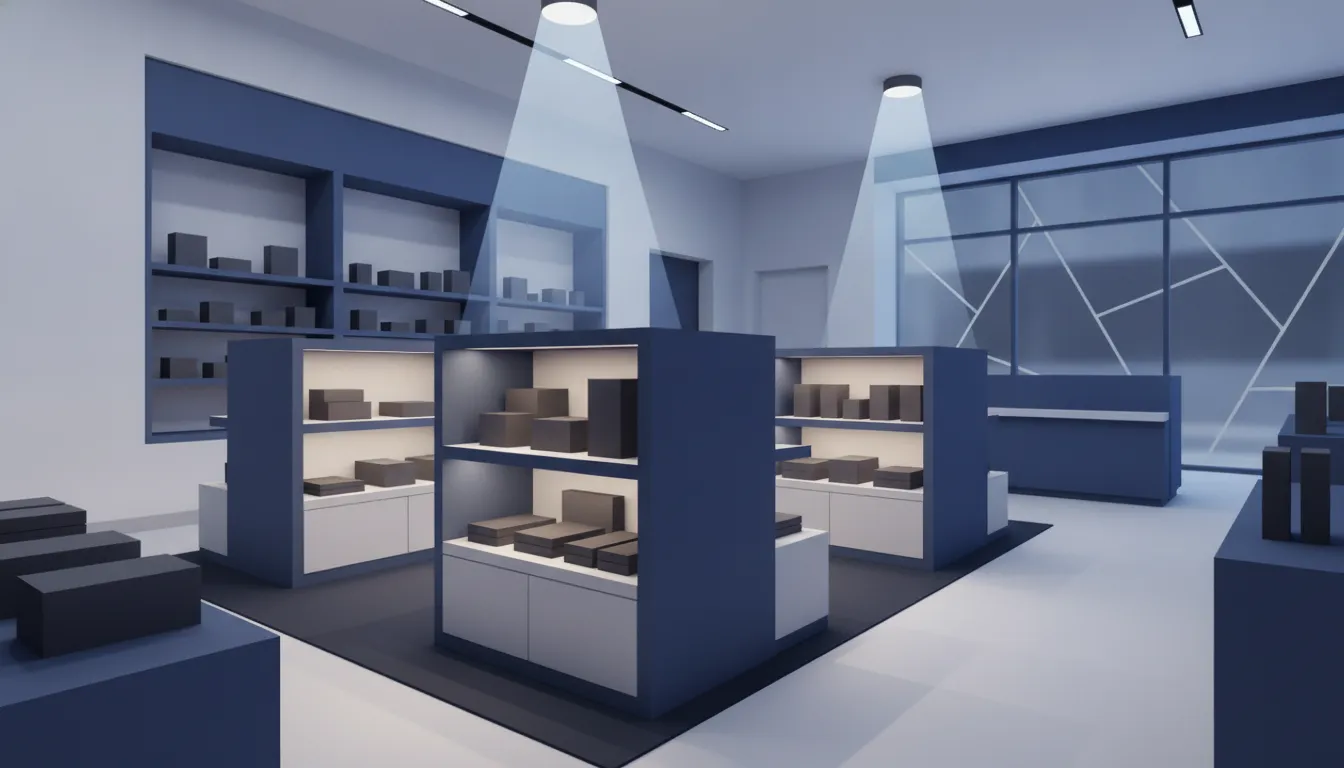


A retail fixture program succeeds long before the first gondola, display table, or cashwrap reaches a store. Enterprise and franchise retailers need a coordinated system that supports brand standards, customer movement, daily operations, and repeatable rollouts across locations.
Plan your custom retail store fixture program
That broader view makes the fixture ecosystem easier to evaluate. Before comparing suppliers or materials, define what belongs in the program and how each fixture contributes to the shopper journey and the operating plan.
Retail store fixtures are strategic brand and customer-experience assets, not simply shelves or product holders. The strongest programs connect design, engineering, manufacturing, and installation support so every component works together, scales across locations, and remains practical for store teams.
Retail store fixtures are the physical infrastructure that organizes a shopping environment. They include shelving and gondolas that hold merchandise, plus display tables that support featured products. Showcases protect high-value items, counters and cashwraps anchor transactions, and signage, fittings, and point-of-purchase elements guide shoppers. Together, these components determine presentation, movement, and brand consistency.
A fixture can make a product easier to find, create a visual focal point, separate departments, or support an associate's workflow. When the system is designed as a whole, each component has a role in making the store easier to navigate and the brand easier to recognize.
The fixture mix varies by retail format, but most programs combine several functional categories.
These categories are not isolated. A gondola establishes the basic aisle structure, while a feature display interrupts that rhythm to draw attention to a priority product. For a closer look at the range of formats, see this guide to retail store display types.
Placement, scale, sightlines, and accessibility all affect how shoppers interpret a store. Fixtures can open or restrict movement, frame what customers notice first, and influence whether a department feels easy to browse or crowded. Research on retail layouts shows aisle direction affects customer movement, reinforcing the importance of planned fixture placement. Fixtures also carry the brand across locations. Standardized components preserve core brand cues, while planned variations accommodate local floor plans.
A complete fixture program connects shelving, gondolas, display tables, cashwraps, signage, fitting rooms, and point-of-purchase displays. Together, these elements support the shopper journey and store operations.
Shelving, counters, displays, signage, and service areas must work as one physical system. Retail fixtures create the infrastructure of the shopping environment while shaping how shoppers enter, browse, compare, select, and complete a purchase. The strongest plan assigns each element a clear job and connects those jobs through visibility, navigation, accessibility, and operational practicality.
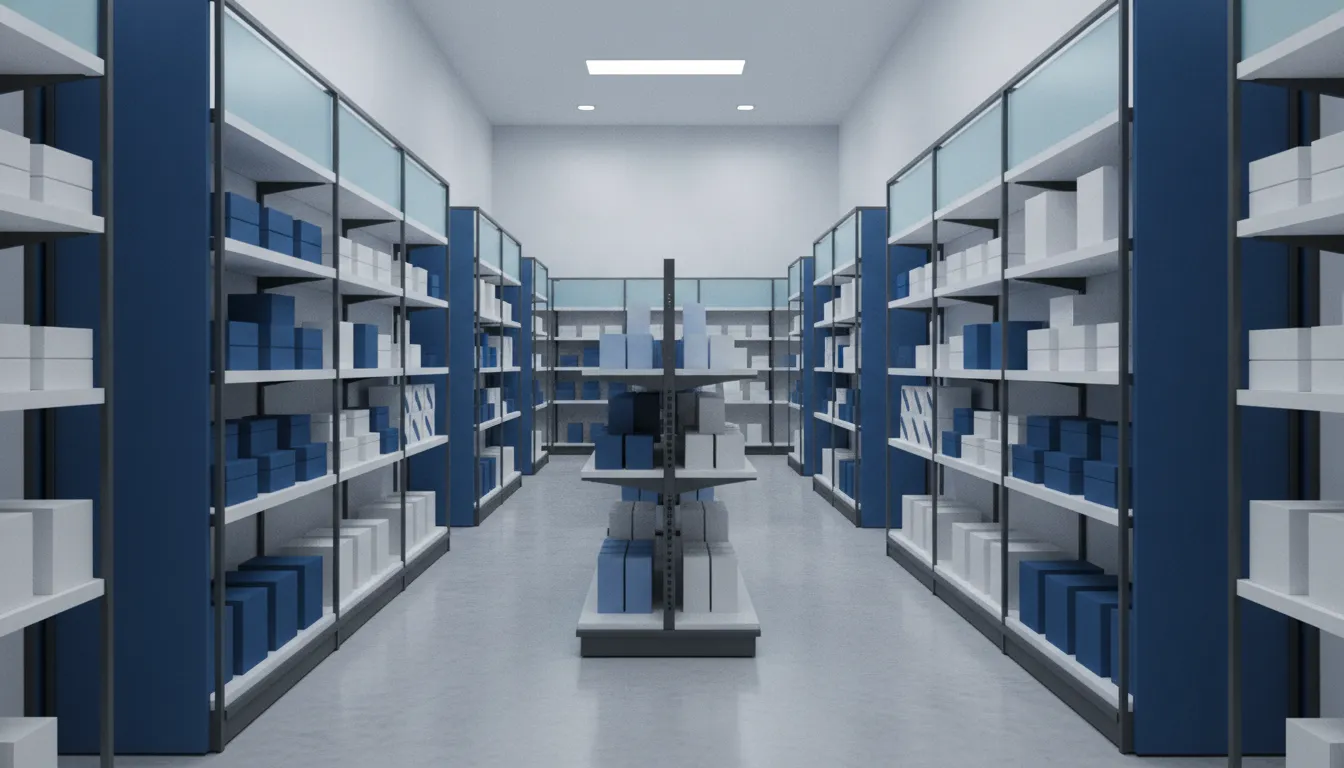
These components also influence one another. A gondola layout affects the sightlines available to signage, a display island can draw attention to a priority assortment. And a cashwrap can act as both a service point and a final merchandising opportunity. For franchise and enterprise retailers, standardized layouts help preserve that experience across different footprints. Use this ecosystem view alongside our practical retail store fixture design guidance to align individual decisions with customer flow and brand consistency.
Plan retail store fixtures in five stages: define floor-plan zones, set budget criteria, choose materials, establish brand standards, and sequence rollout and installation around the opening date.
A successful fixture rollout starts before the first unit reaches a store. Treat the work as a structured program rather than a series of isolated purchases. Give store planners, operations managers, marketing leaders, and manufacturing partners a shared process for resolving constraints and deploying assets with consistency.
Map entrances, primary traffic paths, checkout, fitting rooms, service counters, promotional areas, and back-of-house transitions, then assign fixture types to each zone. Consider sightlines, replenishment routes, accessibility, and seasonal changes. Research on retail layouts indicates that aisle direction can influence customer movement, so review the fixture plan alongside the floor plan rather than after it is finalized.
Build a budget that covers design, engineering, tooling, materials, production, freight, installation, and replacement parts. Separate one-time development costs from recurring costs so you can compare a standard component. A modular option, and a custom element on total program value rather than unit price. This custom retail fixture cost guide walks through those line items in detail. Ask the manufacturing partner to identify value-engineering opportunities early; for S-CUBE, this can reduce project costs by 30% to 50% without sacrificing quality.
Select materials based on traffic, load requirements, cleaning routines, climate, and expected service life. Then confirm finishes, edges, hardware, and tolerances in the approved specifications. Manufacturing partners should translate the design intent into production-ready drawings and prototypes for store teams to review before a large batch is released.
Convert the brand direction into repeatable rules for proportions, finishes, colors, signage, lighting, and merchandising density. Standardized layouts help multi-location retailers remain consistent while accounting for different footprints. Create a controlled specification library, revision process, and approval path so every stakeholder works from the same version.
Build the schedule backward from the opening date or reset window, allowing time for design approval, engineering, sampling, production, freight, site readiness, and installation. Custom programs for national retailers typically require 6 to 10 weeks of lead time. Pilot the program in a representative location, capture lessons, and update the installation playbook before expanding across the network. This pilot store fixture program guide explains how to structure that test rollout.
Material selection determines how fixtures handle daily customer contact, product weight, cleaning, transportation, and future reconfiguration. For a multi-location rollout, the right choice balances durability and brand expression with budget, lead time, and replacement needs. This multi-location fixture material selection guide compares the trade-offs in more depth. The goal is to specify the construction that performs reliably in each application. Use the comparison below, then evaluate samples against the actual environment.
| Material or system | Durability | Relative cost | Aesthetic | Best use |
|---|---|---|---|---|
| Wood and veneer | Good when properly sealed; edges and corners need protection. | Moderate to high. | Warm, crafted, adaptable to brand finishes. | Cashwraps, display tables, feature walls, premium areas. |
| Steel | Very high for heavy loads and high traffic. | Moderate; efficient for repeatable structural parts. | Industrial, clean, or discreet when powder coated. | Gondolas, shelving frames, storage, structural supports. |
| Aluminum | High corrosion resistance with lower weight than steel. | Moderate to high. | Light, contemporary, technically finished. | Modular frames, trims, and fixtures needing easier handling. |
| Laminate or HPL | Good resistance to wear, stains, and routine cleaning. | Moderate and predictable. | Broad color, pattern, and woodgrain range. | Work surfaces, shelving panels, branded high-contact surfaces. |
| Acrylic and glass | Good visibility; glass is rigid but can break, acrylic can scratch. | Moderate to high. | Open, refined, product-focused. | Showcases, risers, product protection. |
| Modular systems | High when engineered for repeated assembly. | Moderate initial outlay with lifecycle savings. | Consistent and adaptable across formats. | Rollouts needing seasonal updates or replacement parts. |
Cost optimization should not mean removing the features that protect performance. Value engineering can reduce fixture project costs by 30 to 50 percent without sacrificing quality, per S-CUBE. But it should not weaken load-bearing components or choose a finish that cannot survive the store environment. A Retail Ready in-stock fixture can supplement a longer custom program when timing is tight. A partner experienced in custom retail store fixtures can translate these decisions into a repeatable specification that protects both the brand and the budget.
Source retail store fixtures by assigning each component to the production path that best balances consistency, timing, quality, and cost. Choose a partner that can connect design, engineering, manufacturing, logistics, and installation support.
For a multi-location retailer, sourcing retail store fixtures is a program decision rather than a simple product purchase. The right manufacturing partner must translate brand standards into repeatable specifications and deliver the same customer experience from one location to the next. A hybrid manufacturing model can combine domestic facilities, useful for close communication and rapid iteration, with international capacity that supplements volume and broad production needs.
The important point is not choosing one source for every component. It is assigning each part of the program to the production path that best balances consistency, timing, quality, and cost. This matters most at scale: S-CUBE Fixtures supports programs spanning more than 500 locations and more than 120 unique SKUs. Small variations in dimensions or finish can create installation problems across the fleet. A disciplined process should include approved drawings, finish standards, prototype review, production controls, and a plan for replacement parts.
Not every component needs to be engineered from scratch, but the elements customers associate most strongly with the brand should not be generic inventory. Custom manufacturing is useful for signature display structures, distinctive cashwraps, and branded wall systems. Experienced manufacturers also test how a design performs in production, shipping, and installation, identifying opportunities to simplify assemblies and reduce packaging risk before the first broad release.
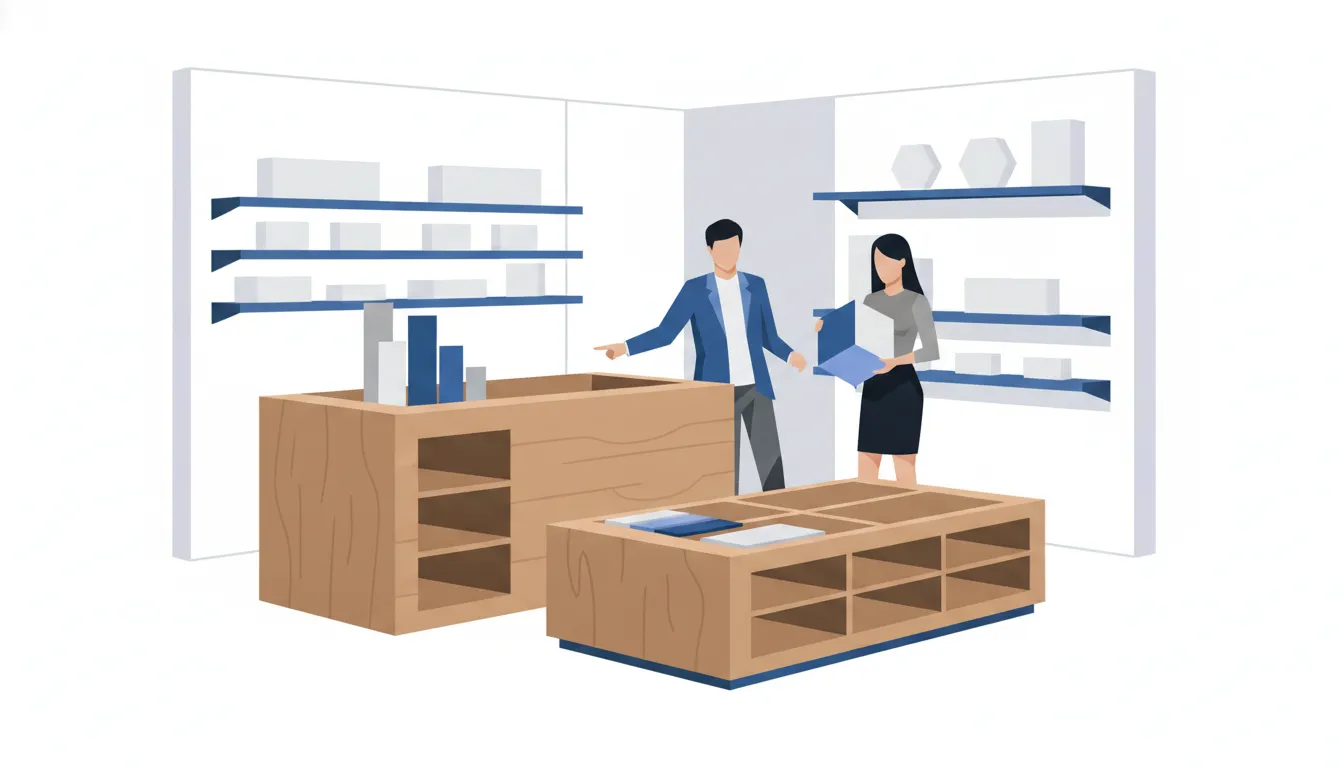
End-to-end fixture programs can include design, engineering, manufacturing, and installation support. Keeping these stages connected reduces the chance that a production decision arrives as a surprise during the build. For larger rollouts, fixture program management services should connect schedules, specifications, logistics, and site requirements so the work moves with fewer handoffs.
Use retail store fixtures to guide movement, preserve sightlines, support replenishment, and create safe, accessible paths. Plan placement around shopper behavior and store operations, not product capacity alone.
Modern retail layouts are built around more than product capacity. Retail store fixtures are the physical tools that guide movement, shape visibility, and support replenishment. Their height, spacing, and orientation can create a clear path through a department, establish sightlines to priority products, or unintentionally create congestion. That is why fixture planning should begin with shopper behavior and store operations rather than a catalog of components.
Retailers can use observed traffic, dwell points, conversion data, and product performance to refine placement instead of relying on assumptions. A data-driven approach may move a high-interest display closer to a natural stopping point or reduce dead space near the perimeter. See these retail store fixture design principles for a deeper planning framework. A productive layout must also be safe. CDC and NIOSH guidance on preventing slips, trips, and falls emphasizes hazard control and unobstructed paths. Displays should not project into circulation zones. Checkstands deserve special attention because they combine customer interaction, payment equipment, and repetitive associate movement, so their dimensions and reach should support the work being performed.
The strongest layout serves several users at once: customers can find and evaluate products comfortably. Associates can replenish and serve efficiently, and the brand presents a consistent experience across locations.
Request a custom retail store fixture program for your next rollout
Common fixtures include gondola shelving, wall shelving, display tables, showcases, cashwraps, fitting-room elements, signage, and point-of-purchase displays. The right mix depends on merchandise, shopper movement, available footprint, checkout needs, and the brand experience you want each location to deliver.
Retailers typically source fixtures from stock suppliers, specialty fixture manufacturers, or custom program partners. Stock fixtures address immediate needs, while a custom manufacturer can design, engineer, produce, and coordinate installation for a repeatable multi-location rollout.
Choose stock or Retail Ready fixtures when speed and straightforward functionality matter most. Choose custom fixtures when the program must express a specific brand, accommodate unusual products, support a precise floor plan, or scale consistently across multiple stores. Many retailers use both approaches for different phases of a rollout.
Document the floor plan, fixture schedule, product dimensions, materials, finishes, budget, brand standards, accessibility needs, installation sequence, and store-specific variations. Include operations and manufacturing stakeholders early so the design supports replenishment, ergonomics, and the planned opening schedule.
Custom programs generally require 6 to 10 weeks of lead time depending on scope, engineering, approvals, materials, production, and logistics. Confirm the schedule before finalizing the opening plan, and build in time for prototypes or finish approvals when fixtures are highly customized.
Retail store fixtures are one of the biggest levers a brand has over its store experience. The difference between a good rollout and a seamless one usually comes down to planning, sourcing, and a partner who can execute at scale.
When you are ready to build a fixture program that protects your brand across every location, start the conversation with the S-CUBE Fixtures team.