


Supply chain safe retail fixtures are fixtures planned and sourced through a program designed to anticipate disruption, protect store schedules, and keep specifications consistent across locations. For a retailer, the practical answer is not simply to choose domestic or international production. It is to match each fixture type to the right sourcing path, build visibility from production through delivery, and prepare workable alternatives before a problem affects store readiness.
Explore custom retail fixture solutions
In brief: Start with a location-by-location demand plan, classify fixtures by timing and flexibility, choose production and inventory options accordingly, and coordinate freight and installation around store-specific constraints. Document what can change, who approves a change, and what the team will do if a shipment or component is delayed.
Supply chain safety in this context means reducing avoidable exposure to disruption while preserving the fixture program's essential requirements: function, brand standards, quality, quantity, and delivery sequence. It does not mean promising that delays cannot happen. It means designing decisions and communication paths so a delay in one part of the program does not automatically leave every store without a workable plan.
A fixture program includes more than manufacturing. It can involve design approval, engineering, prototypes, production, quality checks, warehousing, freight, receiving, and installation support. A resilient plan considers how these steps depend on one another. For example, a late approval can shift a production slot, and a change in pack-out can affect the number of deliveries. A store with limited receiving hours may also need a different delivery sequence than a distribution point.
The Retail Industry Leaders Association describes consistent data, shared metrics, and interoperable standards as important to end-to-end supply chain visibility. For a fixture rollout, that principle translates into common item identifiers, consistent status definitions, and a shared view of orders, quantities, and delivery milestones across the parties involved. Read RILA's discussion of retail supply chain challenges.
Begin by dividing the program into fixture families rather than treating every item as one purchase. A custom cash wrap, repeatable shelving component, and short-run promotional display may have different design dependencies, volumes, and timing needs. A family-level plan helps teams compare sourcing paths without assuming one path fits every item.
Domestic manufacturing may suit items where direct coordination, shorter replenishment paths, or rapid response are important to the project. It can also help when teams expect design revisions or need to coordinate closely during a pilot. These are planning considerations, not guarantees of a particular lead time or outcome. Confirm actual capacity, specifications, production dates, and shipping assumptions with the supplier for the program in question.
International manufacturing partnerships can be considered for programs where the production plan, order volume, and schedule support that approach. The evaluation should include the full path from approved design to the destination warehouse or store, including production milestones, quality checks, shipping arrangements, and the time needed to respond to changes. Do not compare a factory cost alone with a domestic delivered cost; compare equivalent scopes and assumptions.
A hybrid plan assigns different fixture families to different production routes based on their needs. For instance, a retailer might evaluate a production route for a repeatable core fixture separately from a route for a late-changing branded component. The example is a planning pattern, not a recommendation for a specific material, product, or country. The team must validate compatibility, quality requirements, and schedule for each item.
| Approach | May fit when | Questions to resolve | Risk control to plan |
|---|---|---|---|
| Domestic production | Coordination speed, flexibility, or closer production oversight is a priority. | What capacity is reserved, and what are the approved specifications and dates? | Confirm milestones and define an escalation path for changes. |
| International production | Volume and schedule allow for a planned production and transit cycle. | What is included in the delivered scope, and how are quality and shipping milestones tracked? | Allow schedule visibility and identify which decisions must be finalized early. |
| Hybrid sourcing | Different fixture families have different volume, timing, or change requirements. | How will components from different routes meet the same store standard? | Use shared specifications, item identifiers, and a single program status view. |
| Retail-ready inventory | A suitable standard fixture can meet the program need without full customization. | Are dimensions, finish, function, and available quantities appropriate for the plan? | Verify inventory and reserve quantities before assigning stores. |
Retail-ready fixtures may provide another option when a standard product genuinely meets the requirement. S-CUBE provides custom and retail-ready fixture solutions; its parent company's catalog also includes retail shelving information and slatwall panels and displays. Treat any catalog item as a candidate to evaluate, not as a confirmed substitute for a custom specification.
To compare proposals fairly, give each supplier the same item list, destination assumptions, and requested delivery milestones. Ask each to identify what is included in production, inspection, packing, storage, freight, and exception handling. Then record exclusions and dependencies alongside the quoted scope.
This avoids a misleading comparison in which one option appears simpler only because coordination tasks or delivery requirements are left outside the estimate. Review sample approvals and change procedures as well. The lowest-friction route on paper may not be workable if the team cannot confirm who owns a decision or when an update becomes final.
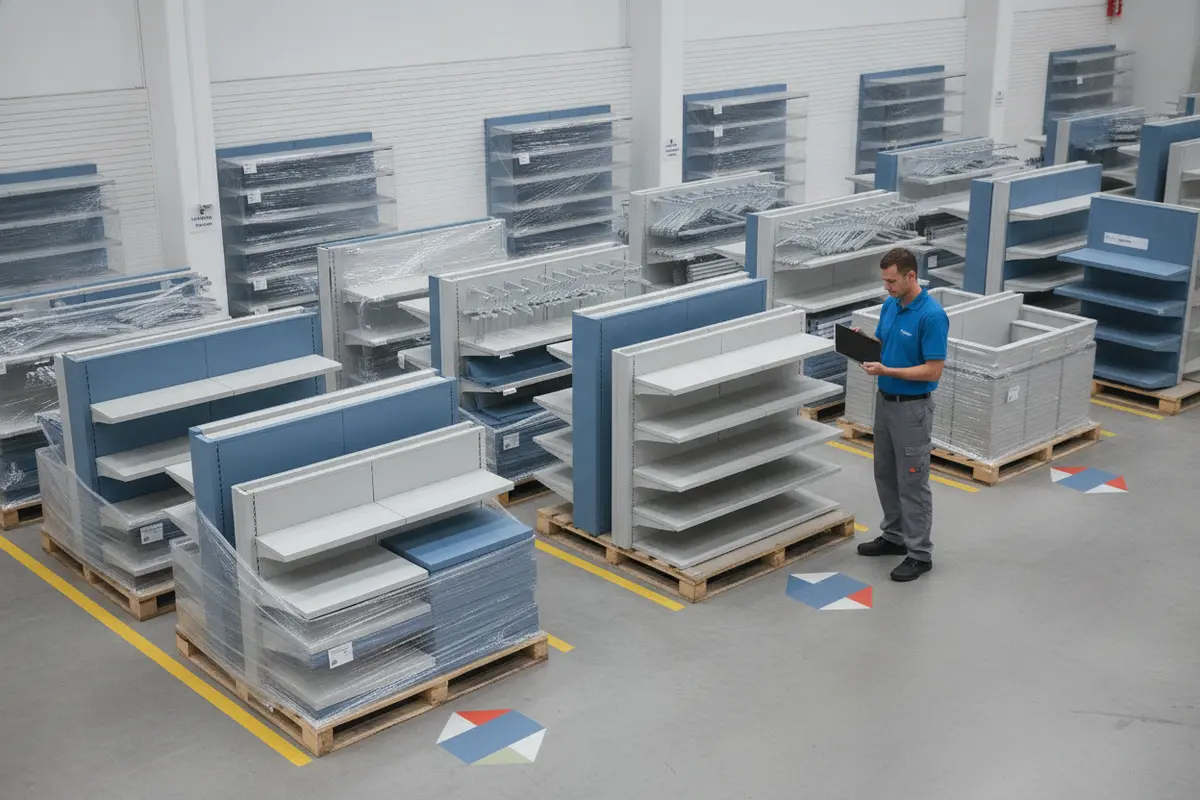
Warehouse planning links production decisions to store delivery. Before goods move, establish where completed fixtures will be received, how they will be identified, and how orders will be allocated to locations. A warehouse plan should account for the full fixture set, not just whether a shipment has arrived.
For a multi-store program, a clear kit structure can make missing-item checks easier. A kit may be defined by store, department, phase, or fixture family, depending on how installation will happen. The important point is that the unit used to track inventory matches the unit the field team needs to execute. If a store requires several shipments, the team should know which shipment contains each part of the planned set.
For example, suppose a rollout wave includes ten stores and each requires a consistent core fixture set plus a location-specific component. The warehouse team can track the core set as a standard kit while keeping the variable component mapped to each store. Before release, reconcile the pick list against the store-level bill of materials and flag incomplete kits. If one component is delayed, the program owner can see which locations are affected and decide whether to hold a complete kit, ship unaffected stores first, or revise the sequence. The choice should follow agreed rules rather than an improvised first-come allocation.
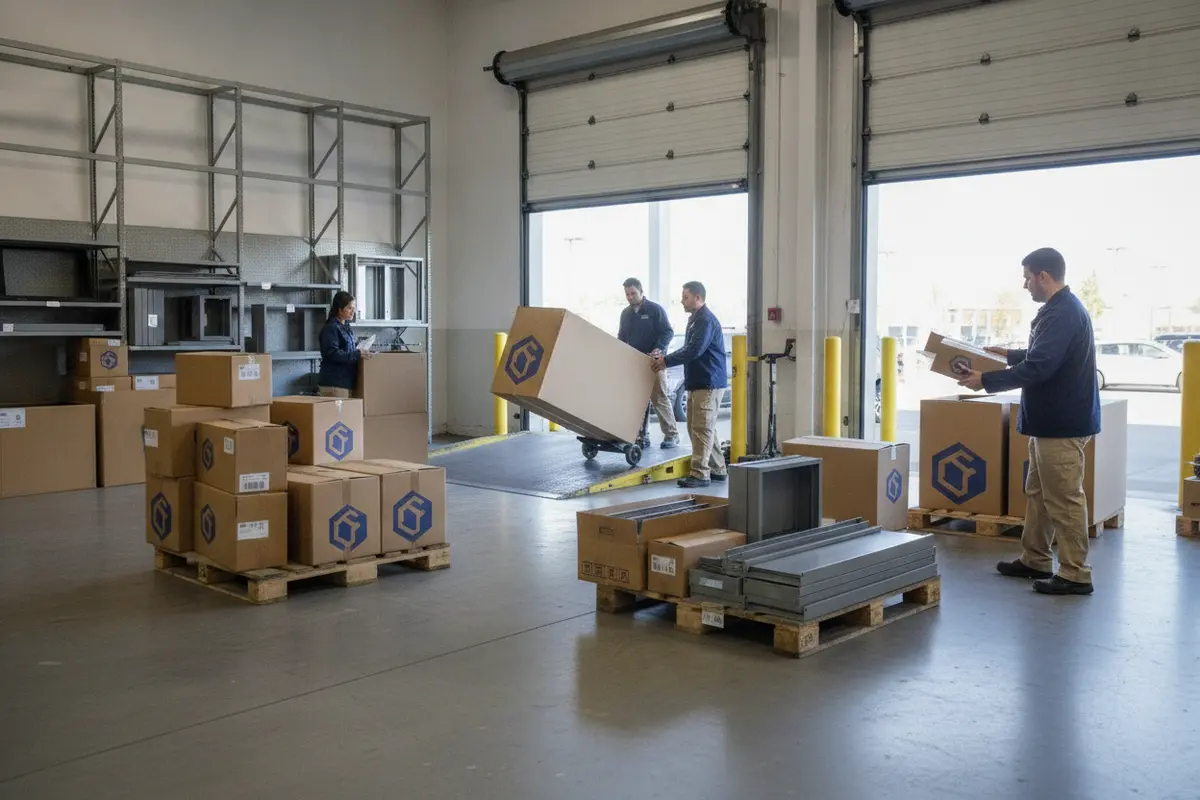
Freight planning should begin while the fixture plan is still being developed. Confirm the ship-to points, delivery windows, store receiving rules, and who is responsible for coordinating appointments. A destination list alone is not a delivery plan: one location may accept freight at a distribution center, while another may require a scheduled direct-to-store delivery.
Build a shipment calendar that connects each load to its intended store or rollout wave. Include the expected contents, delivery destination, planned arrival range, receiving contact or process, and current status. Then establish how the team will respond if a shipment misses its expected window. A useful escalation path identifies who investigates, who communicates with the retailer, and who can approve a revised sequence.
Packaging and load planning also affect execution. Confirm that the pack-out is documented and that each shipment can be reconciled against the store's required fixture list. If a program uses multiple trucks or separate delivery waves, make dependencies visible: teams should know whether stores can begin work with the first shipment or need a complete set before installation starts.
Before dispatch, run a destination check against the latest store schedule. Confirm the address and receiving method, appointment requirements, delivery contact, and any restrictions on when the location can accept goods. Share the shipment contents in a format the receiving team can reconcile quickly. If a delivery must be split, identify which pieces are traveling separately and whether the store can act on the first arrival. This small pre-dispatch review can reveal a mismatch between the project schedule and a site's actual receiving process while there is still time to adjust the plan.
When evaluating how fixtures will display merchandise, teams can also review available formats such as display counters and showcases or portable displays. Those examples can inform the planning conversation, but final selection should follow the retailer's approved design, operating needs, and project scope.
Contingency planning works best when it distinguishes a real alternative from a vague fallback. For each risk that matters to the schedule, define the trigger, decision owner, acceptable response, and communication path. A contingency should not be activated without confirming that the alternative meets the project's requirements.
Set a cutoff for design and specification changes, then document how exceptions are reviewed. Changes can affect production, quality checks, inventory allocation, or installation instructions. Make clear who approves a revision and how the current version reaches every relevant supplier, warehouse, and field team. Keep obsolete drawings and item lists out of active execution packets.
Where a substitute might be acceptable, define the performance and appearance requirements that cannot change, plus the person authorized to approve an option. A substitute should be checked for fit with the store plan, merchandise, and related fixture components. Do not assume that a similar-looking item is interchangeable.
For a large rollout, sequencing stores in waves may allow the team to confirm processes and address issues before later locations proceed. A pilot or early wave should test the actual coordination steps: receiving, kit accuracy, documentation, and communication. Decide what evidence is needed before a wave is considered complete and what issues require a pause or adjustment.
A shared tracker should show the latest status, the next milestone, the accountable owner, and any open decision. Keep the same item identifiers and store codes across purchase orders, pack lists, shipment records, and installation materials. This makes it easier to locate the source of a mismatch and reduces dependence on scattered email updates.
Make the response path concrete with a short scenario exercise. If a component is not confirmed at its planned production milestone, the tracker should show the affected fixture family and locations. It should also name the person who verifies the status and the deadline for deciding whether to hold, substitute, or resequence. The team should also identify who informs store operations and how the approved decision is reflected in warehouse allocation and field instructions. Reviewing this scenario before a live exception helps expose missing authority or unclear handoffs without treating every possible delay as a reason to change the plan.
Use a cross-functional review before the production plan is locked. Procurement, store planning, operations, logistics, and the fixture partner should agree on the scope and assumptions. A focused review can surface gaps that a price comparison will not reveal.
One useful final check is to trace a single store from approved design to receipt. Can the team identify the correct fixture version, confirm which items make up the store's kit, see the planned warehouse release and delivery window, and locate the owner for an open exception? If any step depends on an informal email or a person who is not assigned to the program, document the process before committing to the full schedule. Repeat the trace for a store with a different receiving setup to make sure the plan works beyond the simplest destination.
For additional store planning context, teams may compare needs against retail signage options, while keeping the approved program specification as the controlling document. For S-CUBE's project scope and capabilities, review its retail fixture services.
Explore custom fixture options
No single sourcing route is automatically best for every program. Compare the full scope, confirmed capacity, schedule, quality controls, freight plan, and ability to manage changes. The appropriate choice can differ by fixture family within one rollout.
That depends on the program's risk tolerance, storage capacity, expected demand, and the cost and practicality of holding inventory. First identify which items are difficult to replace and which stores or rollout waves depend on them. Then agree on an allocation plan and verify warehouse capacity rather than adding inventory without a defined purpose.
At minimum, track the store or destination, fixture identifiers and quantities, production or shipment status, expected milestone, current owner, and open exception. Use consistent status terms and update the tracker when a decision changes the plan.
Start during scope and sourcing decisions, before production and freight schedules are fixed. Early planning gives the team time to identify acceptable alternatives, approval owners, and communication steps. Revisit the plan when quantities, specifications, dates, or destinations change.
A resilient fixture rollout comes from clear specifications, visible milestones, realistic inventory plans, coordinated freight, and decisions that have named owners. Align those elements before production begins, then keep the plan current as each store moves toward delivery and installation.