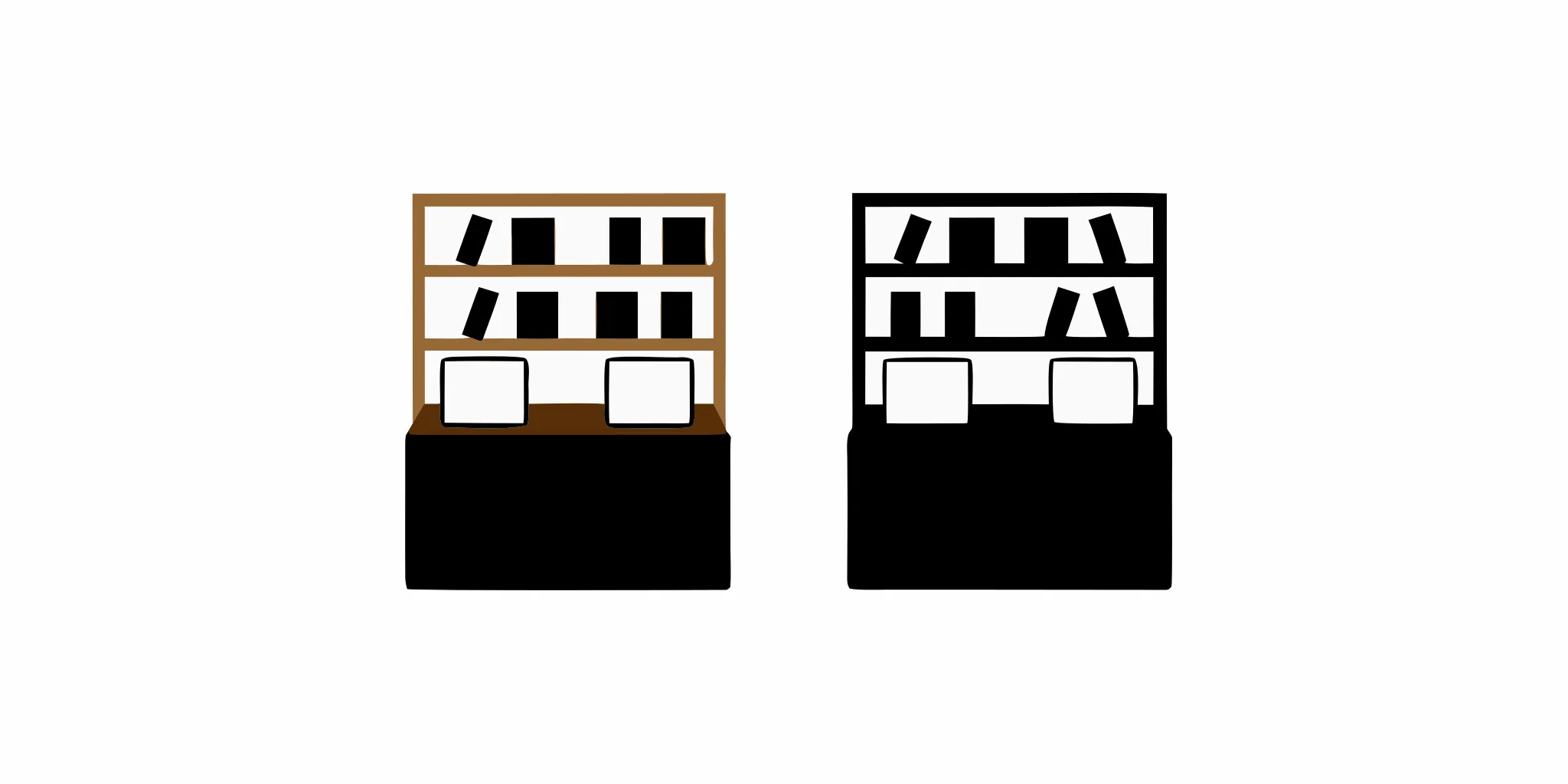


A bookstore has to do more than hold inventory. Its fixtures guide browsing, bring new releases into view, support staff recommendations, and help customers move comfortably through the store. For enterprise retailers, the challenge is making that experience consistent across locations while protecting product quality, capacity, and rollout timelines.
Bookstore fixtures are the shelving, display tables, browser bins, checkout systems, and specialty units used to organize and showcase books and media merchandise. The right systems combine durable materials, accessible merchandising, and flexible configurations so stores can support both everyday inventory and high-impact featured displays.
S-CUBE helps enterprise retailers plan custom programs around their space, assortment, and operating requirements, using materials such as wood, metal, acrylic, glass, wire, and mixed mediums. The starting point is understanding how each fixture type contributes to store flow and product visibility. It also helps ensure a reliable customer experience.
Bookstore fixtures are the built-in and movable elements that hold, organize, and present merchandise throughout a retail store. They include shelving, display tables, gondolas, browser bins, service counters, and specialty displays designed around the way customers shop for books, gifts, stationery, media, and related products.
Unlike basic shelving, a well-planned fixture program supports the entire retail experience. Fixtures determine how much inventory customers can see, how easily they can browse, and how naturally they move from one department to the next. Wall-mounted displays can use vertical space while keeping the center of the store open. Tables and angled ledges can give new releases or featured titles prominent face-out placement. Counters and integrated wayfinding elements can define service zones without making the store feel crowded.
Fixtures also express the bookstore's identity. A warm wood finish can create a traditional, welcoming atmosphere, while metal, acrylic, or glass can support a more contemporary brand direction. Wire and mixed-material construction can add flexibility, visibility, and texture. The right combination should balance visual appeal with durability, accessibility, maintenance, and the weight requirements of high-volume merchandise such as textbooks.
Effective fixtures connect merchandising strategy with customer flow. They make important products easier to discover, create clear category groupings, and give visual merchandising teams the flexibility to refresh promotions throughout the year. They can also reinforce a consistent brand experience across multiple locations. which matters when a regional or national chain needs every store to feel familiar while still fitting its physical environment.
S-CUBE brings 30+ years of experience delivering custom retail fixture programs for enterprise chains, including complex, multi-location environments. Its end-to-end approach helps retailers coordinate materials, finishes, construction, and rollout requirements rather than treating each fixture as an isolated purchase. To explore how a coordinated program can support your store network, visit custom retail fixtures.
Answer capsule: The most effective bookstore fixtures combine perimeter shelving, freestanding bookcases, gondolas, display tables, browser bins, endcaps, and spinner racks. Each format supports a different merchandising goal, from maximizing capacity to highlighting new releases and encouraging discovery.
Perimeter systems use the store's walls for organized, high-capacity category shelving while keeping the center of the floor open for circulation and featured displays. They work especially well for fiction, nonfiction, children's books, and other sections with broad assortments. A combination of standard shelves and angled ledges can add face-out placement for new releases or high-priority titles without giving up the vertical capacity that makes wall space valuable.
Freestanding bookcases create flexible aisles and can define departments within a larger sales floor. Straight, flared, or cascade configurations can support different browsing experiences. Specialized shelf profiles help keep books aligned and accessible. For retailers that need more adaptability, custom gondola configurations can be built with pegboard, slatwall, or wire-grid backs. That makes it easier to combine book shelving with accessories, promotional signage, or related merchandise as the assortment changes.
Gondolas are particularly useful in chain environments because their modular structure can be adapted to different footprints while maintaining a consistent visual language. A thoughtful layout should balance shelf height, aisle width, sightlines, and accessibility rather than simply maximizing the number of books on the floor.
Display tables bring selected titles into the customer's natural path and are well suited to bestsellers, seasonal collections, signed editions, and thematic groupings. Their lower profile preserves sightlines and creates a more conversational browsing zone. Browser bins serve a similar purpose for paperbacks, children's titles, or deeply discounted merchandise. They allow customers to flip through books comfortably and can make high-volume assortments feel approachable instead of crowded.
Endcaps turn the end of an aisle into a high-visibility promotional position. Use them for launches, staff picks, event tie-ins, or complementary products that benefit from a concise story. Spinner racks add compact, mobile capacity for small-format books, cards, or impulse items near checkout and other high-traffic areas. Because they can interrupt circulation if placed carelessly, their position should support the shopper journey rather than narrow important routes.
These systems can work together as a coordinated plan, not as isolated furniture purchases. For related point-of-purchase merchandising displays, see S-CUBE's point-of-purchase merchandising displays.
Answer: Media retail displays help entertainment merchandise stand out while keeping products organized, accessible, and secure. Effective bookstore fixtures for DVDs, vinyl records, video games, and related products combine face-out presentation with durable shelving, compact browsing formats, and clear checkout zones.
Point-of-purchase merchandising displays are useful for new releases, seasonal promotions, and add-on products that benefit from high-visibility placement. A dedicated display near the entrance or cash wrap can introduce customers to priority titles before they reach the main shelving. Point-of-purchase merchandising displays can also be designed around a retailer's circulation patterns, product mix, and brand standards.
Standard shelving is efficient for depth of inventory, but it can make individual titles difficult to notice. Face-out placement gives selected products a stronger visual presence. Angled ledges are especially useful for displaying new releases, featured albums, game launches, and other high-impact merchandise at a readable angle. This approach keeps the product itself at the center of the presentation instead of relying only on signage.
For stores with changing assortments, modular ledges and adjustable components make it easier to refresh the display without replacing the entire fixture. Boutique-style shelving can support a curated presentation, while higher-capacity configurations help media retailers manage larger inventories.
Spinner racks provide compact, high-density browsing for smaller products and can work well in promotional or checkout-adjacent areas. Media shelving should be sized and reinforced for the weight and handling demands of books, records, cases, and boxed games. Display cases add a layer of protection for high-value or limited merchandise while preserving visibility. Cash wrap counters can combine transaction functions with impulse merchandising, storage, and staff access.
Because entertainment retail often includes products with different dimensions and security needs, a coordinated fixture program is more effective than isolated pieces. S-CUBE develops custom display cases, cash wraps, shelving, and modular displays for multi-location retailers, helping maintain a consistent customer experience across every store.
Answer: Bookstore fixtures perform best when material selection, brand expression, lighting, durability, and installation requirements are planned as one system. That approach gives chains room to customize each format without creating unnecessary cost or rollout complexity.
Material choices should follow the role of the fixture. Wood creates warmth and supports a premium, library-inspired environment. Metal provides structural strength for high-volume shelving and long service life. Acrylic can add color, transparency, and lightweight accents, while glass works well for protected displays where product visibility matters. Wire, plastic, and mixed-medium construction can support browser bins, promotional displays, and modular components. Combining materials strategically often produces a more distinctive result than specifying one material throughout the store.
Finishes are another way to carry the bookstore brand into the selling space. Custom colors, specialty coatings, edge treatments, and coordinated hardware can align fixtures with a chain's existing identity. Integrated lighting can improve face-out visibility, draw attention to new releases, and make focal displays easier to shop. Lighting should be designed around the fixture's geometry and maintenance requirements. It should not be added as an afterthought.
| Material | Best For | Key Benefits |
|---|---|---|
| Wood. | Perimeter shelving, display tables, premium zones. | Warmth, durability, traditional aesthetic. |
| Metal. | Gondolas, high-volume shelving, structural frames. | Strength, long service life, modular configurability. |
| Acrylic. | Browser bins, signage holders, lightweight displays. | Transparency, color options, lightweight construction. |
| Glass. | Display cases, protected merchandise showcases. | Visibility, premium appearance, security integration. |
| Mixed medium. | Custom fixtures combining wood, metal, and acrylic. | Design flexibility, brand-specific appearance. |
Bookstore programs need to handle frequent product changes, seasonal campaigns, and sustained customer use. Adjustable shelves, replaceable components, reinforced high-touch areas, and secure display details can help fixtures remain useful as assortments evolve. S-CUBE can combine wood, metal, acrylic, glass, wire, and mixed mediums through a coordinated design and engineering process, helping teams balance aesthetics with structural and operational needs.
Value engineering reviews the complete fixture program to identify savings in materials, fabrication, hardware, packaging, freight, and installation. S-CUBE's value engineering services can reduce costs by 30% to 50% without sacrificing quality. In its Books-A-Million program, S-CUBE achieved a nearly 50% cost reduction through practical design and manufacturing decisions. For context, one industry benchmark places bookstore fixture investment at approximately $35 per square foot, making early cost modeling important for large footprints. That benchmark is a planning reference, not a universal price, because final costs vary by specification, quantity, freight, and installation conditions.
For chains planning a new store concept or refresh, S-CUBE's design and engineering services can test the details before production begins. The result is custom retail fixtures that express the brand, support daily merchandising, and remain financially practical across a multi-location rollout.
Answer: The right bookstore fixture partner combines proven retail experience with disciplined project management and repeatable quality control. This partner must also support every location in a multi-store rollout. That combination matters more than a catalog of attractive individual displays.
Start by looking for evidence that the manufacturer understands enterprise retail. S-CUBE brings 30+ years of experience, more than 15,000 completed projects, and a bookstore-specific partnership with Books-A-Million. Those credentials help a fixture program account for real operating requirements, including durable construction, consistent brand presentation, efficient merchandising, and dependable delivery across a national footprint.
A chain-wide fixture program involves more than design and fabrication. It may include prototypes, purchase orders, kitting, labeling, freight coordination, direct-to-store shipping, installation requirements, and changes between a pilot and full deployment. Ask whether you will have dedicated US-based project managers who can coordinate those details, communicate clearly, and keep decisions moving. S-CUBE manages programs that can scale from an initial pilot to more than 500 locations, giving store planning and procurement teams one accountable partner as the rollout expands.
Consistent fixtures protect the customer experience and reduce costly field corrections. A serious partner should explain how it checks materials, dimensions, finishes, hardware, packaging, and final assembly before products leave the facility. S-CUBE uses multi-point inspection to help ensure that fixtures meet the approved design and arrive ready for deployment. This is especially important when a program includes 120 or more SKUs. Small inconsistencies can multiply across stores, so thorough checks are essential.
Finally, assess whether the partner can provide an end-to-end program rather than simply sell individual products. S-CUBE combines design, engineering, manufacturing, and rollout support to deliver custom retail fixtures without chaos. For a closer review of your store count, SKU requirements, and rollout goals, contact S-CUBE today.
Common options include wall-mounted shelving, freestanding bookcases, gondolas, display tables, nesting tables, browser bins, service counters, and end-cap displays. The right mix depends on the merchandise, available footprint, and how often the store changes featured products. Adjustable or modular components can support books, stationery, apparel, gifts, and seasonal promotions without requiring a complete floor reset.
Start with the customer journey and the products that need the most attention. Use standard shelving for organized browsing, then add face-out ledges, angled displays, tables, or end caps for new releases, high-margin gifts, and promotional merchandise. Keep products accessible, vary fixture heights to create visual interest, and use clear category signage so shoppers can navigate independently.
Use wall-mounted perimeter shelving and corner fixtures to make productive use of vertical space while keeping central aisles open. Combination wall-and-table units can add browsing and feature-display capacity without consuming as much floor area. Modular gondolas also make it easier to reconfigure the layout as inventory, traffic patterns, or seasonal priorities change.
Face-out placement gives a title more visual presence than a spine-only presentation. Angled ledges and featured displays can draw attention to new releases, priority categories, or books supported by a promotion. Use these placements selectively, then connect them to nearby shelving so the display leads naturally into deeper browsing.
Plan for merchandise weight, traffic flow, maintenance, accessibility, signage, and future changes before finalizing the design. Textbook areas may require higher-load shelving than gift or stationery zones. Detailed finish schedules and installation plans help maintain consistency across locations, while commercial-grade materials and durable finishes support long-term performance in high-traffic stores.
A well-planned fixture program can help your team align shelving, displays, materials, and rollout requirements before production begins. For a practical starting point, get a free consultation for your bookstore fixture program. Share your store formats, merchandising goals, and locations so the S-CUBE team can discuss a custom retail fixture approach that fits the way your stores operate.
Subscribe for expert insights on fixture design, materials, and modern retail environments.