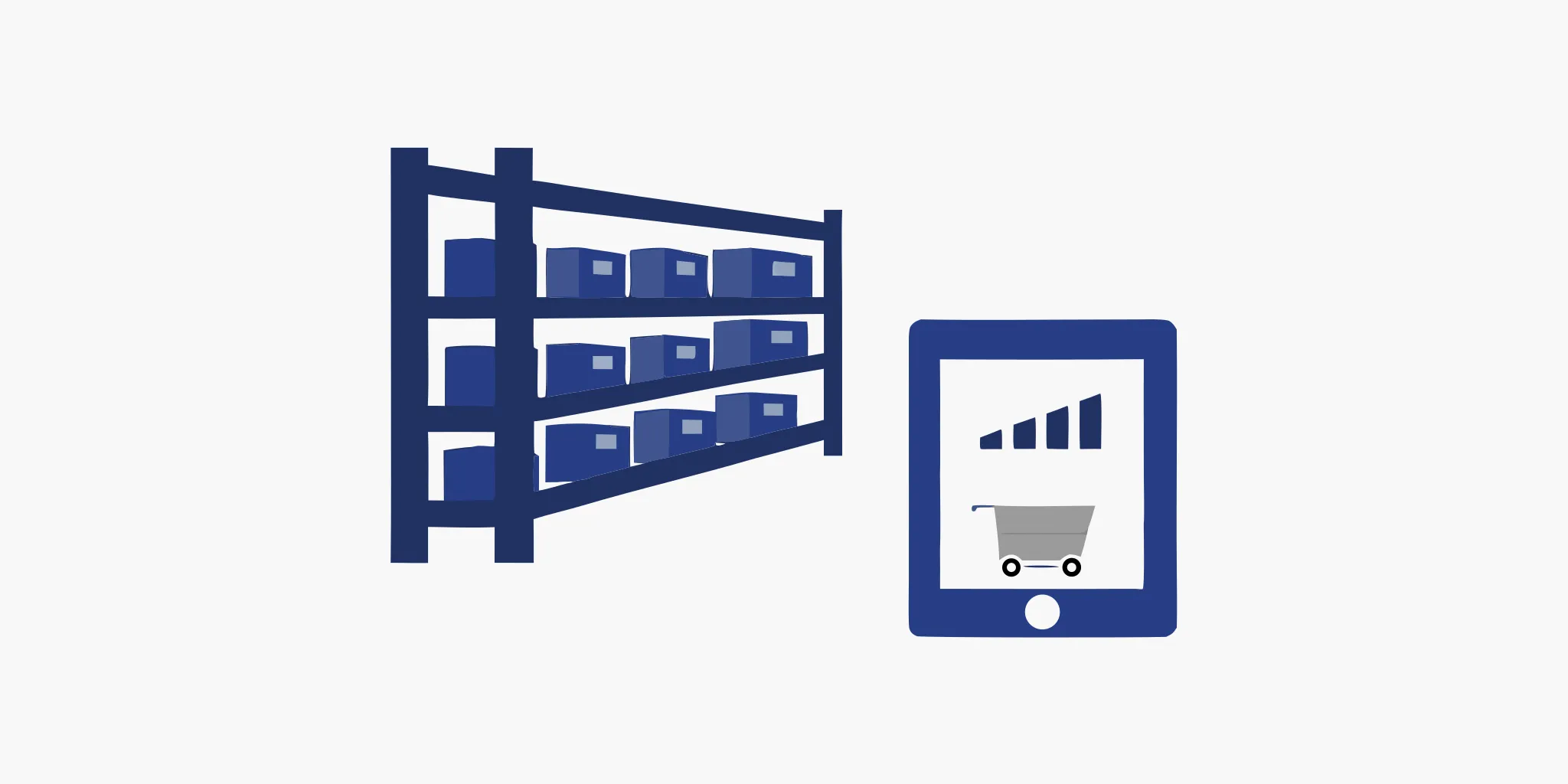


When you think about your business's inventory, your mind probably goes straight to the products you sell. But what about the shelves they sit on, the custom displays that catch a customer's eye, or the signage that defines your brand experience? These fixtures are valuable assets, and for retailers managing multiple locations, they represent a significant investment. Applying the principles of inventory tracking to these non-sellable items is a game-changer. It allows you to protect your assets, maintain brand consistency across every store, and execute flawless rollouts without costly delays. Thinking of your fixtures as part of your inventory transforms them from a logistical headache into a well-managed component of your growth strategy.
At its core, inventory tracking is the process of monitoring every product in your business. It follows an item’s entire journey, from the moment it arrives from a supplier to the second a customer carries it out the door. Think of it as the central nervous system of your retail operation. It uses technology and established processes to keep a detailed record of how much stock you have, where it’s located across all your warehouses and stores, and how it’s moving.
Effective inventory tracking answers three critical questions at any given moment: What do we have? Where is it? And how much more do we need? Having clear answers to these questions is fundamental to running a healthy business. It allows you to see the complete picture of your stock, including what’s on the sales floor, what’s in the backroom, what’s on order from a vendor, and what’s being returned. Without this visibility, you’re essentially making guesses that can have a major impact on your bottom line. A solid tracking system is the foundation for everything from daily operations to long-term financial planning.
If you're managing just one or two stores, a simple spreadsheet might do the trick. But for regional chains and national brands, that complexity multiplies with every new location. Tracking inventory across an entire network, from supplier shipments to individual store stockrooms, is a massive undertaking. You need a unified view to manage customer returns, identify damaged goods, and shift products between stores to meet regional demand. This is where a robust tracking system becomes non-negotiable.
For multi-location retailers, automated tracking provides a clear, real-time view of all your stock, no matter where it is. This level of insight is vital for planning seasonal sales, coordinating marketing promotions, and executing new store rollouts. It ensures that every location has the right products at the right time, which is a cornerstone of effective project management and customer service.
While every business with physical products benefits from inventory tracking, some industries feel the impact more acutely. Any retailer who has ever faced the dual threat of overstock and stockouts knows how crucial balance is. Having too much inventory ties up your cash and racks up storage fees, while having too little means empty shelves and disappointed customers who may not come back.
Industries with fast-moving trends, like fashion and apparel, rely on tracking to avoid getting stuck with last season’s styles. Retailers in consumer electronics need it to manage products with short life cycles. Even grocery and CPG brands depend on it to handle expiration dates and prevent spoilage. Ultimately, real-time inventory data allows you to make smarter purchasing decisions, control your carrying costs, and improve cash flow, no matter what you sell.
Choosing how to track your inventory is a foundational decision for your retail business. It’s a choice between the hands-on simplicity of manual methods and the powerful precision of automation. The right path depends entirely on the scale of your business, the number of products you sell, and how many locations you manage. For a small, single-store operation, a spreadsheet might work just fine. But for regional chains and national retailers, trying to manage inventory manually is like trying to bail out a boat with a teaspoon. It’s slow, exhausting, and ultimately, ineffective.
As your business grows, the hidden costs of manual tracking, like ordering errors and wasted staff hours, quickly add up. An automated system, on the other hand, provides the real-time data you need to make smart decisions, control costs, and keep customers happy across all your stores. Let’s look at the specifics of each approach so you can determine which one fits your business needs right now and where you want to go in the future.
If you’re just starting out, you might be using a spreadsheet or even a paper log to track your inventory. This method feels straightforward and doesn't require any upfront investment in software, which is appealing for new businesses. You simply record what comes in and what goes out. However, this simplicity comes with significant risks. Manual tracking is highly prone to human error. A single typo can lead to ordering too much of one item or running out of a bestseller, both of which hurt your bottom line. This approach is also incredibly time-consuming and doesn't provide a real-time view of your stock, making it difficult to make quick, informed decisions. It’s a workable solution only for the smallest businesses with a very limited product catalog.
Automated inventory tracking uses software, barcode scanners, or RFID technology to monitor your stock levels automatically. When new products arrive or an item is sold, the system updates instantly. This gives you a clear, accurate, and up-to-the-minute picture of your inventory across all locations, from the stockroom to the sales floor. Studies show that automation can increase inventory accuracy to 95%. This level of precision is critical for multi-location retailers who need to maintain consistent stock levels and manage complex supply chains. An automated system provides effective inventory control, saving your team countless hours and giving you the data needed for accurate forecasting and reporting.
When you place manual and automated systems side-by-side, the choice for a growing business becomes clear. Manual tracking’s lack of real-time data means you’re always looking in the rearview mirror, making decisions based on old information. This can lead to frequent stockouts, which disappoint customers, or overstocking, which ties up your cash in unsold goods. While the initial cost is zero, the long-term cost of errors and inefficiencies can be substantial.
Automated systems require an initial investment, but they pay for themselves by preventing costly mistakes and improving efficiency. For retailers managing dozens or hundreds of locations, automation is non-negotiable. It’s the only way to get the visibility and control needed to run a successful, scalable operation. Combining an automated system with expert project management ensures a smooth rollout and helps you get the most out of your investment.
Let's be honest, "inventory tracking" doesn't exactly sound thrilling. But behind the spreadsheets and scanners lies one of the most powerful levers you can pull for your retail business. Accurate inventory tracking is the backbone of a healthy operation, especially when you're managing stock across multiple locations. It’s not just about counting what you have; it’s about understanding the story your products are telling.
This understanding directly impacts your customer experience, your team's efficiency, and, most importantly, your bottom line. When you have a firm handle on your inventory, you can stop putting out fires and start making strategic moves. You can avoid frustrating stockouts, reduce the costs of holding unsold products, free up your cash, and make purchasing decisions with confidence. It transforms your inventory from a logistical headache into a strategic asset.
Think of your inventory levels as a balancing act. On one side, you have stockouts: empty shelves where a best-seller should be, leading to a lost sale and a disappointed customer who might not return. On the other side, you have overstock: a backroom overflowing with products that aren't selling, tying up your cash and costing you money in storage. Both scenarios are incredibly costly.
Accurate inventory tracking is the key to finding that "just right" balance. It gives you a clear, real-time picture of what you have and where you have it. This visibility helps you maintain optimal stock levels, ensuring you can always meet customer demand without drowning in excess products that drain your resources.
Every product sitting on your shelves has hidden costs associated with it. These are your inventory carrying costs, and they include expenses like warehouse rent, insurance, staffing, and the risk of products becoming damaged or obsolete. For retailers with multiple locations, these costs multiply quickly and can eat into profits without you even realizing it.
By tracking your inventory accurately, you gain the data needed to manage and reduce these expenses. You can see which products are sitting too long at one store and could be transferred to another where they sell better. This kind of inventory optimization prevents unnecessary markdowns and minimizes the carrying costs that weigh down your business, turning a major liability into a well-managed asset.
Inventory is essentially cash in the form of products. When you have too much of it, your cash is literally just sitting on a shelf, unable to be used for payroll, marketing, rent, or investing in growth. Poor inventory management can create serious cash flow problems, even for a business that looks profitable on paper.
Effective inventory tracking helps you convert those products back into cash more efficiently. By preventing overstock, you keep your money liquid and available. By avoiding stockouts, you ensure a steady stream of revenue from sales. This improved cash flow gives you the financial flexibility and stability you need to run your business day-to-day and plan for the future.
Great purchasing is less about gut feelings and more about good data. Accurate inventory tracking provides the exact data you need to move from reactive ordering to proactive, strategic buying. When you know what's selling, how fast it's selling, and which items are collecting dust, you can make purchasing decisions with confidence.
This information is crucial for effective demand forecasting. You can identify seasonal trends, spot your best-sellers early, and know when to reorder before you run out. It also tells you which products to phase out, preventing you from wasting more money on items your customers don't want. This data-driven approach ensures your capital is always invested in the products most likely to sell.
Even with a solid plan, you can run into a few common roadblocks on your way to inventory excellence. The good news is that these challenges are completely normal, and with a little foresight, you can clear them easily. Knowing what to look for is the first step. From messy data to getting your team up to speed, let’s walk through the most frequent hurdles and the practical steps you can take to overcome them. Think of this as your field guide to keeping your inventory system running smoothly.
Relying on manual tracking with spreadsheets or paper logs might seem like a way to save money, but it often costs more in the long run. These methods are an open invitation for human error, which can lead to incorrect counts, surprise stockouts, or costly overstock situations. If your data isn't accurate and in real time, you're making critical business decisions based on outdated information. The best way to solve this is to automate your data collection. Implementing a system with barcode or RFID scanners drastically reduces errors and ensures your inventory levels are updated instantly with every sale, return, or shipment received.
As your retail business grows, so does the complexity of your inventory. Tracking stock across several stores, a distribution center, and maybe a warehouse or two can quickly become a logistical nightmare. Without a unified view, it’s nearly impossible to know what you have and where you have it. This can lead to one store being out of stock while another is overstocked with the same item. The solution is a centralized system that offers a single source of truth. S-CUBE’s inventory control and warehouse management services, for example, are built to handle this exact challenge, ensuring you have a clear, real-time view of all your assets, no matter where they are.
Your inventory tracking system doesn't operate in a vacuum. It needs to communicate seamlessly with your other essential platforms, like your point-of-sale (POS), accounting software, and ecommerce site. When these systems don't talk to each other, you end up with data silos and an incomplete picture of your business performance. To avoid this, prioritize inventory software that offers robust, pre-built integrations with the tools you already use. Before you commit to a new system, ask for a list of its integration partners and make sure it can connect with your current technology stack without requiring extensive custom development.
A new inventory system is only as effective as the team using it. If your employees aren't properly trained or don't understand the new workflow, you'll face inconsistent data entry and low adoption rates. Change can be difficult, so it's crucial to manage the transition thoughtfully. The key is to invest in comprehensive training and create clear, easy-to-follow procedures for every task. Explain the "why" behind the new system, highlighting how it will make their jobs easier and help the company succeed. When your team feels confident and supported, they become your greatest asset in maintaining inventory accuracy.
Choosing an inventory tracking system isn't a one-size-fits-all decision. The right platform will feel like a natural extension of your operations, while the wrong one can create more headaches than it solves. As you evaluate your options, focus on features that directly address the complexities of running a multi-location retail business. The goal is to find a system that not only tracks your products but also supports your growth, streamlines your processes, and gives you the data you need to make smart decisions.
A great system provides a clear, accurate picture of every item you own, from the products on your shelves to the fixtures and displays in your warehouse. For a growing retail chain, this level of detail is essential. It allows you to manage assets efficiently, plan for new store openings, and ensure consistency across all your locations. Think of it as the central nervous system for your entire retail operation. With the right tools, you can manage everything from your sellable goods to your in-store fixtures with total confidence, making sure every component of your business is working together seamlessly.
Real-time visibility means knowing exactly what you have in stock, across all your locations, at any given moment. It’s the difference between making decisions with today’s data versus last week’s. When your system updates instantly with every sale, return, or transfer, you can confidently answer customer questions, prevent stockouts, and fulfill orders from the most logical location. This immediate insight is the foundation of modern inventory management, allowing you to be agile and responsive in a fast-moving market. Without it, you’re always a step behind, trying to make sense of outdated information while your customers are waiting.
Manual data entry is slow and prone to human error. Barcode and RFID scanning solve this by automating data capture. With a quick scan, your team can receive shipments, update stock counts, and process transfers with speed and accuracy. This information feeds directly into your central system, ensuring your inventory records are always current. While barcodes are the tried-and-true standard for most retail products, RFID (Radio Frequency Identification) technology allows you to scan multiple items at once without a direct line of sight. This makes it a powerful tool for quickly counting high-volume inventory in a stockroom or warehouse.
For regional and national chains, managing inventory is exponentially more complex. A system with strong multi-location capabilities is non-negotiable. This feature gives you a bird's-eye view of stock levels at each store and warehouse, all from a single dashboard. You can easily see which stores are overstocked on a particular item and which are running low, allowing you to initiate store-to-store transfers instead of placing unnecessary purchase orders. This is also crucial for managing the distribution of non-sellable inventory, like fixtures and displays, during a multi-store rollout.
An inventory system should do more than just hold data; it should help you understand it. Look for robust reporting and analytics features that turn raw numbers into actionable insights. You’ll want to generate reports on sales velocity, inventory turnover, and slow-moving products. This information helps you identify your bestsellers, phase out underperforming items, and spot seasonal trends. With solid data, you can refine your purchasing strategy, optimize your stock levels, and ultimately improve your cash flow. These reports are your roadmap for making smarter, more profitable business decisions.
Stockouts mean lost sales, and overstocks tie up valuable capital. Customizable low-stock alerts help you find the sweet spot. You can set minimum quantity thresholds, or reorder points, for each product at each location. When inventory dips below that level, the system automatically notifies you or even generates a draft purchase order. This proactive approach ensures you replenish stock before you run out, keeping your shelves full and your customers happy. It takes the guesswork out of reordering and helps you maintain a lean, efficient inventory without constant manual checks.
Your inventory system doesn't operate in a vacuum. It needs to communicate with the other software you rely on, like your point-of-sale (POS) system, accounting software, and ecommerce platform. Seamless integrations create a unified ecosystem where data flows automatically between platforms. When a sale is made online, for example, the inventory level in your central system and your accounting software should update without any manual intervention. This eliminates redundant data entry, reduces errors, and ensures everyone in your organization is working from a single source of truth.
The system that works for you today should also work for you tomorrow. Scalability is about choosing a platform that can grow with your business. Whether you’re planning to add new locations, expand your product catalog, or increase your sales volume, your inventory system should be able to handle the load without slowing down. A scalable solution will support more users, more transactions, and more complex inventory control needs as your company expands. Investing in a scalable system from the start prevents the major disruption of having to switch platforms down the road.
Once you decide to go with an automated system, the next step is finding the right software. The market is filled with excellent options, but the best one for you will depend on your business size, sales channels, and specific operational needs. Are you an online-only brand? A brick-and-mortar chain? A mix of both? Answering these questions will help you narrow down the choices. To give you a head start, I’ve put together a list of some of the most popular and effective inventory tracking platforms available for retailers today.
If you’re managing large-scale fixture rollouts, having your inventory system integrated with your fixture partner can be a game-changer. S-CUBE’s own inventory control and warehouse management solution is designed to work seamlessly with our other services. It gives you real-time tracking and automated updates, helping you optimize stock levels and reduce carrying costs across all your locations. This is especially helpful for keeping your fixture and display programs on track, ensuring everything arrives where it needs to be, right on schedule. It’s a comprehensive approach that simplifies your entire retail operation from the ground up.
For retailers already running their ecommerce store on Shopify, the Shopify POS system is a natural fit. It fully integrates your online and in-person sales, creating a single, unified inventory. This means when a product sells in one of your physical stores, the stock count is automatically updated on your website, and vice versa. Features like barcode scanning and low-stock alerts help streamline daily tasks for your staff. Using Shopify POS is one of the easiest ways for omnichannel brands to maintain accurate inventory and provide a smooth customer experience across all channels.
Lightspeed is a cloud-based retail management system known for its powerful inventory features and user-friendly design. It’s a great option for retailers who want to manage stock levels, track sales trends, and pull detailed reports without a steep learning curve. Because it’s cloud-based, you and your team can access your inventory data from anywhere, whether you’re on the sales floor with a tablet or checking in from home. Lightspeed’s platform is built to handle the needs of multi-location businesses, making it a strong contender for growing retail chains.
If your business involves selling across multiple ecommerce platforms and online marketplaces, your inventory needs can get complicated fast. Cin7 is an all-in-one platform built to handle that complexity. It connects your inventory, orders, and supply chain into a single automated system. Cin7 provides real-time visibility that prevents stockouts and overselling, no matter how many channels you sell on. It’s a robust solution for retailers who need to manage a high volume of orders and products across a diverse and expanding digital footprint.
For many small to medium-sized businesses, keeping financial records and inventory data in sync is a top priority. Fishbowl is an inventory management software that shines here, thanks to its seamless integration with QuickBooks. Beyond simple tracking, it offers features for order management and even has capabilities for light manufacturing. This makes it a popular choice for businesses that assemble or create their own products. By using Fishbowl, you can connect your inventory operations directly to your accounting software, which simplifies bookkeeping and gives you a clearer picture of your company’s financial health.
When your retail operation grows into a large, multi-location enterprise, you need a system that can scale with you. NetSuite is a comprehensive cloud-based ERP (Enterprise Resource Planning) solution that includes advanced inventory management. It goes beyond basic tracking to offer demand forecasting and automated replenishment, helping you make smarter purchasing decisions. NetSuite’s inventory management provides real-time visibility across your entire organization, from the warehouse to the sales floor. It’s an enterprise-level platform designed for large retailers who need a powerful, scalable, and all-encompassing system to manage complex operations.
Finding the right inventory tracking system also means finding one that fits your budget. The costs can range from completely free to thousands of dollars per month, so it’s helpful to understand what you get at each level. The best choice for your business depends on your scale, complexity, and how much you’re willing to invest to solve inventory headaches.
Think of it like this: a small boutique with one location has very different needs than a national chain with 100 stores. The boutique might do just fine with a simple spreadsheet, while the national chain needs a powerful, integrated system to keep everything running smoothly. As you explore these options, consider not just the upfront cost but also the long-term value. A system that saves you from costly stockouts or overstock situations can easily pay for itself over time. Let’s walk through the common pricing tiers to see where your business fits in.
If you’re just starting out or have a very small-scale operation, you don’t need to spend a dime to get organized. The most common entry-level method is using a spreadsheet. You can find plenty of free, editable templates online that let you set up product IDs, track costs, and even create simple flags for when stock is running low. This manual approach gives you a basic framework for tracking what you have on hand. While it requires discipline to keep it updated, it’s a practical first step for any business owner looking to get a handle on their inventory without a financial commitment.
When spreadsheets start to feel limiting, it’s time to look at mid-tier solutions. This category typically includes dedicated inventory apps and software that use barcode scanning. These tools are perfect for fast-paced retail environments where you need to update stock levels in real time. Many operate on a subscription model, which ensures you get regular updates and support. Be cautious of apps that ask for a one-time payment, as they might not receive bug fixes or new features down the line. This tier offers a great balance of advanced features and affordability for growing businesses that need more accuracy than a spreadsheet can offer.
For large, multi-location retailers, an enterprise-level platform is essential. These are comprehensive systems that integrate inventory management with your sales, purchasing, and accounting software. Instead of juggling separate tools, you get a single, centralized hub to manage everything across all your stores and channels. This approach provides a complete view of your business operations, making it easier to make smart purchasing decisions and maintain optimal stock levels everywhere. S-CUBE’s inventory control and warehouse management services are designed for this level of scale, ensuring your products and fixtures are exactly where they need to be.
When you think about inventory, your mind probably goes straight to the products on your shelves. But what about the shelves themselves? Your custom fixtures, point-of-purchase displays, and signage are valuable assets that play a huge role in your store's success. Applying inventory tracking principles to these items is a smart move, especially for retailers managing multiple locations. Thinking of your fixtures as part of your inventory helps you protect your investment, maintain brand consistency, and execute flawless store rollouts.
Just like your sellable goods, your fixtures move through a supply chain. They are designed, manufactured, shipped to a warehouse, and distributed to stores. Without a system to track them, it’s easy to lose sight of what you have, where it is, and what condition it’s in. This can lead to unnecessary spending on new fixtures when you already have perfectly good ones in storage. By extending your inventory strategy to include these crucial assets, you can run a more efficient and cost-effective operation. S-CUBE offers comprehensive services that cover the entire lifecycle of your fixtures, from initial concept to final installation.
For national retailers and regional chains, consistency is everything. You want customers to have the same high-quality brand experience whether they’re in Miami or Seattle. Tracking your fixtures is essential for making this happen. When you’re opening new stores or remodeling existing ones, you need to ensure the right displays and fixtures arrive at the right location on time. An effective tracking system gives you a clear view of your fixture inventory, showing you what’s available and where it’s located. This visibility is critical for coordinating large-scale rollouts and helps your project management team execute flawlessly, preventing delays and ensuring every store is set up for success.
Your fixtures and displays take up valuable space in your warehouse. Without a clear tracking system, that space can become disorganized and inefficient, leading to wasted time and money. Implementing inventory control for your fixtures simplifies your entire back-end operation. Knowing the exact quantity, location, and status of your displays allows you to manage your warehouse more effectively and streamline distribution. This means you can pull from existing stock for a new store opening instead of placing a rush order for new fixtures. S-CUBE’s inventory control and warehouse management solutions are designed to handle these logistics, giving you a central hub for storing and deploying your retail assets as needed.
Selecting the right inventory system feels like a huge decision, because it is. This system is the backbone of your retail operation, influencing everything from your cash flow to your customer satisfaction. A great system gives you clarity and control, while the wrong one can create constant headaches, lost sales, and wasted money. The key is to move beyond the price tag and find a solution that truly fits your business needs, both for today and for your future growth.
Making the right choice doesn't have to be overwhelming. You can simplify the process by breaking it down into a few manageable steps. By methodically thinking through your specific challenges, required features, true costs, and team needs, you can confidently select a system that will support your business for years to come. Let’s walk through how to find the perfect fit for your stores.
Before you can find the right solution, you need a crystal-clear picture of the problems you’re trying to solve. Start by taking an honest look at your current inventory process. Where are the frustrations? Are you constantly running out of popular items or finding yourself with too much dead stock? Effective inventory tracking is all about monitoring the movement, quantity, and status of your products. If you can’t easily access this information, that’s your first red flag.
Talk to your store managers and warehouse staff. Ask them what their biggest daily challenges are. Maybe they’re spending hours manually counting stock, dealing with discrepancies between what the system says and what’s on the shelf, or struggling to coordinate transfers between locations. List every issue, no matter how small. This list of pain points will become your shopping list for features you can’t live without.
Your business isn't one-size-fits-all, and your inventory system shouldn't be either. A small, single-location shop might get by with spreadsheets, but for multi-location retailers, that manual approach is a recipe for costly errors. Automated systems that use software and barcode scanning provide a much more accurate, real-time view of your stock across every single location. This visibility is essential for making smart decisions at scale.
When evaluating systems, think about your current operations and where you plan to be in five years. Look for features that solve your immediate problems but also offer the ability to grow with you. For a regional or national chain, non-negotiable features often include multi-location management, real-time data syncing, and seamless integrations with your existing POS and ecommerce platforms. A robust inventory control and warehouse management partner can help you implement a system that scales effortlessly.
The sticker price of an inventory system is only one piece of the financial puzzle. To understand the real value, you need to calculate the total cost of ownership. This includes the initial software and hardware costs, plus any monthly subscription fees, implementation charges, and training expenses. More importantly, you need to weigh these costs against the money you’re currently losing due to poor inventory management.
Think about it: having too much stock ties up your capital and increases storage costs, while having too little leads directly to missed sales and unhappy customers. A good inventory system prevents both. It helps you optimize stock levels, reduce carrying costs, and improve cash flow. When you frame it as an investment that solves expensive problems, the right system often pays for itself surprisingly quickly.
The most powerful inventory software in the world is useless if your team doesn't know how to use it. A smooth transition is critical, and that starts with excellent implementation and training support from your vendor. Before you sign a contract, ask detailed questions about their onboarding process. Will they help you migrate your data? Do they offer live training sessions for your staff? What kind of ongoing support is available when you run into issues?
Proper training and standardized procedures are what turn a piece of software into a functional business tool. When your team feels confident using the new system, they’re more likely to follow best practices, which leads to greater accuracy and productivity across the board. Don’t underestimate the human element; choosing a vendor that acts like a true partner will make all the difference in your success.
How do I know when it's time to upgrade from spreadsheets to an automated system? The moment your spreadsheet starts creating more problems than it solves is your sign to upgrade. If you're constantly dealing with ordering errors, surprise stockouts, or your team is spending hours on manual counts instead of helping customers, your business has outgrown the manual approach. Think about it this way: if you can't get a quick, accurate answer to "how many of this item do we have across all stores right now?", you're making decisions with outdated information, which is a risky way to run a business.
My biggest concern is the cost. How can I justify the expense of a new inventory system? This is a completely valid concern, but it helps to reframe the question. Instead of asking what a new system costs, ask what your current system (or lack thereof) is costing you. Calculate the money lost from stockouts, the carrying costs of overstocked items that aren't selling, and the staff hours wasted on manual counts and fixing errors. A good inventory system is an investment that pays for itself by preventing those expensive problems and freeing up your cash flow.
You mentioned tracking fixtures. Is that really necessary, and how does it work? It's absolutely necessary if you want to protect your investment and maintain brand consistency across multiple locations. Your fixtures, displays, and signage are valuable assets. Tracking them works much like tracking products; it gives you a clear view of what you own, where it is, and what condition it's in. This prevents you from accidentally reordering expensive displays you already have in a warehouse and ensures every new store gets the right components for a flawless opening.
What's the most common mistake retailers make when choosing an inventory system? The biggest mistake is choosing a system based only on its price tag. A cheap or free system that doesn't have the features you need, can't grow with your business, or doesn't integrate with your other software will cause major headaches down the road. It's far better to invest in a solution that truly fits your operational needs, even if it has a higher initial cost. Focus on the total value, including its ability to scale and the quality of support you'll receive.
How can I make sure my team actually uses the new system correctly? A new system is only as good as the people using it, so getting your team on board is critical. The key is great communication and training. Start by explaining the "why" behind the change, focusing on how it will make their jobs easier and help the company succeed. Choose a software partner that provides excellent training and support, and then create your own clear, simple procedures for daily tasks. When your team feels confident and supported, they become your biggest asset in maintaining accuracy.
Subscribe for expert insights on fixture design, materials, and modern retail environments.