


Retail fixture financing is the set of choices a retailer uses to pay for a multi-store fixture program: spend capital now, phase the buy, or ask a lender about a lease. The right choice depends on cash timing, who owns the fixtures, and the full program cost. It is not a rate quote, and it is not advice from a lender or a tax adviser.
Procurement teams need a shared frame before finance signs off. A capital plan, a phased purchase, and a lease question can fund the same gondolas and still look very different on a cash calendar. This guide keeps the comparison practical and neutral. It does not recommend a product, a lender, or a tax treatment.
Talk with S-CUBE about a custom fixture program
Start with the program, not the payment label. A national chain or a regional group is rarely buying one rack. The package can include design, prototypes, production, kitting, freight, and warehouse hold for later stores. Those pieces land on different dates. A funding plan that only covers the fixture invoice will miss the rest.
S-CUBE builds custom fixture programs for national retailers, regional chains, and multi-location businesses. A typical custom program runs about 6 to 10 weeks from design approval, with room for a pilot before a wider rollout. That schedule is useful here because cash leaves the business in steps, not in one lump on day one.
Use four questions on every option:
Answer those before anyone compares a monthly payment with a purchase order. A lower payment can still cost more once freight, storage, spares, and a buyout are on the sheet.
Three paths cover most multi-store fixture programs. None of them is always cheaper. The table is a planning aid, not a quote and not a recommendation.
| Planning question. | Capital purchase. | Phased purchasing. | Lease question. |
|---|---|---|---|
| When cash leaves. | Mostly near production and delivery. | In waves tied to store groups. | Spread across a term set by the lessor. |
| Who owns the fixtures. | The retailer, once paid. | The retailer, wave by wave. | Often the lessor until a buyout or return. |
| Best fit. | Approved capital and a known store list. | A pilot, a seasonal wave, or a growing chain. | A team that wants to test payment timing. |
| Main risk. | A large cash use before stores open. | Repeat setup cost and spec drift. | End-of-term fees and less control. |
| What to confirm. | Deposits, freight, and spares. | Price hold and minimum run size. | Buyout, return, and change rules. |
Read the rows as questions to take into a meeting, not as prices. This article covers how to compare capital, phasing, and a lease question. It does not quote a rate. A retailer that wants a lease still needs its own finance partner and its own counsel.
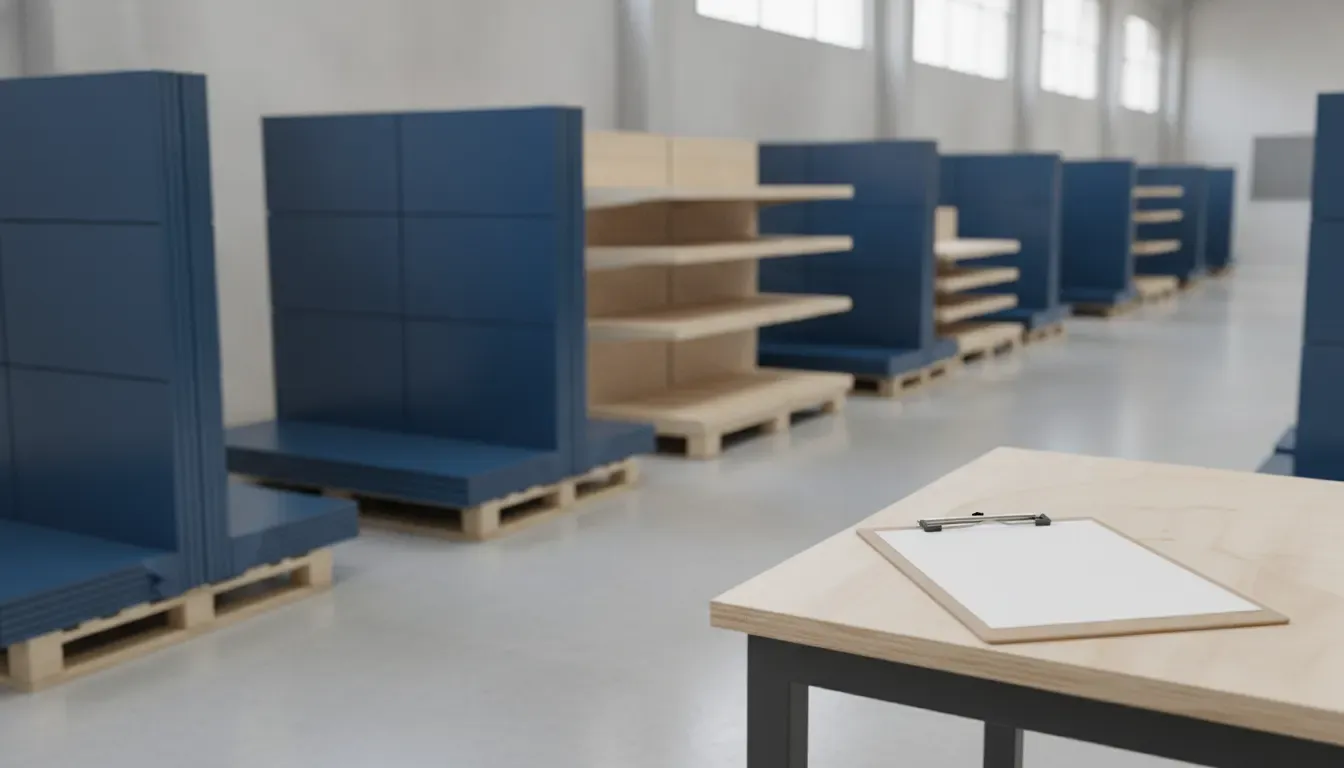
A capital purchase fits when leadership has already approved the spend and the store list is stable. The retailer owns the fixtures after payment. That ownership matters for later moves, refreshes, and spare parts, because the chain is not asking a lessor for permission to relocate a gondola.
Cash usually clusters around production release and delivery. For a chain opening many doors in one season, that cluster can be large. Put the deposit, the balance, freight to each store, and a spare-parts hold on one calendar. If the calendar shows a gap between payment and the first opening, say so before the purchase order goes out.
Capital planning also needs a scope lock. Custom programs at S-CUBE start by defining goals, timelines, and budgets, then move through design and a prototype when the program calls for one. Ask whether a finish change after release is a new cost before you treat it as a free revision. Lock the spec before you lock the funding date.
Phased purchasing splits one program into store groups. Wave one might be a pilot or a region. Later waves repeat the same spec. Cash leaves as each wave is released, which can match a chain that opens stores through the year instead of all at once.
The tradeoff is repeat cost and drift. Each wave can carry its own setup, freight plan, and warehouse slot. If the spec changes between waves, the stores no longer match. Ask the manufacturer whether a price can be held, what minimum run keeps the unit cost steady, and how long a released drawing stays valid.
S-CUBE can scale from a short-run pilot to a rollout across hundreds of locations, and it can hold inventory for an ongoing program. Phasing works best when the drawing, the finish, and the pack-out stay the same from wave to wave. Treat a new finish as a new program, not as a small add-on.
A lease is a contract with a finance company, not a feature of the fixture order. Some retailers ask about leasing so a large program does not land as one capital hit. That can be a fair question. It is not a reason to skip the spec, the freight, or the spare-parts plan.
Before anyone requests a proposal from a lessor, write down what the payment is supposed to cover. Fixtures only? Design and prototypes? Freight and install support? A payment that covers the fixture and nothing else will surprise the team when trucks and warehouse fees arrive on a separate invoice.
Also write the end of the term in plain language. Who owns the fixtures then? Is there a buyout, a return, or an automatic renewal? Can the chain move a fixture to another store, or does that need consent? Those answers change the real cost more than the monthly figure on page one.
S-CUBE will not tell a retailer to lease or to buy. The useful handoff is a clear bill of materials, a store count, and a delivery calendar that finance can share with its own partner.
Payment timing and ownership are different questions. A capital buy spends more cash up front and leaves the fixtures on the retailer's books as assets it controls. A phased buy spreads that spend. A lease may spread cash further, while ownership stays with the lessor until the contract says otherwise. Compare all three on the same store count and the same spec.
Total program cost is wider than the fixture unit price. For a multi-store program, include:
Leave unit-price tables to the custom retail fixture cost guide. Leave year-by-year operating cost to the lifecycle cost guide. This page only asks which of those costs sit inside the funding plan.
Ownership changes what the chain can do next. Owned fixtures can be moved, refinished within the spec, or used as the master for a later wave. Leased fixtures may be restricted. If a five-year remodel plan assumes the chain can relocate fixtures, confirm that the funding path allows it.
A useful brief is short enough for a capital meeting and specific enough that two vendors would price the same thing. Build it in this order. The bold labels are the pieces finance needs before it asks for numbers:
S-CUBE's project path starts with that kind of brief. Teams tell us the schedule, the design needs, and the materials that matter. We then define goals, timelines, and budgets before production. A funding conversation that starts before this brief usually gets redone once the store count or the finish changes.
Hand the same packet to a prospective lessor if leadership wants that comparison. Do not let the lessor define the spec. The fixture partner defines what will be built. Finance defines how it will be paid for.
Tax treatment, depreciation method, and lease accounting sit outside this guide. The IRS explains how a business may recover the cost of property it owns in Publication 946. That includes furniture and equipment expected to last more than one year. Whether a given fixture qualifies is a question for the retailer's own tax adviser. How a lease should be reported is a question for that adviser too. Do not treat a blog post as that advice.
The same limit applies to claims about savings. S-CUBE can value-engineer a design so the program cost comes down. Published project pages describe that work for Books-A-Million, Bon-Ton, and Ollie's Bargain Outlet. Those pages cover design, production, and delivery. They are not a financing rate, and they are not a promise that a lease or a phased buy will cost less than capital.
If leadership wants the business case after the funding path is chosen, use the fixture ROI guide. If the open question is whether a fixture spend might be a business expense, use the store fixture expense overview and then confirm it with a tax professional.
S-CUBE is a fixture partner, not a lender. The company has more than 30 years of expertise in store displays and fixtures for national retailers, regional chains, and multi-location businesses. The work covers design and engineering, domestic and international manufacturing, logistics, warehouse hold, and quality checks. Retail-ready fixtures can ship sooner when a program does not need a fully custom run.
That scope is what procurement can price. Our services page lists the pieces a funding brief should name: design, project management, manufacturing, logistics, inventory, and quality control. A capital plan that ignores warehouse hold will understate a phased rollout. A lease request that ignores freight will understate cash leaving in month one.
For a chain comparing options, the practical next step is a scoped program, not a generic payment example. Share the store count, the fixture families, and the first opening date. S-CUBE can then separate a pilot from a later wave, which is often the cleanest way to see how phasing changes cash without changing the spec.
Scope a multi-store fixture program with S-CUBE
It is the set of ways a retailer can fund a fixture program: a capital purchase, a phased purchase, or a lease arranged with a finance company. The fixture manufacturer builds and delivers the program. The retailer and its finance partner choose how to pay.
S-CUBE designs, builds, and delivers custom and retail-ready fixtures. This article does not describe a loan, a lease, or a payment plan from S-CUBE. A retailer that wants a lease works with its own finance partner, using a scoped bill of materials from the fixture program.
Not by default. A lease can spread cash across a term and may leave ownership with the lessor. A purchase spends more cash up front and leaves the fixtures with the retailer. Compare the full program cost, including freight, storage, spares, and any buyout, before calling one path cheaper.
It fits a pilot, a regional wave, or a chain that opens stores through the year. Cash follows each wave. It works when the spec stays locked. Price-hold terms, minimum runs, and warehouse hold should be in the brief so later waves do not drift.
No. Publication 946 from the IRS describes depreciation for business property the taxpayer owns. Whether your fixtures qualify, and how a lease is reported, depends on your facts. Ask your tax adviser before you rely on any tax treatment.