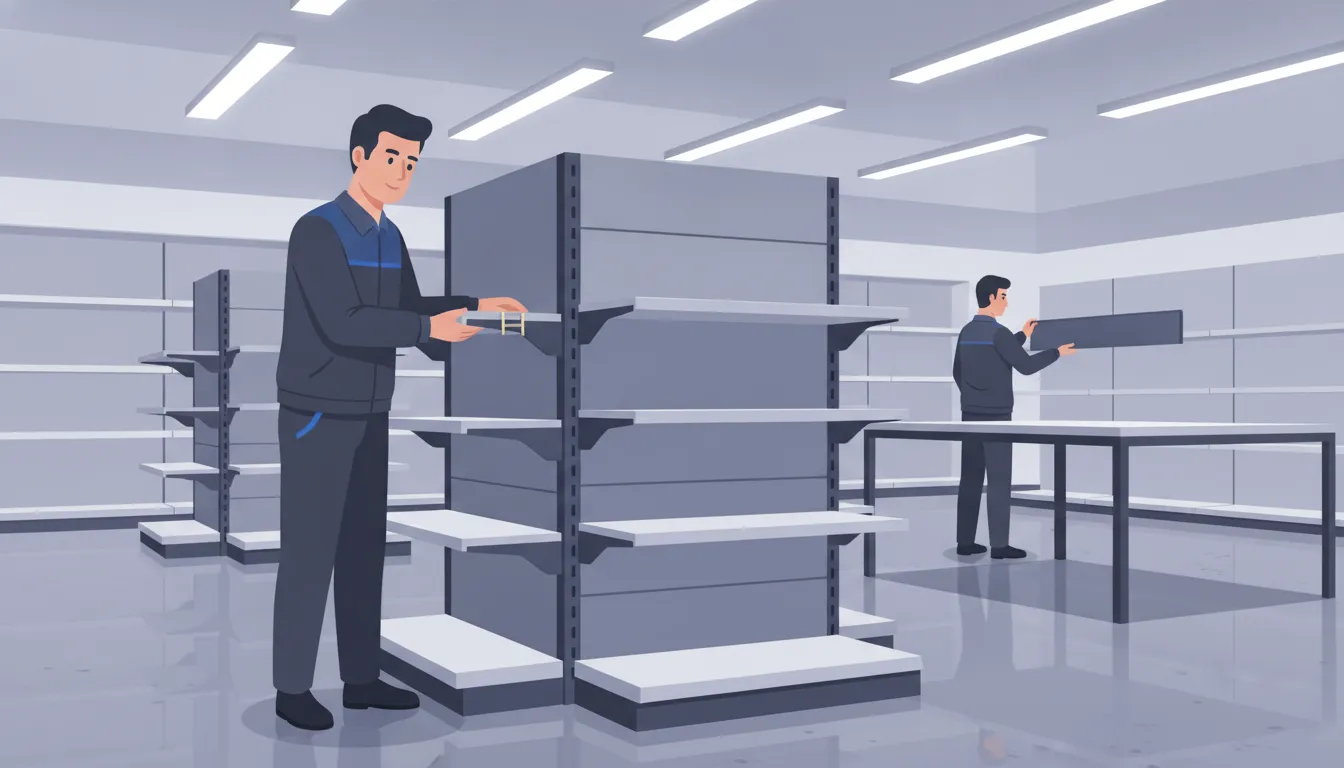


Store fixtures rarely fail all at once. A loose connection, worn hinge, damaged surface, or unstable support can begin as a minor service issue and become a safety concern. A merchandising disruption, or an unplanned replacement across multiple locations. For retail operations teams, the goal is not simply to fix what is broken. It is to protect uptime, preserve brand consistency, and make better lifecycle decisions.
Plan a custom retail fixture repair and replacement program with S-CUBE today
Key takeaway: A structured fixture repair program combines routine inspections, documented field maintenance, compatible spare parts, and clear repair-versus-replace criteria. Repair is usually the stronger option when the cost is well below replacement and the fixture still has substantial useful life. While safety risks, repeated failures, or limited remaining life may justify replacement.
That framework gives regional and enterprise retailers a practical way to control costs without treating every damaged fixture as a capital project. The first step is understanding which conditions make a repair financially and operationally worthwhile, and which signal that a replacement will deliver better long-term value.
The right choice depends on more than the visible damage. Compare the repair estimate with the fixture's replacement value, then assess how much useful service life remains. Guidance on repair-versus-replace decisions supports repair when the cost is significantly lower than replacement and the component still has substantial remaining useful life. Review the lifecycle criteria before approving a capital purchase.
Repair is often practical when the problem is isolated: a loose connection, worn hinge. Damaged panel, or replaceable support can be corrected without disturbing the rest of the unit. A repair can extend the fixture's functional life while preserving the appearance shoppers and store teams already recognize. Research on fixture management specifically identifies repair as a way to extend lifespan and maintain aesthetics, rather than forcing a complete replacement for a limited failure. Read the source research on fixture repair and refurbishment.
| Decision factor | Repair | Replace |
|---|---|---|
| Cost | Usually wins when the repair is substantially below replacement value and does not require repeated service. | May win when repair requires extensive labor, custom reconstruction, or multiple interventions. |
| Downtime | Can limit disruption when a component or panel is repaired in place or swapped quickly. | May require removal, delivery, installation, and merchandising time, especially for a large fixture set. |
| Remaining useful life | Makes sense when the main structure remains sound and the fixture has substantial life left. | Is stronger when fatigue, repeated failures, or obsolete construction leaves little reliable life. |
| Brand consistency | Preserves the established finish, proportions, and customer-facing presentation when repairs match existing materials. | Creates an opportunity to update the design, materials, or merchandising standard across locations. |
| When it wins | Choose repair for localized damage, sound structures, accessible parts, and predictable service costs. | Choose replacement when safety, reliability, availability, or lifecycle economics no longer support repair. |
Downtime should be part of the calculation, not an afterthought. Broken fixtures can reduce store productivity and contribute to lost sales, so the lowest invoice is not always the lowest total cost. A quick repair scheduled outside customer hours may protect revenue while preserving a fixture that still supports the brand experience. Conversely, repeated emergency calls can make replacement more sensible even when the initial repair appears cheaper.
For a multi-location chain, record the decision, repair cost, failure type, and outcome by fixture model. Patterns can reveal when a standard repair is valuable and when a design change is overdue. If you are evaluating a new rollout or a legacy fixture fleet, S-CUBE can help plan custom retail fixtures around serviceability, finish consistency, and long-term operational needs. For the broader view, use this fixture lifecycle management guide to connect repair decisions with replacement planning.
Key takeaway: Repair when the structure is sound, useful life remains, and the work costs materially less than replacement. Replace when safety, repeated failures, downtime, or lifecycle cost outweigh the value of keeping the existing fixture.
A retail fixture repair program gives a multi-location chain a repeatable way to keep displays safe, functional. And consistent from store to store, rather than treating each broken shelf, cabinet, or merchandising unit as an isolated emergency. The program defines who responds, which parts are stocked, how work is scheduled, and how results are reviewed. A dedicated repair team or service contract improves responsiveness by formalizing maintenance procedures, while data-driven maintenance management strengthens alignment across store operations. Federal guidance on facility maintenance supports prioritizing the safety of customers and staff in every repair program.
The right scope depends on store traffic, fixture age, materials, and the consequences of downtime. It should also connect with broader fixture program management, so repair decisions support rollout schedules, visual standards, and procurement planning rather than competing with them.
Repair work should be planned around customer traffic, replenishment windows, visual merchandising changes, and regional installation activity. Scheduling repairs during off-hours can reduce disruption to shoppers and store teams, a practice supported by facilities maintenance guidance. For chains, a centralized ticketing process can group work by region or technician route, making it easier to address several issues during one visit.
Over time, the repair record becomes an operating asset. Consistent documentation shows which fixtures fail repeatedly, which parts deserve deeper stocking, and where a repair program should give way to replacement or redesign. That visibility helps retail leaders protect the customer experience without defaulting to a full fixture replacement every time something wears out.
Key takeaway: An effective fixture repair program combines scheduled inspections, stocked parts, qualified dispatch, photographic records, and quality review. Standard processes help multi-location retailers respond faster while maintaining consistent store standards.
A fixture rarely fails without warning. A loosening bracket, developing crack, worn hinge, or damaged finish can be easy to overlook during a busy store day. Left unresolved, however, a minor defect can affect stability, appearance, merchandise presentation, and shopper safety. A disciplined field maintenance program gives retail teams a practical way to identify these conditions early and route them to the right repair before a component failure forces a full replacement.
Regular inspections are designed to identify structural wear and other issues while a fixture remains functional. Guidance from the Virginia Department of Transportation emphasizes early identification of wear to preserve safety and functionality. In a retail setting, inspections should cover connections, supports, brackets, hinges, fasteners, and visible signs of fatigue or movement. The exact checklist will vary by fixture type, traffic level, and installation environment.
One inspection schedule does not fit every store or fixture. High-traffic displays, frequently adjusted shelving, and fixtures exposed to heat or moisture deserve closer attention. Aging fixtures may also require more frequent inspections because cumulative material fatigue increases the likelihood that a small weakness will progress. The Federal Highway Administration's preservation guidance similarly calls for increased vigilance as infrastructure ages.
Inspection findings should lead to a clear action, not simply a note in a checklist. A technician can tighten or replace hardware, correct alignment, repair a surface, or recommend a more substantial intervention. Photographing the condition before and after the work creates a useful record for quality control and future planning. Retailers can also review recurring findings across locations and determine whether a part, installation method, or fixture design needs improvement.
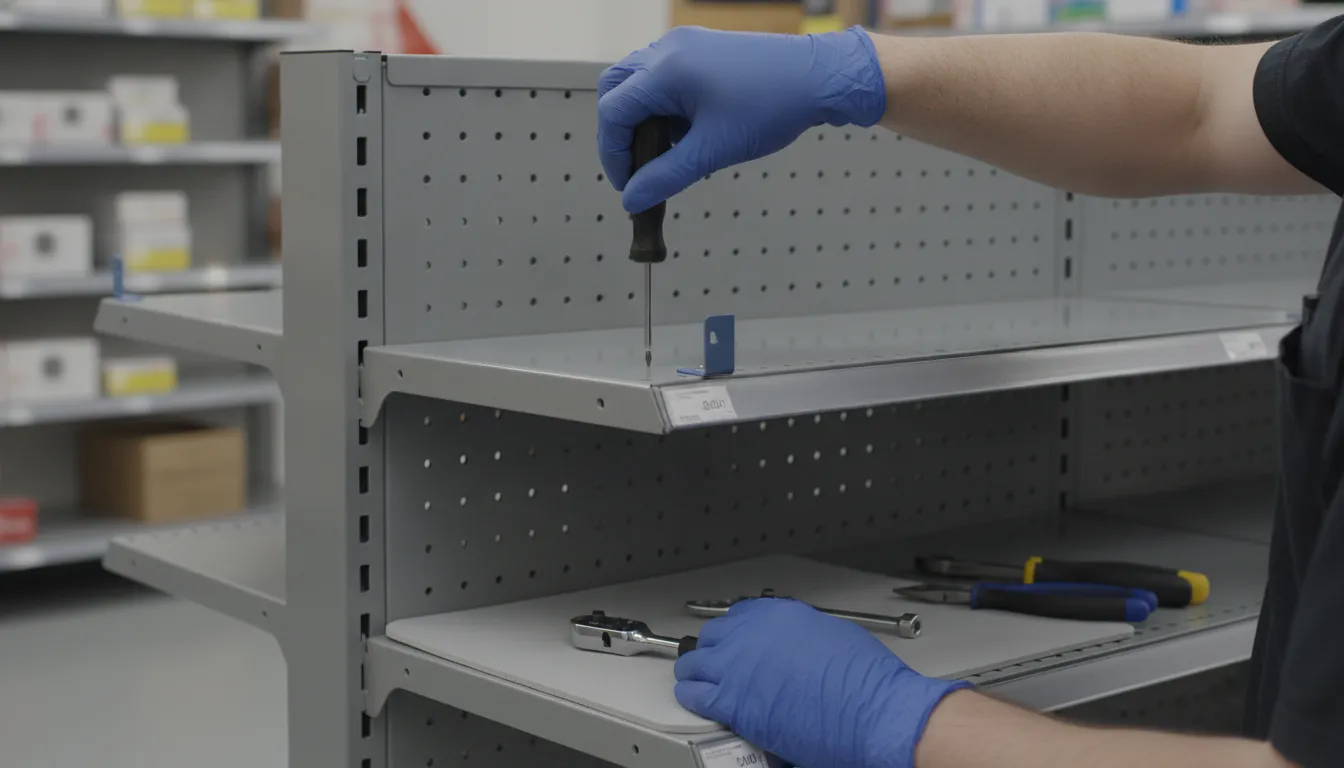
Not every repair belongs in a general store-maintenance queue. Repairs involving load-bearing or structural components should be performed by certified or otherwise qualified technicians who understand the fixture's design and safety requirements. VDOT guidance states that structural repairs require qualified personnel to ensure load-bearing safety. A maintenance plan must also prioritize user safety and accessibility, as emphasized in GAO guidance. If a fixture is unstable, sharp, detached, or unable to support its intended load, isolate it from shoppers and staff until it has been assessed.
For multi-location retailers, a documented field maintenance process connects store teams, qualified technicians, and the fixture supplier. That coordination makes fixture repair more consistent, reduces emergency decisions, and helps preserve the original merchandising standard across the chain.
Key takeaway: Frequent, risk-based inspections catch wear while a targeted fixture repair is still possible. Escalate structural concerns to qualified technicians, document the work, and remove unsafe fixtures from service until repaired.
The price of a broken fixture is rarely limited to the replacement part or technician invoice. In a busy store, a damaged display can restrict access, interrupt merchandising. Create a safety concern, or leave a product area out of service until the repair is complete. That disruption can reduce retail productivity and contribute to lost sales, especially when the issue affects a high-traffic area. A U.S. Government Accountability Office report notes that operational downtime caused by maintenance issues directly affects retail store productivity. Read the GAO maintenance findings.
Preventive maintenance changes the economics. The U.S. Department of Energy states that preventive maintenance is more cost-effective than reactive maintenance because small problems can be identified before they require major repairs. DOE facility maintenance guidance supports a planned approach: inspect, document, repair, and schedule work before a minor defect becomes an operational emergency.
Repair readiness also makes capital planning more accurate. Maintenance cost indices can provide a benchmark for facility operations, giving retail managers a way to compare repair spending over time rather than reacting to isolated invoices. Maintenance cost index research illustrates why consistent cost tracking matters. A repair log can show whether a recurring failure calls for a better part, a revised installation method, or a broader replacement plan.
That is where whole-life-cycle asset management becomes practical. Academic research links whole-life-cycle asset management systems with improved operational efficiency, a useful principle for retailers managing fixtures across many locations. Review the lifecycle asset management research. S-CUBE brings a value-engineering background to these decisions, helping teams weigh repair scope, remaining service life. Visual standards, and rollout requirements instead of treating every failure as a one-off purchase. When a repair program needs a durable, coordinated fixture solution, retailers can explore custom retail fixtures designed around long-term operating value.
Key takeaway: Fixture repair is most cost-effective when it prevents downtime, preserves usable components, and protects consistent store presentation. Track repair costs and recurring failures so maintenance decisions improve the entire fixture lifecycle.
Store fixtures rarely fail without warning. Repeated use, vibration, cleaning, humidity, and high-traffic conditions create recognizable problems that can often be corrected before they disrupt merchandising or shopper safety. A practical fixture repair process identifies the failure, applies a compatible fix, and sets a clear threshold for escalation.
Key takeaway: Most common fixture failures are manageable when inspections identify the cause early and repairs use the correct hardware and materials. Escalate promptly when damage affects structural integrity, safety, persistent moisture, or unavailable replacement parts.
Consistent fixture repair decisions should not depend on which store manager notices a problem first. A chain-wide framework gives every location the same way to weigh cost, remaining service life, safety, downtime, and the availability of replacement parts. It also turns individual repair tickets into operational data that can improve future fixture specifications.
Key takeaway: A reliable repair-vs-replace framework combines documented history, a defined cost threshold, failure-pattern analysis, standardized spares, and a partner capable of supporting legacy fixtures.
Talk to S-CUBE about your custom retail fixtures and repair program today
Choose repair when the repair cost is well below replacement cost, the fixture has meaningful useful life remaining, and the repair can restore safe, reliable operation. Replacement is usually more appropriate when damage is widespread, compatible parts are unavailable, or repeated repairs show that the fixture no longer supports store needs. A documented repair-versus-replace review helps balance cost, downtime, appearance, and lifecycle value. Federal transportation asset guidance uses remaining useful life and repair cost as core decision factors.
Watch for loose connections, unstable supports, sticking or misaligned hinges, cracked components, exposed edges, peeling finishes, and surface damage that is spreading. A fixture that rocks, sags, or no longer carries its intended load should be removed from service until it is assessed. Regular inspections help identify wear before it becomes a larger structural or safety problem, while structural repairs should be handled by qualified technicians. Inspection guidance emphasizes early identification and qualified repair work.
Maintenance extends fixture life by catching loosened hardware, worn hinges, moisture exposure, and finish damage while those issues are still repairable. Teams can tighten connections, replace small parts, protect surfaces, and adjust inspection frequency for older or high-traffic fixtures. Preventive maintenance is generally more cost-effective than waiting for failures that require larger repairs. U.S. Department of Energy maintenance guidance supports addressing small issues before they become major repairs.
A coordinated program gives every location a consistent process for reporting damage, approving work, sourcing parts, scheduling field service, and documenting results. Standardized components can simplify spare-parts inventory, while repair histories reveal recurring failures and help teams plan capital spending. Scheduling work during off-hours can also reduce disruption to shoppers. Before-and-after photos and repair logs create a practical record for comparing locations and improving future fixture designs.
Keeping store fixtures working longer comes down to the right repairs, the right data, and the right partner. S-CUBE has helped multi-location retailers maintain and refresh their store fixtures for 30+ years, combining custom fixture manufacturing with practical lifecycle and repair expertise. Whether you need compatible replacement parts for legacy fixtures or a partner who can build durable. Repairable fixtures for your next rollout, the S-CUBE team can help you protect uptime and brand consistency across every location.
Talk to S-CUBE about your custom retail fixtures and repair program today.