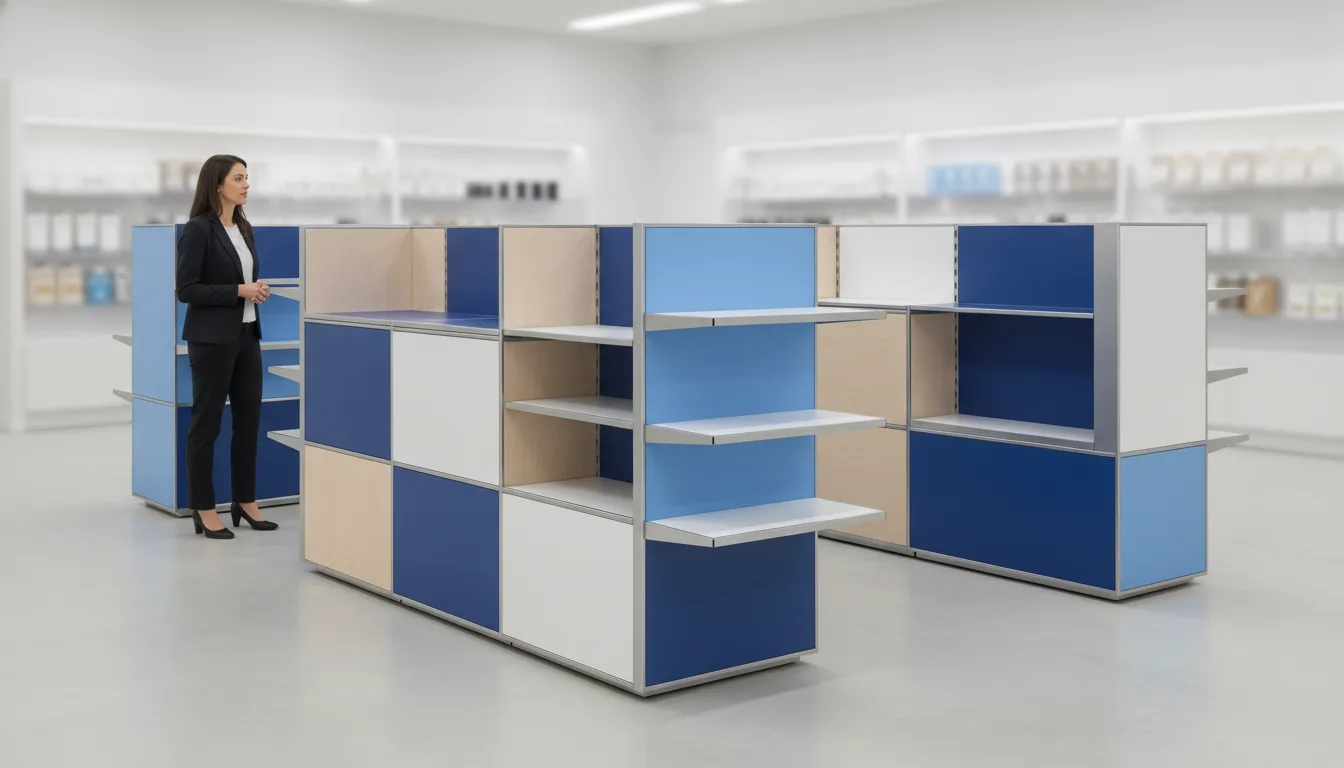


A short retail campaign can create a strong merchandising moment, but only when the display is planned for the way stores actually operate. Seasonal launches, promotions, pop-up activations, and pilot programs each have a defined window, footprint, assortment, and removal plan.
Discuss your temporary retail display program with S-CUBE Fixtures
Temporary retail displays are merchandising systems designed for a limited-duration program rather than a permanent store installation. The right approach accounts for the campaign objective, store count, timing, replenishment, assembly, and whether components will be reused or stored afterward. Retail-ready fixtures can be a practical fit for short-run programs because pre-configured modular systems use semi-customizable parts and accessories to support different configurations.
That distinction matters: temporary does not have to mean disposable, improvised, or visually disconnected from the broader store environment. Start by defining the program boundaries, then match the display format and level of customization to the operational demands of the campaign.
Temporary retail displays are merchandising structures planned for a defined, short-duration program rather than continuous use as a store's permanent fixture package. The program may support a seasonal presentation, a promotional change, or a pilot store. The defining boundary is not that the display is disposable. It is that the display has a planned start, active period, and next step.
That distinction matters when selecting the right solution. Retail-ready fixtures are designed for short-run programs, seasonal displays, and pilot stores. These systems use pre-configured modular displays with semi-customizable parts and accessories, allowing teams to adapt the configuration to the product, footprint, and rollout requirements without treating every project as a custom build. See retail-ready fixture solutions for the available approach.
A temporary program should be managed as a lifecycle, not as a one-time visual installation. Before selecting a format, define the objective, store footprint, rollout count, timing, replenishment needs, assembly method, and what happens after the campaign. Reuse or storage may be part of the plan, especially when a modular system can support another location or program. This is different from a broad pop-up idea list or a permanent-fixture specification.
The display format serves a merchandising role within that boundary. If the project depends on product placement near a buying decision, review what a POP display does. The question is not whether a display looks temporary. It is whether its design, deployment, and end-of-campaign plan match the program's purpose.
Start with the campaign objective, not the display format. A temporary display may draw shoppers toward a product, support a sale, give a slow-moving item more visibility, or introduce a seasonal assortment. Define the intended action first, then select the products, message, and structure that support it. Penn State Extension recommends setting the objective, budget, and central theme as part of display planning. See its guidance on creating effective displays for additional planning context.
Next, match the display to the audience and the store environment. Identify who should notice the campaign, what they need to understand quickly, and where they naturally move through the space. Traffic flow can reveal focal areas, but the most visible location is not always the best one if it interrupts circulation or competes with another department. A compact unit may suit a high-traffic aisle, while a broader presentation may need a defined zone near the relevant category.
Set the footprint and duration before finalizing the design. A short promotional run, a seasonal changeover, and a multi-location activation may require different levels of durability, assembly, replenishment access, and end-of-campaign storage. Retail-ready fixture solutions can provide a practical starting point for short-run programs, while custom work may better support a specific brand or product presentation.
Finally, align the visual theme and rollout timing with the campaign calendar. Account for holidays and faith-based events when selecting themes, and allow time for approvals, production, shipping, setup, and removal. For broader seasonal retail display planning, map each location's delivery and changeover requirements before the campaign begins.
The right temporary retail displays depend on what the program must accomplish, where customers will encounter it, and what should happen when the campaign ends. A compact point-of-purchase unit may suit a focused promotion, while a modular system may be more useful when the assortment or store count varies. Review point-of-purchase fixture formats when the display sits close to a buying decision, and compare cardboard retail display options as one possible material direction rather than an automatic solution.
| Format | Best fit | Planning questions | Lifecycle consideration |
|---|---|---|---|
| POP display | Promotions or featured products near a purchase path | What product, message, and placement need emphasis? | Can components be removed, refreshed, or redeployed? |
| Shelving, gondola, or display case | Programs requiring organized product presentation | How will assortment, access, and replenishment work? | Can the unit support a later campaign or another location? |
| Retail-ready modular system | Seasonal programs, pilots, and changing store requirements | Which semi-customizable parts and accessories are needed? | Plan for configuration changes, storage, and reuse. |
| Custom mixed-media fixture | Programs requiring a specific brand or product environment | Which material and construction approach suits the setting? | Assess whether the program merits continued use beyond the campaign. |
S-CUBE describes retail-ready fixtures as pre-configured modular display systems with semi-customizable parts and accessories. That approach can accommodate different short-run program configurations without treating every campaign as a one-off build. For a more tailored result, custom programs may combine wood, metal, acrylic, glass, wire, plastic, or mixed media to suit the brand, products, and retail environment. The material decision should follow the program's handling, presentation, and reuse requirements, not a presumed price or performance claim.
The right choice depends less on the label and more on the program's lifecycle. A seasonal promotion, pilot store, or limited-duration assortment may benefit from a temporary system that can be moved, reconfigured, or stored after the campaign. A permanent fixture is usually the better fit when the merchandising need will remain part of the store environment and must support a consistent customer experience over time.
When the program needs a branded solution that must fit a specific store environment, review custom retail fixtures alongside modular alternatives. The best decision balances campaign duration with the cost of change, operational effort, and future use rather than treating temporary as automatically disposable or permanent as automatically superior.
A short-run program needs an operating plan, not just a display concept. Coordinate specifications, approvals, delivery, store setup, product replenishment, and field feedback before units move into the network. This creates a clearer handoff between the brand team, stores, and production partners.
Plan the final day of a temporary display before the first unit ships. A clear closeout process protects the investment, captures useful evidence, and makes the next rollout easier to repeat.
Photograph each display in context, including its placement, product presentation, and condition at the end of the campaign. Record product sales during the run alongside location, assortment, and timing notes. The goal is not just a set of attractive images. It is a practical record of what supported the campaign and what created friction. Penn State Extension recommends photographing displays and tracking sales, because documentation helps retailers repeat effective presentations and avoid mistakes in future programs: display planning guidance.
Before the campaign ends, decide which locations will reuse the display, which components need configuration changes, and what should move into controlled storage. Label parts by display, store group, or product line. Keep assembly instructions, hardware notes, approved graphics, and packing requirements with the units. That record reduces guesswork when a similar promotion returns or a pilot expands to more stores.
For short-run programs, retail-ready fixture solutions can provide a practical starting point when a modular format fits the product and footprint. Review the available retail-ready fixture solutions alongside your reuse and storage plan, then confirm what needs to change for the next deployment.
Evaluate the program as an operating test, not just a sales event. A practical review should show what happened in the store, how consistently the display was maintained, and what the next rollout should change.
Keep the final record with the display specifications and removal notes. That documentation can support repeating a strong execution, correcting weak points, and deciding whether retail-ready fixture solutions fit the next temporary program.
Talk with S-CUBE Fixtures about your temporary retail display requirements
A temporary retail floor display is a freestanding merchandising unit placed on the sales floor for a defined promotion, product launch, seasonal program, or pilot. It gives selected products a dedicated presentation without committing that footprint to a permanent fixture. The design should account for product access, replenishment, and program length.
They help retail teams test a merchandising idea, spotlight a product group, support a seasonal campaign, or create a focal point. A temporary unit also makes it easier to adjust assortment or placement when a campaign changes. Planning the objective, footprint, assembly, and storage keeps the display practical.
Temporary displays are designed around a defined campaign period, changing assortment, or pilot rollout. Permanent fixtures are intended to remain in the store for long-term merchandising. The decision depends on expected use, reuse plans, customization, rollout scale, and the required investment in materials and installation.
Yes. A custom corrugated display can be planned around the product assortment, package dimensions, floor footprint, access requirements, and brand graphics. Share the SKU count, objective, location details, and rollout needs early so the display can be evaluated for fit, consistency, assembly, and replenishment.
A clear discussion about campaign timing, display formats, rollout needs, and reuse can help your team align the fixture approach with the program ahead. Contact us to discuss your temporary retail display requirements with S-CUBE Fixtures and determine the next practical step for your locations. Discuss your custom retail fixture program.
Subscribe for expert insights on fixture design, materials, and modern retail environments.