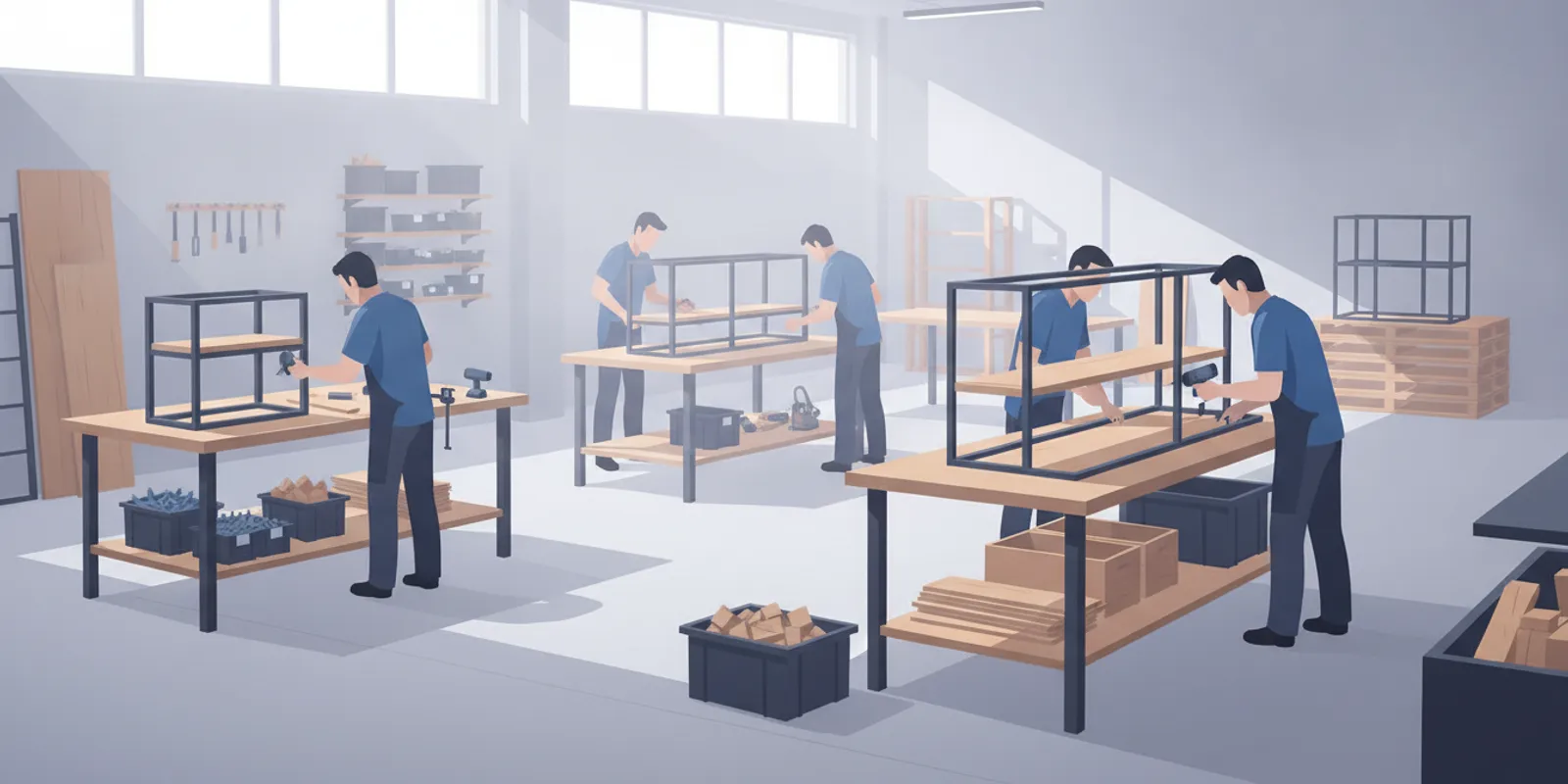


Custom fixture manufacturing succeeds when the brief is ready for production, not just attractive on a screen. For retailers, that means resolving dimensions, materials, finishes, hardware, packaging, and store requirements before the first production run. Small gaps in a specification can become large delays when a fixture must be repeated across many stores. This guide explains each stage and shows how buyers can reduce avoidable waiting through better specifications and approvals.
Explore custom retail fixture solutions
A custom fixture moves through a connected set of decisions and production stages. Most programs include a defined brief, design and engineering, material selection, sample or prototype approval, fabrication, finishing, inspection, packing, and delivery coordination. The exact order varies, but decisions made early affect every step after them.
For a multi-location program, making the fixture is only part of the work. The design must be repeatable, protected in transit, practical to handle at a store, and consistent across a rollout. Treat the specification and approval process as production inputs, not paperwork to complete after design. Retailers planning a new program can review custom retail fixture solutions while assembling their requirements.
The brief gives the manufacturing team a clear definition of what to make and where it will be used. Cover the fixture's purpose, merchandise, store environment, installation context, rollout quantity, and schedule constraints. Include reference photographs or drawings when available, but identify which details are firm requirements and which are only inspiration.
Useful information includes overall dimensions, shelf or display arrangement, replenishment access, product visibility, brand colors, finish expectations, and store-specific restrictions. If a fixture connects to an existing wall, counter, or system, provide measurements and interface details. A photograph rarely conveys scale or hidden clearances on its own. If a custom solution is being considered, the custom fixture program page is a relevant starting point for describing the intended scope.
These inputs help the team make a realistic design and production plan. They also reduce late revisions caused by requirements that were known internally but never made it into the brief. If information is not ready, list it as an open item with an owner and due date instead of letting it disappear between teams. For a retailer working through scope, a custom retail fixture discussion can help align the program with its requirements.
Material choice influences construction methods, finish options, weight, durability expectations, sourcing, and repeatability. Retail fixtures may use wood, metal, acrylic, glass, or combinations of materials. The best option depends on the fixture's function and the project's requirements, not on a universal ranking.
| Material family | Potential fit | Questions to resolve early |
|---|---|---|
| Wood and wood-based materials | Branded surfaces, cabinetry, and display components | Which surface finish, color, grain, and edge details define an acceptable match? |
| Metal | Frames, brackets, shelving, and repeatable components | Are shape, bends, joining details, and finish fixed in the approved drawing? |
| Acrylic | Clear or colored product presentation and display details | How will visibility, edges, attachment, and transit protection be reviewed? |
| Glass | Display surfaces or enclosed showcases where specified | What dimensions, support, handling, and packaging requirements apply? |
| Mixed materials | Programs combining structure, branded surfaces, and product presentation | How do the components join, and which reference controls appearance? |
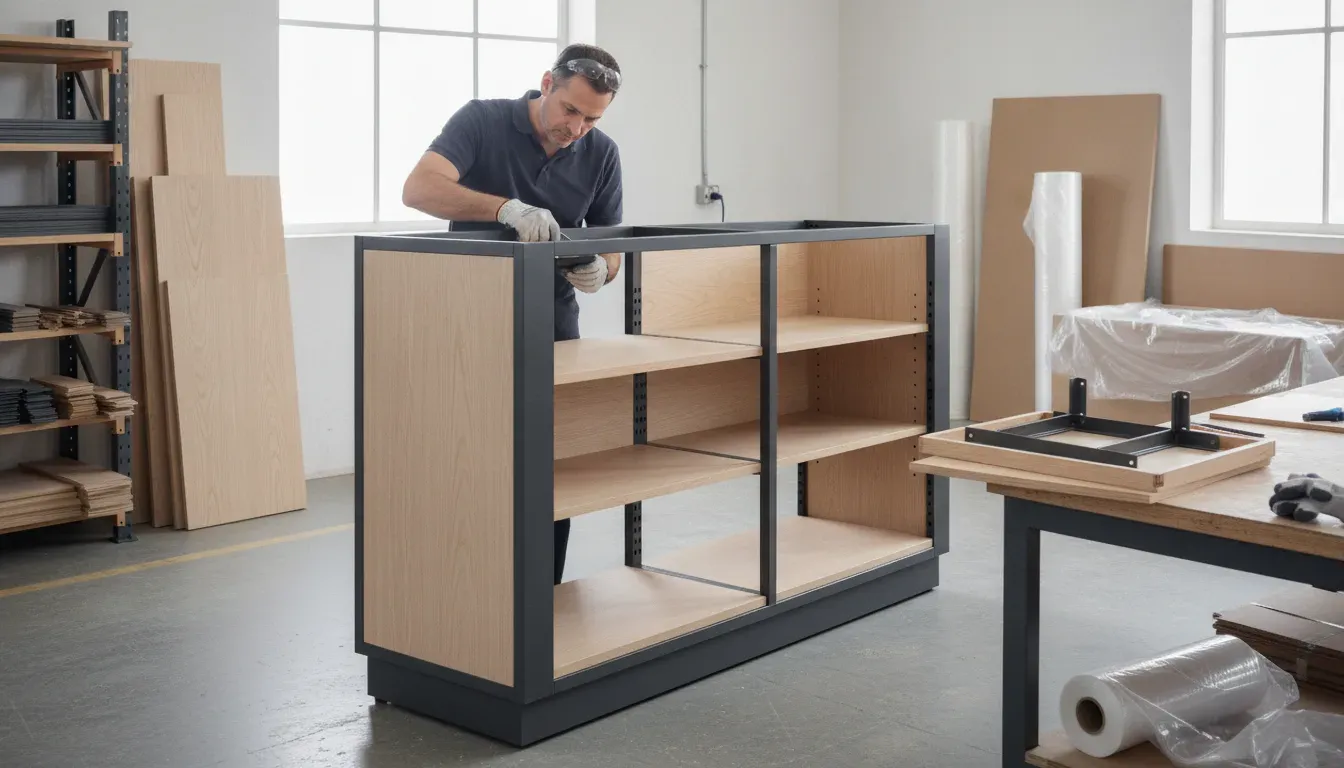
Ask the manufacturing partner to explain trade-offs against the brief. A substitute may preserve appearance while changing the production method, or change the look enough to require brand approval. Record approved alternatives and limits in the specification. Descriptions such as "standard finish" or "close match" leave room for different interpretations when color or sheen matters.
If standard or modular products may suit part of a program, compare them with custom elements rather than treating the entire project as all-custom. A retailer might use a custom branded focal display with repeatable shelving elsewhere. The parent-company catalog includes store fixture collections and retail shelving options that may help frame standard components to evaluate. Confirm fit against project requirements.
Design, engineering, and prototyping services translate the selected concept into buildable information. Drawings should settle dimensions, component relationships, attachment points, hardware, finish callouts, and details that affect assembly or packing. Review a drawing as a production document, not only as a visual presentation.
Approval delays often start when feedback is fragmented. One reviewer approves the appearance, then another raises a store-operations concern. Several departments may send conflicting markups. Prevent this by establishing a review owner, collecting comments from the full team, and returning one consolidated response by an agreed date.
Before sign-off, check that dimensions and orientation are clear; materials, colors, textures, and finish samples use agreed references; hardware and assembly expectations are shown; packaging assumptions are understood; and every open item has an owner and resolution date.
If a prototype, finish sample, or first article is needed, define what it must prove. A visual sample may confirm color and appearance but not validate every assembly or packing detail. A full prototype can reveal fit or handling issues, but it takes time to create, ship, review, and revise. Set the approval scope and decision deadline before the sample is made.
Fabrication turns the approved specification into fixture parts. Depending on design and material, production may involve cutting, forming, machining, joining, or assembly. The plan should reflect the approved design and required quantities. A revision after fabrication starts can require affected parts to be reviewed or remade, so document changes and their schedule implications.
A clear custom fixture production scope helps both parties understand which drawings, materials, and quantities are approved for release. Avoid informal changes spread across separate emails or conversations. If a dimension, finish, or component changes, ask the project lead to document the revision and confirm its effect on approvals, schedule, and work already completed. Keep the current approved drawing easy to identify. Multiple files labeled "final" create version risk.
For rollouts, ask how production batches and store configurations will be distinguished. If a program includes many SKUs or location-specific variations, a clear item list and controlled revision history help prevent the wrong version from being made or packed. S-CUBE's domestic and international manufacturing capabilities can help buyers compare production routes against schedule and volume needs. Agree what counts as a release-ready specification before a manufacturing slot is scheduled.
Finishing brings the fixture to its specified appearance. The approved sample, color reference, and specification should guide this stage. Terms such as "matte," "black," or "wood tone" can mean different things to different reviewers. Where appearance matters, use a sample or precise reference and explain what reviewers should compare.
Inspection should follow project-defined acceptance criteria. Agree what will be checked, when checks occur, and how exceptions will be handled. Criteria may address dimensions, finish appearance, component fit, assembly, or other requirements in the approved documents. Avoid adding acceptance rules after production without discussing schedule and cost implications.
Workplace handling and fabrication require attention to safe practices. For general workplace safety information, consult the U.S. Occupational Safety and Health Administration at OSHA.gov. Project-specific production controls should be agreed with the manufacturing partner; a general resource is not a site-specific safety review.
When an inspection finds an issue, capture the affected component or quantity, the requirement it does not meet, and the decision needed. S-CUBE's complete quality control process provides a relevant reference for defining inspection points and documentation. A photo and reference to the drawing can clarify the question. Then agree whether to repair, replace, accept with a documented deviation, or pause shipment until the issue is resolved.
Packaging is a production decision, not an afterthought. Fixture shape, materials, fragility, assembly state, and route to the store affect protection and labeling. Confirm whether fixtures ship assembled or as components, what surface protection is needed, and whether instructions or hardware must accompany each unit.
For multi-store programs, align labels with the rollout plan. Store numbers, fixture identifiers, quantities, and delivery sequence should be legible to receiving teams and consistent with the packing list. S-CUBE's logistics, transportation, and distribution services can support the handoff from finished fixtures to store delivery. If several cartons go to each store, agree how they will be grouped and how missing or damaged items will be reported. Consider the receiving location's capacity and delivery window before finalizing the shipment plan.
Retailers comparing display types can review examples such as point-of-purchase displays and portable retail displays. These catalog examples do not replace specifying the custom fixture's exact dimensions, components, and packaging needs.
Lead time covers the path from a production-ready brief through delivery, not just time spent fabricating parts. Ask for milestones and dependencies rather than relying on a single finish date. A useful schedule distinguishes work the manufacturer controls from decisions and information the buyer must provide.
Use a milestone table to identify who owns the next decision:
| Milestone | Buyer action | Avoidable delay |
|---|---|---|
| Brief and kickoff | Provide requirements, quantities, references, and store context | Key dimensions surface after design starts |
| Drawing and finish approval | Consolidate review and return a clear decision on time | Conflicting comments or late stakeholder review |
| Sample review | Set approval criteria and reviewer availability in advance | New criteria appear after the sample arrives |
| Production release | Confirm current revision, quantities, and open-item status | Work starts from an outdated drawing |
| Pack and ship | Confirm labels, destinations, receiving windows, and grouping | Late address, labeling, or access details |
Ask which milestones are sequential and which can overlap. Some preparation may proceed while a detail is unresolved, but that should be a deliberate decision. Starting dependent work on an assumption can cause rework if the assumption proves wrong.
A practical delay-prevention plan makes decisions visible and timely. Work backward from the required in-store date, then confirm review, production, packing, and delivery milestones with the manufacturing partner. Build in the approval time the program actually needs.
If a program includes standard components as well as custom work, identify each clearly in the fixture list. A metal gondola shelving category can provide a product reference, but dimensions and compatibility still need confirmation against the store plan. Clear scope boundaries show what is custom engineered, what is selected from existing options, and what remains to be approved.
Discuss a custom retail fixture program
There is no single timeline for every program. Lead time depends on specification readiness, design and sample approvals, materials and production planning, quantity, inspection, packaging, and delivery. Ask for a milestone schedule based on the approved scope and decision dates.
Share the fixture's purpose, merchandising needs, dimensions or site constraints, references, preferred materials and finish, rollout quantity, store variations, and required delivery timing. Separate firm requirements from preferences and identify who approves each decision.
No. Whether a prototype or sample is useful depends on the design, finish requirements, risk, and approval needs. Agree what a sample must demonstrate. A finish sample and a full functional prototype answer different questions.
Yes, when selected standard or modular components meet the design and operational requirements. Define which items are custom, identify the standard components, and verify fit, finish, quantity, and delivery needs before production release.
Complete the brief, consolidate approvals, maintain one current specification, and document post-approval changes. Confirm delivery and packaging details early. These actions cannot remove every variable, but they reduce delays caused by missing or conflicting information.
Custom fixture manufacturing is easier to manage when each stage has a clear input, owner, and approval decision. Define the store need first, choose materials against actual requirements, review production drawings carefully, and coordinate inspection and packing before shipments begin. A well-controlled brief and timely approvals give the manufacturing team a stronger foundation for consistent fixtures and a more dependable rollout.