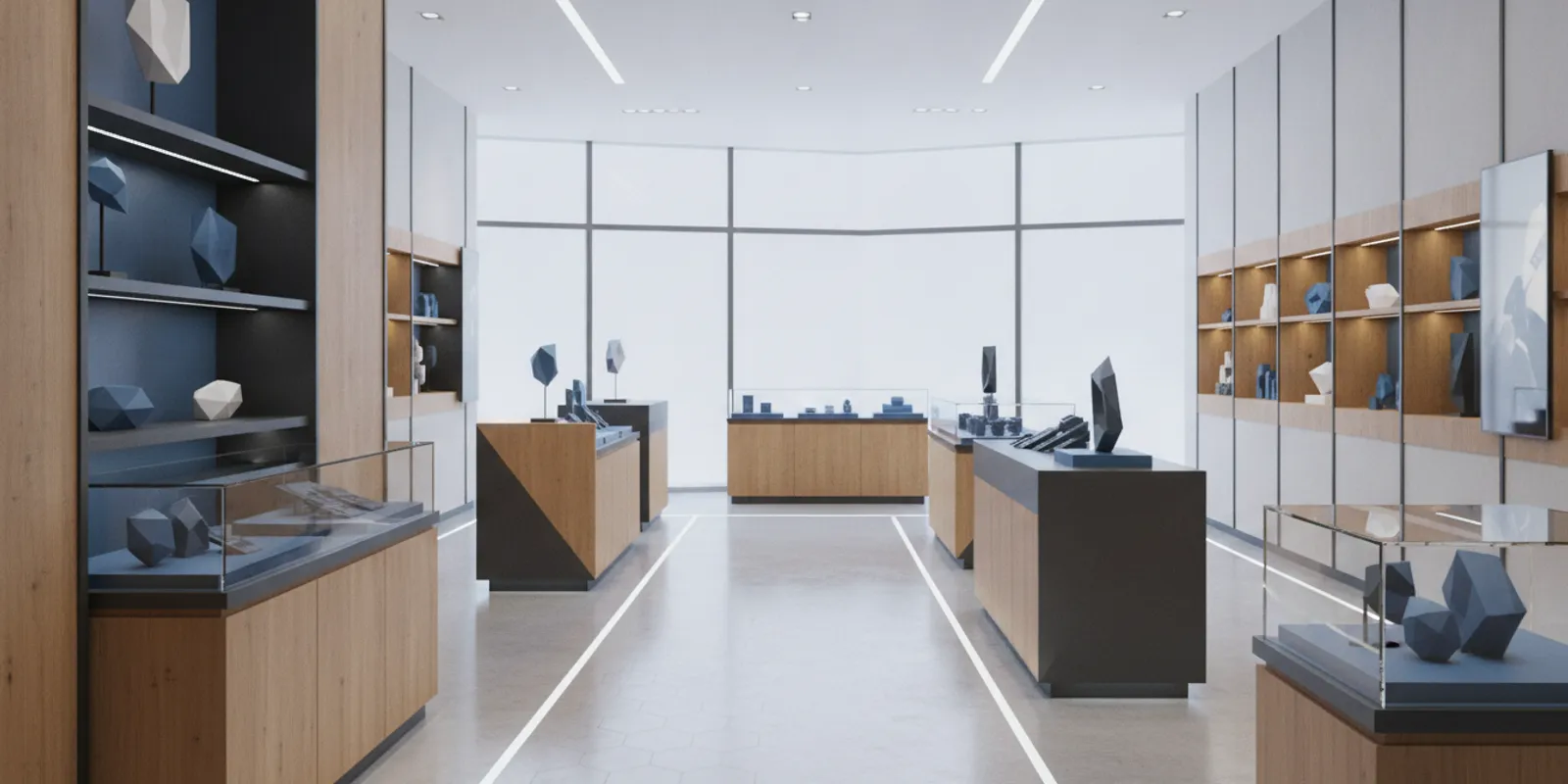


Flagship retail store fixtures are the custom counters, displays, shelving, and other built elements that help a leading store location express a brand while presenting products and supporting everyday work. A flagship has a special role: it may introduce a concept, showcase a broader assortment, or make a brand experience tangible. Its fixtures need to do more than look distinctive. They should work for customers and employees, withstand routine use, and be considered for the realities of a larger store program.
Tell us about your project to get started
Quick answer: Start with the job the flagship must do, then translate the brand idea into fixture functions, materials, and details. Check customer and employee flow, review a working prototype for form, fit, and function, and plan which components can be repeated or adapted elsewhere. A flagship can be highly distinctive without making every fixture a one-off.
The term “flagship” describes a store’s role, not a particular fixture style. One retailer may use its leading location to tell a fuller brand story. Another may use it to present a deep assortment or demonstrate how several product categories work together. The fixture plan should follow that purpose rather than defaulting to a dramatic focal point.
That distinction matters because fixtures sit at the intersection of brand expression and operations. A feature wall can establish a visual signature, while the shelves and displays around it need to make products understandable and accessible. A cash-wrap counter can support a branded finish and also serve daily transactions. An apparel rack or point-of-purchase display can carry a campaign, but still needs a practical relationship to replenishment and the surrounding floor.
For a multi-location retailer, the flagship may also inform future stores. It can help teams explore a look, test custom details, and establish a set of fixture choices to consider elsewhere. It does not automatically prove that every element should be copied unchanged. Store footprints, merchandise plans, and local operating needs can differ. The useful outcome is a clear design direction and a deliberate decision about what to repeat, modify, or reserve for the flagship.
Begin by separating the visible idea from the practical job. Write down what customers should notice, what products the fixture must present, and what employees need to do around it. This makes the design conversation more concrete than choosing finishes or shapes in isolation.
These are design prompts, not substitutes for site-specific review. The available information does not establish a universal clearance, service-access, or circulation formula. Retailers should review the actual floor plan and operating requirements with the relevant internal teams before design approval.
A disciplined brief helps resolve trade-offs early. If a sculptural counter is central to the concept, the team can also clarify the transaction tasks it must support. If a display uses glass or integrated lighting, define the intended product presentation and how the unit will be handled and maintained. S-CUBE’s custom fixtures can combine materials such as wood, metal, acrylic, glass, wire, and plastic, with finish recommendations and options for integrated lighting or security features. The suitable combination depends on the project brief and design review.
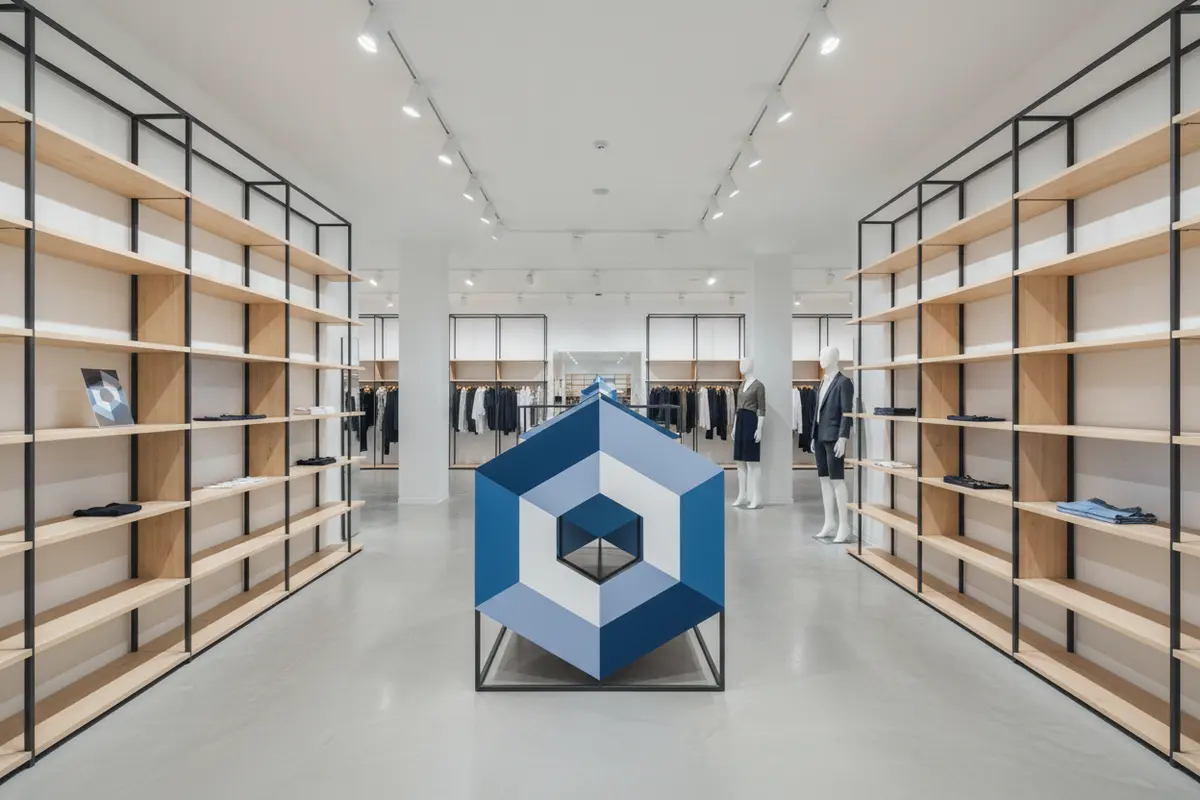
A flagship usually contains more than one fixture type. Consistency comes from making the pieces feel related while allowing each one to serve its own role. Use a fixture schedule or zone plan to connect the visual direction to a product and operational purpose.
| Fixture option | Useful role in a flagship | Questions to resolve in the brief |
|---|---|---|
| Perimeter wall system and shelving | Organize product presentation along a store boundary and support a consistent visual framework. | What assortment, shelf arrangement, finishes, and sign locations must the system accommodate? |
| Custom gondola | Present merchandise in a central zone, with possible pegboard, slatwall, or wire-grid back configurations. | Which products and accessories belong on each side, and how should the unit relate to nearby pathways? |
| Apparel rack | Support hanging presentation and reinforce the design language through form and finish. | What garment mix, capacity, placement, and replenishment approach should the team review? |
| Point-of-purchase display | Give a featured item, campaign, or complementary product a focused presentation. | Where will it sit, what product does it hold, and how will it fit with adjacent fixtures? |
| Custom cash-wrap counter | Bring brand alignment to a functional service and transaction point. | Which work tasks, storage needs, equipment, and customer-facing details must be considered? |
This comparison is a starting point, not a specification. Dimensions, load requirements, equipment, and site conditions must come from the project team. Avoid selecting a fixture solely because it looks striking in a rendering. Confirm how it serves its zone and whether its materials and construction align with the intended use.
Consider a hypothetical flagship with a feature display, perimeter shelving, and a custom cash wrap. The feature may carry a distinctive finish; the wall system may repeat a related color or material; the counter can echo selected details without copying the feature’s entire form. That creates a family resemblance while preserving the different job of each unit. The example is illustrative, not a documented S-CUBE customer project.
Materials influence the character of a fixture, but the choice should also match its function and intended environment. Wood, metal, acrylic, glass, wire, plastic, and mixed-medium combinations are among the options available for custom fixtures. Instead of asking which material is best in general, connect each choice to what the fixture must do and how the brand wants it to feel.
Integrated lighting or security features may be options for custom displays. Define the need in the brief and review how the feature affects the design, product presentation, and service requirements. Do not assume that a visual rendering alone verifies a finished fixture’s performance; that is one reason to evaluate a functional prototype.
A prototype gives the team a chance to examine more than appearance. S-CUBE’s process can include 3D renderings and functional prototypes, with form, fit, and function evaluation and refinement based on feedback. The specific prototype scope should be agreed for the project.
Before review, invite the right participants: brand or visual merchandising leads, store operations, facilities or installation contacts, and other owners of equipment or product requirements. Prepare the actual merchandise or representative items when appropriate, plus the drawings and criteria used to evaluate the fixture. During the review, record observations and assign decisions instead of relying on informal impressions.
A prototype review is most useful when it has a defined decision at the end. For example: approve the design as shown, approve it with listed changes, or hold approval pending named checks. That discipline helps reduce ambiguity as the program moves from concept toward production. For an overview of related capabilities, see S-CUBE’s design, engineering, and prototyping information.
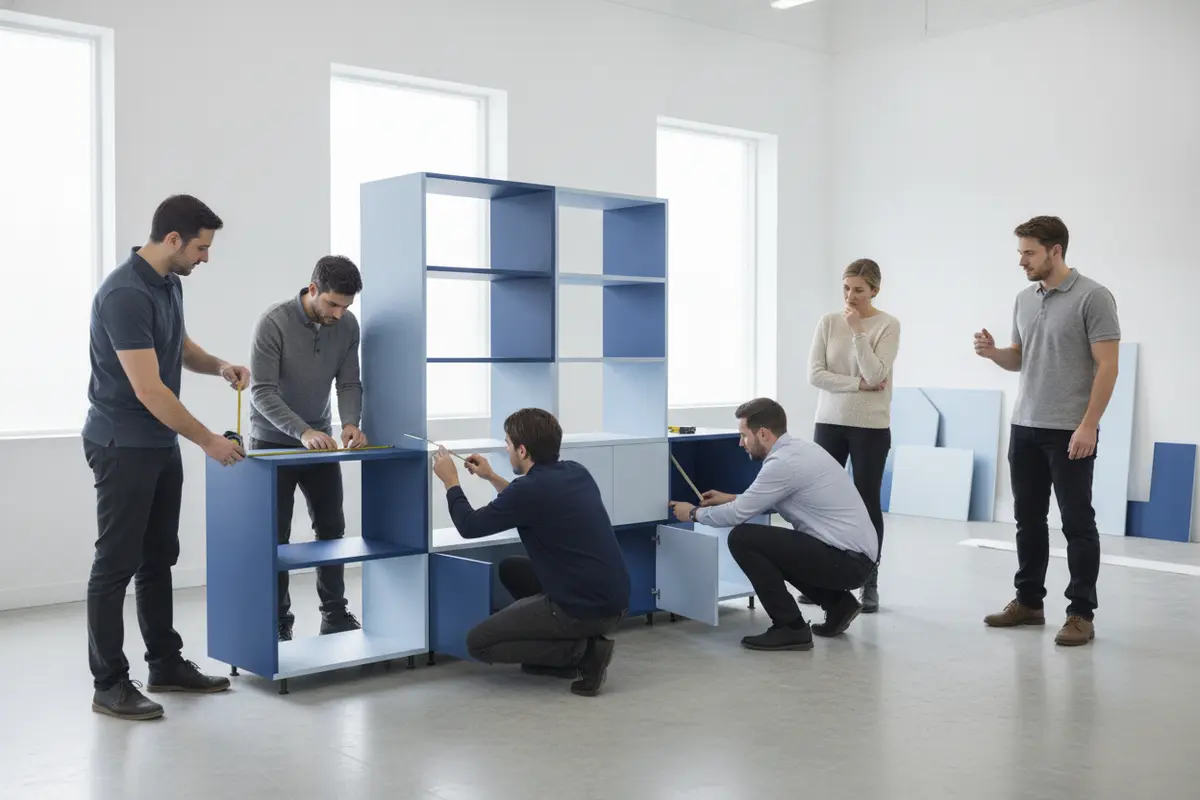
Do not frame rollout planning as an all-or-nothing choice between exact duplication and a completely new design. Identify the parts of the flagship concept that should remain consistent, then distinguish them from elements that need adjustment for other locations.
A practical review can sort elements into three groups:
This sorting exercise gives design, merchandising, and rollout teams a shared reference. It also surfaces questions before a broader program is committed: Which designs have been reviewed? What specifications are stable? What decisions remain location-specific? A program manager can coordinate milestones, design changes, and communication across the lifecycle. S-CUBE describes its project-management approach as including a dedicated US-based project manager and milestone tracking; learn more about project management and customer service.
For a program that moves beyond the flagship, production and delivery planning belong in the conversation early. S-CUBE’s capabilities include manufacturing, quality checks, logistics, warehousing, and coordination for multi-location rollouts. Quality checks can include factory-level inspection, assembly verification, and pre-shipment inspection. The project team should confirm which checks, specifications, and shipping arrangements apply to its own scope. Custom fixture lead time is listed as 6–10 weeks from design approval, with expedited options available; confirm current timing against the actual project plan.
A focused brief makes it easier to align the creative idea with the work required to deliver it. Gather the following before requesting a project discussion:
Custom project pricing is based on scope, so a complete brief helps make the conversation specific. If the team is still shaping the concept, explain what is decided and what remains open. S-CUBE’s services overview describes its design-to-delivery capabilities for custom fixture programs.
Discuss your custom fixture project with S-CUBE
No. A flagship can combine signature elements with fixture types that are practical to adapt for other stores. Decide which details express the concept and which need to serve repeatable merchandising or operating tasks.
Review the intended appearance, fit against the approved design information, and function for the tasks identified in the brief. Record feedback, required changes, owners, and the approval decision so the production baseline is clear.
It can inform a broader program, but the team should not assume that every unit transfers unchanged. Sort the concept into core, adaptable, and flagship-only elements, then review location requirements and confirm specifications for the rollout.
S-CUBE lists a 6–10 week custom fixture lead time from design approval, with expedited options available. Timing for a particular program should be confirmed based on scope, approvals, and its project plan.
Discuss your custom fixture project with S-CUBE
A flagship should make the brand tangible and make the work of running the store easier to plan. Connect the design ambition to clear fixture functions, review critical decisions with a prototype, and define what should carry forward before the wider rollout begins.
For broader retail-sector context and current industry resources, retailers can consult the National Retail Federation.