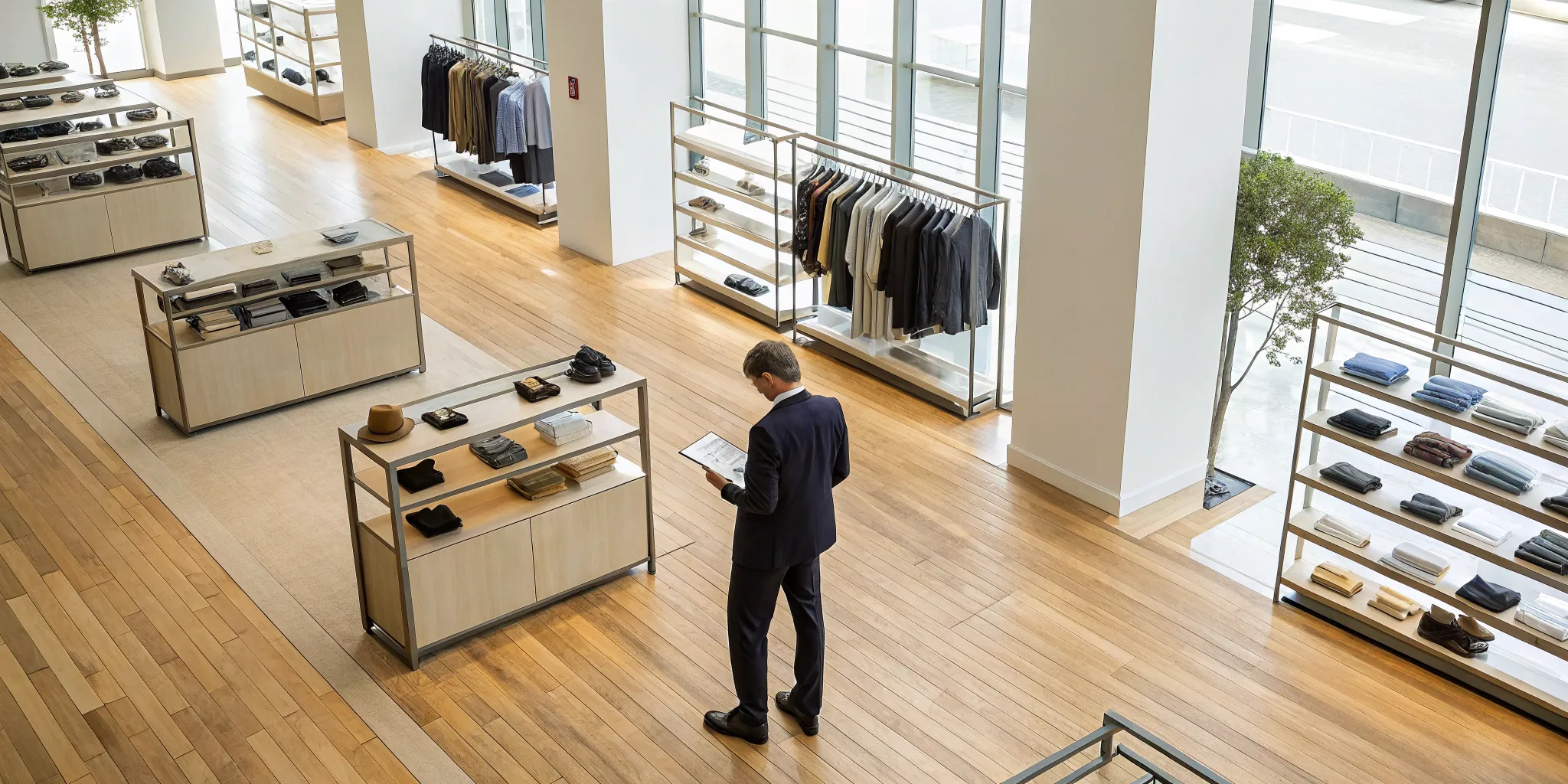


Every square foot of your retail space is valuable real estate. Is yours delivering a return on investment? Underutilized corners, confusing traffic patterns, and poor product placement can quietly drain your profitability. A thoughtful approach to store planning transforms your physical footprint from a simple cost center into a powerful, revenue-generating asset. It’s about making strategic decisions that influence customer behavior, improve operational efficiency, and directly impact your bottom line. This guide will walk you through the essential strategies for designing a store that maximizes sales, from optimizing your layout and traffic flow to selecting custom fixtures that make your merchandise impossible to ignore.
Think of store planning as the architectural blueprint for your retail space. It’s the strategic process of designing and organizing every square foot of your store to guide your customers, highlight your products, and create a memorable shopping experience. A great store plan doesn't just happen by chance; it’s a deliberate effort to blend aesthetics with functionality, ensuring that the environment not only looks good but also performs well. When done right, store planning influences customer behavior, improves sales, and builds lasting brand loyalty. It’s the foundation upon which a successful, scalable retail operation is built.
At its core, store planning is the thoughtful process of designing a physical retail space to meet specific business goals. This involves several key steps: defining what you want to achieve, analyzing your floor plan, mapping the ideal customer journey, and choosing a layout that makes sense for your products. It also includes selecting the right custom fixtures and signage to create a cohesive and efficient shopping environment. This isn't just about arranging shelves; it's about creating a system where every element has a purpose, working together to support your brand and drive revenue.
A well-executed store plan directly shapes the customer experience and how people act in your space. The right layout can make shoppers want to stay longer, discover new items, and return in the future. For example, the path you create guides them through different departments, exposing them to more merchandise and increasing the chances of an impulse buy. By understanding how customers move and what they respond to, you can design a space that feels natural and engaging. This thoughtful approach is what turns a simple shopping trip into a positive experience, ultimately leading to higher sales and a stronger connection with your customers.
A great store plan is more than just a floor plan; it’s a strategic document that brings together your brand, your products, and your customers in a physical space. Think of it as the foundation upon which you build your entire in-store experience. Without a solid plan, you risk creating a confusing or uninspired environment that fails to connect with shoppers. A thoughtful approach considers everything from the big picture down to the smallest details.
The core elements of a store plan work together to create a cohesive and effective retail environment. It starts with understanding your business objectives and translating them into a physical layout. From there, you’ll analyze the unique characteristics of your space, map out the ideal customer path, and choose the fixtures that bring it all to life. Each element influences the others, creating a system that guides shoppers, highlights products, and ultimately drives sales. Getting these fundamentals right is the first step toward creating a store that not only looks great but also performs brilliantly.
Before you move a single display, you need to know what you’re trying to achieve. What is the primary purpose of this store plan? Are you aiming to increase overall sales, improve the flow of foot traffic, or create a stronger brand presence? Your goals will shape every decision you make. For example, if your goal is to encourage product discovery, you might opt for a more open, exploratory layout. If efficiency is key, a clear, grid-like path might be better. Start by establishing clear goals for the store, as this will serve as your North Star throughout the entire planning process.
Every retail location has its own quirks and features. Take a thorough inventory of your store’s physical characteristics, including its size, shape, and any permanent structures like columns, windows, or support walls. You’ll also need to consider the existing infrastructure, such as electrical outlets and lighting. Understanding these constraints and opportunities is crucial. A detailed analysis of your space allows your team or a partner to begin the design and engineering process with a realistic picture, ensuring the final layout is both functional and effective. This step prevents costly surprises and helps you make the most of the space you have.
Put yourself in your customers' shoes. A big part of planning is thinking about how they will enter, move through, and exit your store. Where will their eyes go first? What path will they naturally take? The goal is to create a journey that feels intuitive and enjoyable. Products should be placed logically, but also in a way that encourages shoppers to discover items they didn't originally plan to buy. A well-mapped customer journey guides people seamlessly from one area to the next, minimizes friction, and creates opportunities for engagement and impulse purchases along the way.
Your fixtures and signage are the workhorses of your store plan. Shelving, display units, and other equipment are not just for holding products; they are essential tools that help guide customers and shape their perception of your merchandise. The right custom fixtures can make a product look more appealing and encourage interaction. Similarly, clear and well-placed signage is critical for directing shoppers, announcing promotions, and telling your brand story. When selected thoughtfully, these elements work together to create a visually appealing and easy-to-shop environment that supports your store’s overall goals.
Your store’s layout is so much more than just a floor plan; it’s a silent salesperson. The way you arrange your fixtures, design your aisles, and place your products directly influences how customers move, what they see, and ultimately, what they buy. A thoughtful layout can make a shopping trip feel intuitive and enjoyable, encouraging customers to linger, explore, and spend more. On the other hand, a confusing or cramped layout can create friction, causing shoppers to leave empty-handed and frustrated.
Every element, from the moment a customer walks in to the final checkout, contributes to their overall experience. By understanding the connection between your physical space and customer psychology, you can create an environment that not only looks great but also performs brilliantly. It’s about strategically designing a journey that aligns with your brand and meets your customers' needs, turning casual browsers into loyal patrons.
At its core, great retail design makes people feel comfortable and curious. A well-planned store encourages shoppers to stay longer, discover new things, and feel a connection to your brand that makes them want to return. The psychology here is simple: when an environment is easy to understand and visually appealing, it reduces stress and makes the experience more pleasant. Wide aisles, clear sightlines, and logical product groupings help customers feel in control. Custom fixtures that reflect your brand’s identity create a cohesive atmosphere, making the space feel unique and curated. The goal is to use thoughtful design to build an inviting world that customers want to be a part of.
Your store layout is one of the most powerful tools you have for guiding customers through a curated shopping experience. It’s all about creating a natural path that exposes them to the right products at the right time. Think about the journey from the front door: a "decompression zone" gives them a moment to transition before they encounter merchandise. From there, the layout can lead them on a specific route, using focal points and endcap displays to draw their attention. By understanding your store’s traffic flow, you can place high-margin items in high-traffic areas and create logical adjacencies that encourage complementary purchases. It’s not about manipulation, but about making the shopping process seamless and inspiring.
A strategic store plan isn't just an aesthetic choice—it's a direct investment in your profitability. In fact, stores that update their design often see a steady sales increase of 7% to 10%, with some experiencing an initial jump as high as 40%. When your layout successfully encourages customers to stay longer and explore more of your merchandise, you increase the chances of a bigger sale. An effective plan also improves operational efficiency, allowing staff to restock shelves and assist customers more easily. By creating a positive and frictionless shopping experience, you build customer loyalty, which is the foundation for long-term success. The right retail environment doesn't just house products; it actively sells them.
Choosing a store layout is one of the most critical decisions you'll make in your store plan. It’s the architectural foundation of the customer experience, dictating how shoppers move, what they see, and how they interact with your products. The right layout makes a store feel intuitive and inviting, while the wrong one can create confusion and frustration. There isn't a single "best" layout; the ideal choice depends on your brand identity, the type of products you sell, and the size of your retail space.
Understanding the fundamental options is the first step toward creating a floor plan that works for your business and your customers. Most retail environments use a variation of one of four primary layouts: grid, racetrack, free-flow, or boutique. Each has distinct strengths and is suited for different goals, whether you want to maximize product exposure, encourage leisurely browsing, or get customers to their desired item as quickly as possible. Let's look at how each one functions.
You’ve seen the grid layout in action in most grocery stores, pharmacies, and hardware stores. It features long, parallel aisles with merchandise on either side, creating a predictable pattern that’s easy for repeat customers to learn. This layout is the workhorse of retail for a reason: it’s incredibly space-efficient, allowing you to display a large volume of inventory in an organized way. It also simplifies stocking and inventory management for your team.
The main challenge with a grid layout is that it can feel a bit plain or uninspiring. To counter this, you need strong visual cues. Effective signage, endcap displays, and point-of-purchase fixtures are essential for guiding customers and highlighting promotions. With a thoughtful design and engineering approach, you can break up the monotony and create focal points that draw shoppers down the aisles.
The racetrack layout, also known as a loop, guides customers along a clearly defined path through the store. Think of stores like IKEA or many department stores, where the main walkway leads you on a specific journey from the entrance to the checkout. This design is perfect for larger retail spaces because it exposes shoppers to a wide variety of products in a controlled sequence. It encourages exploration and discovery by creating engaging visual stops along the way.
This layout gives you significant control over the customer journey. You can strategically place key products and displays to capture attention at different points along the loop. The success of a racetrack layout depends heavily on the quality and placement of your fixtures. By looking at examples of our work, you can see how custom displays create compelling vignettes that invite customers to pause and browse.
If you want to create a more relaxed, exploratory shopping environment, the free-flow layout is an excellent choice. Common in smaller boutiques and specialty stores, this layout has no predefined paths. Instead, fixtures and displays are arranged more organically, encouraging customers to wander and discover items at their own pace. This approach can make a space feel more open and less rigid, giving shoppers the freedom to follow their curiosity.
The key to a successful free-flow layout is to avoid chaos. While there's no set path, you still need to guide customers subtly using focal points and carefully arranged product groupings. Unique, eye-catching fixtures are your best tool for this, acting as gentle signposts that draw attention to different areas of the store. A well-executed custom fixture program ensures your displays are both beautiful and functional, creating an intuitive flow without restrictive aisles.
The boutique layout, sometimes called a spine layout, is a sophisticated variation of the free-flow design. It typically features a main aisle running from the front to the back of the store (the "spine"), with distinct product areas or "shops-in-shops" branching off it. This approach is perfect for retailers who want to showcase different brands, product categories, or curated collections in semi-private, themed spaces. It creates an intimate and high-end shopping experience that encourages deep engagement.
This layout excels at telling stories and building a strong brand atmosphere. However, it can be less space-efficient and requires careful planning to ensure customers don't get distracted and miss other parts of the store. Executing a consistent yet varied boutique layout across multiple locations requires detailed project management and customer service to make sure each "shop" feels unique while still aligning with the overall brand vision.
Once you’ve chosen a layout, the real work begins. A store plan is more than just a floor map; it’s a dynamic strategy for guiding customers and showcasing products. The most successful retail environments are built on a few core principles that turn a good layout into a great one. By focusing on how shoppers interact with your space, you can create an experience that feels intuitive, engaging, and encourages them to explore. These strategies are the key to transforming your physical store into a powerful sales tool.
Strategic product placement is about making the shopping experience seamless and intuitive. Think about how you can make your customers' lives easier. Place your most popular, high-demand items in highly visible, high-traffic areas to draw people deeper into the store. Grouping related products together—like placing chips and salsa next to each other—not only makes sense but also encourages add-on sales. Your custom fixtures can be designed to highlight these key groupings and create compelling displays that naturally guide purchasing decisions. The goal is to create a logical flow that feels helpful, not forced.
Understanding how customers move through your store is critical. The ideal traffic flow guides shoppers along a specific path, exposing them to the maximum amount of merchandise without creating bottlenecks or confusion. You can observe customer paths or use heat maps to see where people linger and where they pass by. Use your layout and fixtures to create clear, wide aisles that lead to key departments or displays. A well-managed flow ensures a comfortable shopping pace, reduces frustration, and gives every product a chance to be seen. This is a foundational part of the design and engineering process for any successful retail space.
Visual merchandising is the silent salesperson of your store. It’s how you use lighting, displays, color, and signage to create an atmosphere and tell a story. This is your chance to communicate your brand’s personality and make your products look irresistible. Effective visual merchandising captures attention, highlights features, and creates an emotional connection with shoppers. It transforms a simple shopping trip into a memorable brand experience. By focusing on creating a beautiful and comfortable space, you encourage customers to stay longer, explore more, and ultimately, make a purchase.
The first few feet inside your store's entrance is the most critical real estate you have. This area, often called the "decompression zone," is where customers adjust to the new environment—the lighting, the sounds, the smells. It’s important not to overwhelm them with products or promotions right away. Instead, use this space to make a strong first impression. A clean, open entrance with simple, impactful branding or a welcoming display allows shoppers a moment to orient themselves. This small adjustment gives them the mental space to transition from the outside world and get ready to engage with your store.
Store planning used to rely heavily on experience and intuition. While those are still valuable, technology now gives us powerful data to back up our decisions. It’s not about filling your store with flashy screens, but about using smart tools to understand what’s working and what isn’t. By integrating technology into your planning process, you can move from guessing to knowing, creating a retail environment that’s finely tuned to your customers’ needs and your business goals.
Modern tools can help you get the most out of every square foot, see exactly how shoppers move through your space, and even test a new layout before you spend a dime on fixtures. This data-driven approach allows you to create a more efficient, engaging, and profitable store. For retailers managing multiple locations, technology is the key to maintaining consistency and executing flawless rollouts. It provides the insights needed to refine your blueprint and apply it successfully across your entire brand footprint, ensuring every store delivers the best possible experience. The right project management can help you implement these tech-driven plans seamlessly.
The days of sketching store layouts on paper are long gone. Today, digital tools give you a bird's-eye view of your retail space and how to use it best. Planogram software, for example, helps you map out exactly where each product should go to maximize visibility and sales. These tools can also help you manage inventory more effectively, ensuring your displays are always stocked with the right products. For retailers with multiple locations, this software is essential for maintaining a consistent brand experience and simplifying updates across all stores. It’s about making smarter, data-backed decisions to get the most out of your physical footprint.
To truly understand how your store layout affects sales, you need to see it through your customers' eyes. Modern technology offers powerful ways to track how customers move and interact within your store. Tools like heat mapping and foot traffic analytics show you which areas are magnets for attention and where people tend to get stuck or lose interest. This information is gold. It helps you make informed decisions about everything from product placement to the width of your aisles. By analyzing this behavioral data, you can refine your store plan to guide shoppers more effectively and place key products where they’ll have the most impact, directly informing the design and engineering of your fixtures.
What if you could walk through your new store layout before a single fixture is moved? With 3D modeling and virtual reality (VR), you can. These technologies allow you to create a "digital twin"—a detailed virtual replica of your physical store. You can test different layouts, experiment with fixture placement, and see how signage looks from various angles, all from your computer. This process allows you to identify potential problems and make adjustments early on, saving significant time and money. It’s an invaluable tool for perfecting your customer journey and ensuring your final design is both beautiful and functional before you commit to a full-scale build-out.
Creating a thoughtful store plan is a huge step, but putting it into action is where the real work begins. Even the most detailed blueprint can run into roadblocks that are common across the retail industry. From managing your team to keeping shelves stocked, these hurdles can impact everything from daily operations to your bottom line. Understanding these potential issues ahead of time helps you build a more resilient and effective retail environment. Let's walk through some of the most common challenges you might face and why they matter for your store's success.
A great store plan depends on having the right people to run it. Right now, many retailers are finding it tough to hire and keep enough staff to maintain store hours, let alone provide top-notch customer service. When you're short-staffed, an inefficient store layout can make a tough situation worse. If your plan requires employees to constantly walk back and forth across the store or struggle with clunky restocking procedures, you’re adding unnecessary strain on your team. Effective labor management is critical, and your store’s physical design should support your team’s efficiency, not hinder it.
Getting products from a supplier to your sales floor involves a lot of moving parts. For retailers sourcing from different international locations, managing the supply chain can get complicated quickly. Your store plan needs to account for this by creating an efficient path for inventory. This means having a well-organized stockroom and displays that are easy to replenish. During peak seasons, retailers often increase their inventory to meet demand. Without a solid plan for warehouse management and how extra stock will get to the floor, you risk creating chaos and missing out on sales.
Today’s shoppers are looking for more than just a transaction; they want a great experience. They expect clean, organized, and easy-to-shop stores with helpful staff. Your store plan is the foundation of that experience. A confusing layout, cluttered aisles, or long checkout lines can frustrate customers and send them elsewhere. To create a positive shopping environment, retailers must focus on excellent customer service, and that starts with a physical space that feels welcoming and intuitive. Your layout should make it easy for customers to find what they need and feel good while doing it.
From self-checkout kiosks to digital displays and inventory tracking sensors, technology is changing the retail landscape. The challenge isn’t just choosing the right tools, but also fitting them into your physical store in a way that makes sense. You can’t just drop a new kiosk in the middle of an aisle and call it a day. A successful store plan incorporates technology thoughtfully, considering things like power sources, Wi-Fi connectivity, and traffic flow. Using digital tools can help you better understand your customers, but only if they are integrated seamlessly into the shopping experience.
Even the most carefully crafted store plan will run into a few hurdles. From unexpected supply chain delays to shifting shopper habits, challenges are a natural part of retail. The key isn’t to avoid them entirely—it’s to build a strategy that’s resilient and adaptable enough to handle them. Instead of seeing these issues as roadblocks, think of them as opportunities to refine your approach and create an even better in-store experience.
Facing these challenges head-on with a proactive mindset will set you apart. It’s about staying agile, listening to your data, and leaning on the right partners to help you execute your vision. By focusing on a few core strategies, you can turn potential problems into powerful advantages that keep your stores running smoothly and your customers coming back. Let’s walk through four practical ways to tackle common store planning obstacles.
Guesswork has no place in a successful store plan. Your best insights will come directly from your customers’ behavior, and the best way to understand that behavior is through data. By using digital tools to analyze everything from foot traffic patterns to dwell time in specific aisles, you can get a clear picture of what’s working and what isn’t. This information allows you to create a customer experience that feels intuitive and engaging.
Use your point-of-sale (POS) system, loyalty program stats, and even online analytics to inform your physical space. If you know customers often buy two items together, place them closer. If a certain area of your store sees little traffic, it’s time to rethink its purpose. Data helps you move beyond assumptions and build a store that truly serves your shoppers.
Retail is always changing. New trends, seasonal shifts, and evolving customer preferences mean a static store layout can quickly feel dated. A flexible design is your best defense against this, allowing you to adapt without requiring a complete and costly overhaul. This approach centers on using modular and movable components that can be easily reconfigured to support new campaigns, highlight seasonal products, or test different layouts.
Think in terms of movable cash wraps, modular shelving, and adaptable display units. This kind of flexibility ensures your store can evolve alongside your brand and your customers. When your physical environment is designed for change, you can respond to market shifts quickly, keeping your store fresh, relevant, and operating smoothly. A partner with expertise in design and engineering can help you create fixtures that are built to last and easy to adapt.
The success of a store plan, especially for a multi-location rollout, often depends on the strength of your supplier relationships. Operational strains and tight deadlines are common, and having a true partner—not just a vendor—can make all the difference. A strategic partner understands your brand, anticipates your needs, and works collaboratively to solve problems before they impact your timeline or budget.
Effective collaboration with your fixture supplier helps you meet customer expectations by ensuring quality and consistency across all your locations. Look for a partner who offers comprehensive project management and transparent communication. When your supplier acts as an extension of your team, you can confidently manage inventory, meet deadlines, and execute a flawless retail experience.
Your customers are the ultimate authority on your store’s experience. Actively seeking out and listening to their feedback is one of the most effective ways to identify and fix pain points you might have missed. Whether it’s through post-purchase surveys, online reviews, or conversations on the sales floor, customer input provides a direct roadmap for improvement.
If shoppers mention that the checkout process is clunky or that a certain area is hard to get through, take it seriously. This feedback is invaluable for making targeted adjustments that enhance overall satisfaction. Treating your store plan as an ongoing conversation with your customers ensures you’re always refining the experience and building a space where people genuinely want to shop.
Think of your store fixtures as more than just furniture—they are the silent salespeople of your retail environment. While off-the-shelf shelving and displays can get the job done, they often fall short of telling your unique brand story. Custom fixtures, on the other hand, are designed from the ground up to be an integral part of your store plan, working in harmony with your layout, products, and brand identity. They are the key to transforming a generic retail space into a memorable brand experience.
When you invest in custom solutions, you’re not just buying a display case; you’re creating a strategic tool built to solve your specific challenges. Whether you’re dealing with an unconventional floor plan, launching a product with unique display needs, or rolling out a consistent look across hundreds of locations, custom fixtures provide the precision and control that standard options can’t. They are a direct reflection of your brand’s quality and attention to detail, helping you build a retail environment that guides customers, showcases products effectively, and ultimately supports your sales goals.
In retail, every square foot of your floor plan is valuable real estate. Standard, one-size-fits-all fixtures often create dead zones or awkward gaps, leaving you with underutilized space that isn’t contributing to your bottom line. Custom fixtures are the answer to this common problem. By designing displays tailored to your store’s exact dimensions and product specifications, you can turn tricky corners, support columns, and narrow aisles into functional, revenue-generating areas.
This tailored approach allows you to make the most of your layout, ensuring a seamless fit and a polished look. The process of design and prototyping ensures that each fixture is built not just to fit the space, but to improve its overall function and flow, creating a more organized and inviting shopping experience for your customers.
For regional and national chains, maintaining a consistent brand experience from one store to the next is a major challenge. Customers should feel like they’re in your store, whether they’re in Miami or Seattle. Custom fixtures are fundamental to achieving this brand cohesion. When every location features the same high-quality, on-brand displays, you reinforce your brand identity and build trust with your audience.
A well-managed custom fixture program ensures that every detail—from materials and colors to dimensions and functionality—is replicated perfectly across your entire network of stores. This level of consistency creates a predictable and reliable shopping environment that customers recognize and appreciate. With dedicated project management, you can execute large-scale rollouts smoothly, confident that your brand’s vision is being brought to life in every location.
Your store layout should actively guide shoppers on a journey, and your fixtures are the signposts along the way. Custom fixtures can be strategically designed to support specific business objectives, from improving traffic flow to highlighting high-margin products. For example, you can create a low-profile fixture to open up sightlines toward the back of the store or design an interactive point-of-purchase display to encourage engagement with a new product line.
By working with a partner who understands retail strategy, you can develop fixtures that do more than just hold merchandise. These solutions become an active part of your sales strategy, helping you create inviting spaces, direct customer attention, and make the shopping experience more intuitive. The right custom fixture services can help you align your physical store with your most important business goals.
Your store plan isn't a static document you create once and file away. Think of it as a living blueprint that evolves with your customers and your business. Once your layout is in place and your custom fixtures are installed, the next step is to measure its performance and find opportunities for improvement. By regularly tracking key metrics and making data-backed adjustments, you can ensure your retail environment is always working its hardest to support your sales goals and create a positive customer experience.
This ongoing process of monitoring and refining is what separates good stores from great ones. It allows you to respond to changing shopper behaviors, test new merchandising strategies, and confirm that every square foot of your space is delivering a return on your investment. With a solid project management partner, you can establish a clear process for tracking performance across all your locations and implementing changes efficiently.
To understand if your store plan is effective, you need to look at the right data. Guesswork and gut feelings won't cut it. Instead, focus on a handful of key performance indicators (KPIs) that tell the story of how customers interact with your space. Start by tracking foot traffic (how many people visit), average basket size (how much they spend per trip), and conversion rate (the percentage of visitors who make a purchase). You can also measure dwell time—how long shoppers stay in certain areas—and customer return rate to see if your design encourages repeat business. These retail metrics provide clear, objective feedback on what’s working and what isn’t.
Store planning is a cycle of implementation, measurement, and refinement. Use the KPIs you're tracking to make smart, incremental changes. If you notice a specific area has low dwell time, consider adjusting the product placement or improving the lighting. If basket sizes are smaller than you’d like, test new cross-merchandising displays near the checkout counter. Always base your decisions on data, not just personal opinion. Combining sales figures with customer feedback and observations from your store staff will give you a complete picture. This allows you to continuously refine your store design to better meet customer needs and drive sales.
Set a regular schedule for reviewing your store’s performance data—whether it's weekly, monthly, or quarterly. This consistent analysis will help you spot trends and identify issues before they become major problems. When you decide to make a change, like moving a high-demand product to a more visible location, be sure to monitor the impact on your KPIs. Did sales for that item increase? Did it affect traffic flow in that aisle? This test-and-learn approach allows you to make informed adjustments that steadily improve the customer experience and your bottom line. It turns store planning from a one-time project into a powerful, ongoing business strategy.
How often should I review my store plan? A store plan isn't something you set and forget. While you don't need a complete overhaul every year, it's smart to review your plan quarterly by looking at sales data and traffic patterns. This allows you to make small, effective tweaks, like updating a seasonal display or testing a new product placement. A more comprehensive review is a good idea every few years, or anytime you introduce a new product line or notice a major shift in your customers' shopping habits.
What's the difference between store planning and visual merchandising? Think of store planning as the architecture of your retail space and visual merchandising as the interior design. Store planning is the strategic foundation—it determines the layout, the customer path, and the placement of core fixtures. Visual merchandising is the creative layer you add on top, using lighting, signage, product styling, and color to create an atmosphere and tell your brand's story. A great store needs both to function well and feel inviting.
How can I make sure my store plan is efficient for my employees, not just customers? This is a crucial point that often gets overlooked. A store that's difficult for your team to work in will ultimately lead to a poor customer experience. The best way to ensure efficiency is to involve your store managers and staff in the planning process. They can point out bottlenecks in restocking or challenges with the current layout. A great plan considers the entire workflow, from the stockroom to the sales floor, to make daily tasks smoother for everyone.
My retail space is small and has an awkward shape. Can a store plan still help? Absolutely. In fact, a strategic store plan is even more critical for a challenging space. This is where custom fixtures really shine. Instead of trying to force standard shelving into a room with odd angles or support columns, a custom plan treats those quirks as opportunities. You can design solutions that fit the space perfectly, turning potential dead zones into functional, eye-catching displays that make your store feel unique.
How do I get started with a custom fixture program for a multi-store rollout? The first step is to find a partner who can manage the entire process from start to finish. You'll begin by defining your brand's goals and the specific functional needs for your stores. From there, the process moves into design and prototyping, where you can test and approve a sample fixture. Once the design is finalized, a strong partner will handle the manufacturing, logistics, and project management to ensure every store receives the right fixtures on schedule, creating a consistent brand experience everywhere.
Subscribe for expert insights on fixture design, materials, and modern retail environments.