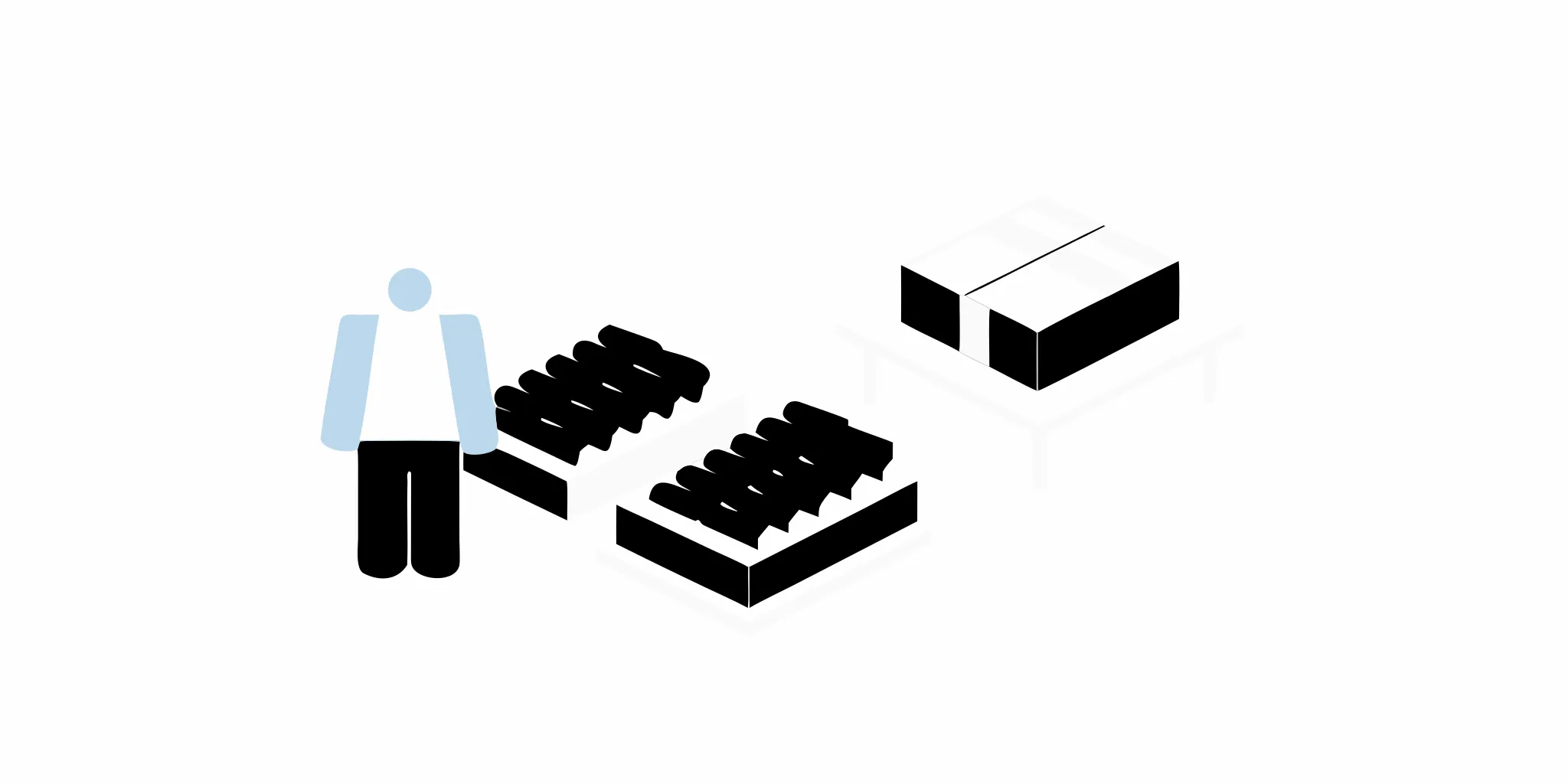


Your brand’s strength is its consistency. Customers expect the same high-quality experience whether they’re in your New York or Los Angeles store. But during a new product launch, that consistency is put to the test. When fixtures and displays arrive in multiple boxes with loose parts, the risk of incorrect assembly is high, leading to an inconsistent look across locations. This is where kitting services become an essential tool for brand management. By ensuring every store receives one complete, identical package for a perfect setup, you guarantee a flawless and uniform presentation every single time.
At its core, kitting is the process of taking multiple, separate items and grouping them together into a single package, or "kit." This kit is then shipped and delivered as one unit. Think of it like a meal delivery box. Instead of buying every ingredient separately, you get a single box with everything you need, perfectly portioned and ready to go. In the retail world, this is a game-changer for store rollouts and promotional updates.
Imagine you’re sending a new point-of-purchase display to hundreds of store locations. Instead of shipping shelves, brackets, signage, and hardware in separate boxes and hoping everything arrives together, kitting combines all those components into one organized package. This means the team at each store receives a single, complete set with everything they need for assembly. This simple change streamlines the entire process, from warehousing to final installation. It’s a crucial part of an efficient logistics and distribution strategy that ensures consistency and saves valuable time for your in-store teams.
The kitting process turns a complex logistical puzzle into a simple, repeatable workflow. It starts with a clear plan. First, you define exactly what goes into each kit. For a retail fixture, this could include every shelf, bracket, graphic panel, and fastener required for assembly. Once the components are identified, they are sourced and stored in a central location. This is a key step in effective inventory and warehouse management.
Next, a dedicated team assembles the kits. Following precise instructions, they gather the individual items and package them together. This ensures that every kit sent to every location is identical and complete. Finally, the finished kits are labeled, packaged, and shipped out as a single unit, ready for a smooth and predictable installation upon arrival.
Professional kitting is about more than just putting items in a box; it’s about precision, reliability, and efficiency. The most critical element is accuracy. A single missing screw or the wrong-sized graphic can bring an entire in-store installation to a halt. That’s why a rigorous quality control process is non-negotiable. Each kit must be checked to ensure it contains the correct components before it ever leaves the warehouse.
Another key element is organization. The items within the kit should be packed logically to make the end user's job easier. This might mean grouping hardware by assembly step or protecting fragile components. Ultimately, professional kitting services are designed to create a seamless experience, removing guesswork and saving time for your teams on the ground.
Kitting services can also extend your brand's reach through private labeling. This means the kitting provider can apply your company’s branding directly onto the products, packaging, or instruction manuals included in the kit. Imagine your store teams receiving a neatly packaged kit with your logo on the box and clear, branded instructions inside. This small touch reinforces brand identity from the moment the kit arrives and presents a polished, professional image. It ensures that every element of the rollout, from the warehouse to the sales floor, aligns with your brand standards, creating a cohesive experience for your employees and, ultimately, your customers.
One of the biggest advantages of kitting is how it streamlines logistics. When kits are prepared in advance, they can be weighed and have shipping labels printed ahead of time. This preparation makes the shipping process faster, more accurate, and more cost-effective. Instead of picking and packing individual components for hundreds of different orders, your logistics partner handles one type of unit: the completed kit. This approach dramatically reduces the chance of shipping errors, saving you from the headaches and costs of sending missing parts. For national retailers managing complex rollouts, this level of advanced assembly and shipping organization is essential for hitting deadlines and staying on budget.
So, what’s the real advantage of grouping items together before they ship? Kitting is more than just a convenient way to package products; it’s a strategic process that can have a major impact on your business operations. By preparing items as ready-to-ship kits, you can simplify your fulfillment process from start to finish. This approach helps you save valuable resources, reduce errors, and ultimately create a better experience for your customers. Let's look at the three main reasons why integrating kitting services into your workflow is a smart move for any growing business.
One of the most compelling reasons to use kitting is its effect on your bottom line. Assembling kits ahead of time drastically cuts down on the labor needed during the final fulfillment stage. Instead of having your team pick and pack multiple individual items for each order, they can just grab one pre-assembled kit. This simple change makes the entire process faster and more efficient. Over time, these saved minutes add up to significant labor cost reductions. Plus, when you work with a partner for your kitting needs, you can often lower expenses related to warehouse space, staffing, and equipment, freeing up capital to invest elsewhere in your business.
Shipping costs aren't just about weight; they're also about size. When you ship multiple components separately, you often end up using standard boxes that are too big, leading to wasted space. This "dimensional weight" can drive up your shipping expenses, not to mention the extra cost of filler materials needed to keep items from shifting around. Kitting solves this by allowing you to use custom-sized boxes designed to hold all the components of your display perfectly. This not only reduces the size and weight of each package but also minimizes the need for tape and fillers. According to DCL Logistics, this optimization can directly save money on shipping and packaging, which in turn helps your profit margins.
Kitting also brings predictability to your shipping process. When every kit is identical, you eliminate the guesswork. You can weigh and measure one completed kit to know the exact specifications for your entire rollout. This allows you to pre-calculate shipping costs and even print shipping labels in advance, turning a variable process into a fixed one. This level of preparation saves an incredible amount of time during the final fulfillment stage, ensuring accuracy and efficiency when it matters most. It’s a core part of a well-executed project management strategy, as it removes last-minute surprises and helps keep your rollout on schedule and on budget.
Mistakes in order fulfillment can be costly, leading to returns, customer complaints, and a damaged reputation. Kitting helps minimize human error by simplifying the picking process. When items are already grouped into a single unit, the chances of shipping an incorrect or incomplete order drop significantly. This improved accuracy leads directly to happier customers. They receive exactly what they ordered, faster. Because the items are already put together, orders can be fulfilled and shipped more quickly, which is a huge win in a world where customers expect speedy delivery. A streamlined, error-free process is key to building customer loyalty and encouraging repeat business.
Managing inventory can be a complex puzzle, especially when you’re dealing with hundreds or thousands of individual components. Kitting simplifies this by consolidating multiple SKUs into a single kit SKU. This makes tracking and managing your stock much easier and more accurate. Instead of monitoring every single nut, bolt, or accessory, you just have to keep track of the kits. This approach also helps you make better use of your storage. Kitted items are often more compact and uniform, allowing for more organized and efficient use of your warehouse or backroom space. S-CUBE’s approach to inventory control and warehouse management ensures your products are organized and ready for rollout.
Kitting is more than just an operational shortcut; it's a smart sales strategy in disguise. By bundling complementary products or promotional items into a single kit, you can encourage customers to buy more. Think about a seasonal promotion or a new product launch. Instead of relying on store associates to manually assemble promotional bundles, you can ship ready-made kits that include the main product, a sample, and the relevant signage. This not only increases the perceived value for the customer but also makes it incredibly easy for your store teams to execute the promotion flawlessly across all locations. This level of coordination, managed through expert project management, ensures every customer sees the same great offer, which can directly influence purchasing decisions and drive revenue.
In the world of logistics and retail, you’ll often hear the terms kitting, bundling, and packaging used interchangeably. While they might sound similar, they refer to distinct processes, and knowing the difference is crucial for your business. Getting this right can be the key to a smooth, on-time store opening, while getting it wrong can lead to on-site confusion, wasted labor costs, and inconsistent branding across your locations. Especially when you’re managing a large-scale rollout, a clear strategy can save you an incredible amount of time and money.
Think of it this way: each process serves a unique purpose in getting your products and fixtures from the warehouse to the sales floor. Kitting is about pre-assembly and preparation, bundling is a sales tactic, and packaging is about protection. Understanding which service you need, and when, helps you streamline your entire supply chain. This ensures that when your fixtures and displays arrive at a new store, your team has exactly what it needs to get set up quickly and correctly, creating the perfect customer experience from day one. Let's break down what each term really means so you can choose the right approach for your next project.
Kitting is the process of taking multiple, separate items and assembling them into a single, ready-to-go package with its own unique SKU. Imagine a new point-of-purchase display for a product launch. A kitted solution would arrive in one box containing the fixture components, the specific signage, assembly instructions, and any necessary hardware. It’s all pre-organized to make on-site setup foolproof.
Product bundling, on the other hand, is a marketing strategy. It involves grouping several existing products together for sale as a single unit, often at a special price. The key difference is that bundled items aren’t physically assembled into a new unit before shipping. They are simply picked and packed together when an order is placed. Kitting creates a brand-new, single item; bundling simply sells existing items together.
The way you manage Stock Keeping Units (SKUs) is at the heart of what separates kitting from bundling. With kitting, you consolidate multiple component SKUs into one new, unique SKU for the finished kit. This is a huge advantage for inventory management. Instead of tracking every bracket, shelf, and sign, your warehouse team only needs to manage one SKU for the entire display package. This simplifies stock counts and order picking, making the process more accurate. It’s a core part of an effective inventory control strategy for large-scale rollouts.
Bundling works differently. The individual products in a bundle keep their original SKUs. When a customer buys the bundle, your system has to track and deduct each separate item from your inventory. While this works for simple sales promotions, it doesn’t offer the same logistical benefits as kitting. For complex projects like fixture rollouts, managing dozens of individual SKUs per shipment is inefficient and prone to error. Creating a single kit SKU ensures every location receives a complete, identical package without the risk of missing components, guaranteeing a smooth setup.
While a kitted item needs to be packaged, kitting and packaging are two different steps. Packaging is focused on protecting an item for safe transit. It’s the box, the filler material, and the tape used to ensure your products arrive without damage. The primary goal of packaging is simply to get an item from point A to point B in one piece.
Kitting is the value-added service that happens before the final packaging. It’s the thoughtful act of gathering and assembling all the necessary components that make up the final kit. Once that kit is complete, it’s then placed into its final packaging for shipment. Our logistics and distribution services handle both, making sure your custom kits are assembled perfectly and then packaged securely for delivery.
So, how do you know which service is right for you? Choose kitting when your main goal is to simplify complex shipments and reduce the workload for your on-site teams. It’s the perfect solution for multi-store retail rollouts where consistency and speed are critical. By pre-assembling fixture components and grouping all necessary parts, you minimize setup errors and ensure a uniform brand presentation across every single location.
Opt for product bundling when you want to run a sales promotion or increase the average order value. It’s a great way to move more inventory without changing your fulfillment process. Standard packaging, of course, is a fundamental need for every shipment. You’ll always need it, but pairing it with a smart inventory and warehouse management system that supports kitting is what truly streamlines your operations.
Kitting isn’t just for one type of company. Businesses across many sectors use it to simplify complex processes, from assembling subscription boxes to rolling out new in-store displays. If your operations involve repetitive assembly, managing multiple components for a single output, or ensuring consistency across different locations, kitting is likely a great fit. It’s a strategic move that can streamline your workflow, reduce errors, and free up your team to focus on bigger goals. Let’s look at a few industries where kitting makes a significant impact.
For e-commerce brands, especially subscription box companies, kitting is a total game-changer. Instead of picking individual items for every single order, you can pre-assemble your boxes in batches. This approach drastically cuts down on fulfillment time and reduces the chance of human error. For example, one subscription box company slashed its fulfillment times by 40% by using kitting. Even better, their order errors dropped from 4% to less than 1%. This means fewer customer service headaches and happier subscribers who get exactly what they ordered, every time. It transforms a time-consuming task into a smooth, efficient part of your operation.
In the manufacturing world, precision is everything. Kitting helps create a more organized and efficient assembly line by grouping all the necessary components for a specific production step into one convenient package. This is especially critical in high-stakes industries like aerospace, where one missing part can cause major delays. By preparing kits ahead of time, you ensure that workers have everything they need right at their fingertips. This streamlines the manufacturing process, minimizes downtime spent searching for parts, and supports strict quality control standards. It’s a simple way to bring predictability and order to even the most complex production environments.
If you manage a retail chain or a business with multiple locations, you know how challenging it is to maintain consistency. Kitting is the perfect solution for ensuring every store delivers the same brand experience. Imagine you’re launching a new promotional display. Instead of shipping dozens of individual items to each location, you can send a single kit containing all the necessary fixtures, signage, and instructions. This simplifies inventory management and makes store rollouts much smoother. With expert project management, kitting ensures every location is set up for success quickly and accurately, creating a cohesive look across your entire brand.
Behind every perfectly executed retail rollout is a team of dedicated people making it happen. While we talk a lot about processes and logistics, it’s the skilled workforce that turns a complex plan into a simple, effective solution. Professional kitting isn’t just an automated function; it’s a hands-on job that requires precision, organization, and a deep understanding of the end goal. This team is the engine that powers efficiency, ensuring that every component is in the right place at the right time. They are the guardians of consistency, making sure that the kit for store one is identical to the kit for store one hundred.
A kitting specialist is a master of organization and accuracy. Their main job is to assemble various individual components into a single, ready-to-ship kit. This starts with carefully identifying every part required for the kit, from the largest fixture piece down to the smallest screw. Following detailed instructions, they gather and package these items, ensuring each kit is complete and identical. The most crucial part of their role is quality control. They meticulously check each kit before it’s sealed, because they know that a single missing item can bring an entire installation to a halt, wasting valuable time and money for the on-site team. This commitment to a complete quality control process is what makes professional kitting so reliable.
A high-performing kitting team is built on a foundation of specific skills that go beyond basic assembly. First and foremost is an exceptional attention to detail. In the world of retail rollouts, precision is everything; a small error in the warehouse can create a huge headache in the store. Strong organizational skills are also essential. Kitting specialists must manage multiple components efficiently, packing them in a logical way that simplifies the final assembly process for your team. Finally, great kitting teams possess strong problem-solving abilities. They are trained to spot potential issues in the workflow and find ways to make the process even more efficient, ensuring your project is handled by experts who are always looking for ways to improve.
Working in the kitting industry offers more than just a job; it provides a clear career path within the growing logistics sector. Many people start as kitting technicians, learning the hands-on process of assembly and quality control. From there, they can advance to supervisory roles, overseeing a team and ensuring operational efficiency. With experience, they can move into broader logistics management positions that involve inventory planning and supply chain optimization. The demand for these logistics services is rising, offering strong job stability. Employees also develop valuable, transferable skills in inventory management and quality control, making it a rewarding field for long-term career growth.
Finding the right kitting service provider is about more than just outsourcing a task; it’s about finding a partner who can help you scale efficiently and deliver a consistent brand experience. When you’re vetting potential partners, you’re looking for a team that can integrate with your operations, maintain high standards, and grow with you. The right provider will feel like an extension of your own company, handling the complex logistics of assembling kits so you can focus on the bigger picture. Key areas to examine include their technological capabilities, their approach to quality control, and their ability to adapt to your changing needs. A thorough evaluation of these factors will help you select a provider that not only meets your current requirements but also supports your future growth.
A modern kitting provider relies on technology to keep operations running smoothly. Look for a partner that uses robust systems for inventory management and order tracking. Automation is a game-changer for kitting, as it makes the process faster, more accurate, and less dependent on manual labor. Automated systems can store, pick, and manage kits with incredible speed, which is essential for meeting tight deadlines. Using a third-party logistics (3PL) partner with strong tech can help your business grow, lower shipping costs, and make your entire supply chain more efficient. Ask potential providers about the systems they use and how they can provide visibility into your inventory and order status.
Your provider’s commitment to quality directly impacts your brand’s reputation. A single incorrect or incomplete kit can lead to a poor customer experience and costly returns. An experienced partner will have strict quality control processes in place at every step, from receiving components to final assembly and shipping. This ensures that every kit is accurate and meets your standards. Effective warehouse management is also critical. A well-organized facility prevents errors and improves efficiency, ensuring that your products are handled with care and precision. A great unboxing experience starts with a perfectly assembled kit, leaving a lasting, positive impression on your customers.
A great kitting partner does more than just put items in a box—they should function as a true extension of your team by offering services that simplify your entire supply chain. When vetting providers, ask what else they can handle beyond basic assembly. Can they manage warehousing and inventory for your components? Will they coordinate the final logistics and distribution to all your retail locations? The goal is to find a partner who provides an end-to-end solution, turning a complex rollout into a single, streamlined project. This level of comprehensive support means you have one point of contact, which frees up your team to focus on a successful launch.
Your business needs will change over time, and your kitting provider should be able to adapt. Whether you’re planning a multi-store rollout, launching a new product line, or managing seasonal demand, you need a partner who can scale their services up or down as needed. A flexible provider can transform your fulfillment from a complex, error-prone process into a streamlined workflow. They should also offer customization options to fit your specific projects. This could mean creating unique kits for different retail locations, special promotions, or marketing campaigns. Strong project management is the backbone of this flexibility, ensuring your custom projects are executed flawlessly and on schedule.
Kitting can seem like a complex process reserved for massive operations, but that’s often not the case. Several common misconceptions might prevent businesses from exploring a solution that could save them significant time and money. Let's clear up a few of these myths so you can see how kitting really works and what it can do for your retail business.
It’s easy to assume that only giant corporations have the scale to benefit from kitting, but that’s simply not true. Kitting is a flexible strategy that works for businesses of all sizes. While it’s perfect for national chains rolling out new displays to hundreds of stores, it’s just as effective for a regional business opening a few new locations. The core benefit is efficiency. By pre-assembling related items into a single kit, you streamline the receiving and installation process at every single site. In reality, a wide range of industries benefit from kitting, from e-commerce startups to established retail chains, proving that size isn't the deciding factor.
At first glance, handling kitting yourself might seem like the most cost-effective option. However, the DIY approach comes with hidden costs that can quickly add up. You need dedicated warehouse space, staff to pick and pack the kits, and systems to manage the inventory and ensure accuracy. The truth is, handling your own kitting and assembly services can be slow and expensive, especially when you factor in the cost of errors or delays. Outsourcing to a specialized provider gives you access to their expertise, established processes, and dedicated infrastructure, which often makes it a more economical and reliable choice in the long run.
The thought of setting up a whole new kitting process can feel overwhelming, but it doesn't have to be. When you work with the right partner, they do the heavy lifting for you. A good provider simplifies the entire process through dedicated project management, handling all the moving parts so you don’t have to. They’ll work with you to define the contents of each kit, establish a timeline, and manage the logistics of getting everything where it needs to go. The goal of a kitting service is to reduce your workload, not add to it. It turns a potentially chaotic rollout into a smooth, predictable operation.
Deciding if kitting is the right move for your business comes down to taking a close look at your current operations. You might not have a flashing sign telling you it's time for a change, but the clues are often hidden in your daily fulfillment, labor, and inventory processes. If you're dealing with recurring shipping errors, rising labor costs, or a warehouse that’s bursting at the seams, those are strong indicators that your current system isn't working as hard as it could be.
Think of it as a health check for your supply chain. By examining these key areas, you can pinpoint inefficiencies and see exactly where pre-assembling items into ready-to-ship kits could make a real difference. Let’s walk through what to look for.
Take a moment to map out your current fulfillment workflow. How many hands touch a single order before it goes out the door? If your team is spending a lot of time picking individual components for each shipment, the risk of human error naturally goes up. Frequent customer complaints about missing parts or incorrect items are a major red flag. Kitting transforms this kind of high-touch, error-prone process into a streamlined, cost-effective workflow.
For multi-location retailers, this is especially critical. When rolling out a new display to hundreds of stores, you need every location to receive the exact same set of components. A reliable project management process that includes kitting ensures consistency and a smooth setup for every store.
Are your labor costs steadily climbing? Your team's time is valuable, and if they're spending hours on repetitive picking and packing tasks, that's time they could be using for more important work. Pre-assembled kits save time and reduce labor costs by cutting down on the manual work required to prepare an order. This simple change can lead to significant savings, especially when you're fulfilling a high volume of orders.
Now, think about your warehouse. Storing dozens of individual SKUs for a single product takes up a lot of shelf space and can make inventory counts a headache. Kitting consolidates these items into a single unit, simplifying your inventory control and warehouse management. This not only frees up valuable space but also makes your inventory easier to track and manage.
Sometimes, the need for kitting isn’t about fixing a problem but about finding a better way to work. Kitting allows you to add value by simplifying the workflow for everyone involved. Imagine sending a new point-of-purchase display to your stores. Instead of shipping a box of loose parts with a separate instruction manual, you could send a single kit containing the display, signage, hardware, and clear instructions.
This makes life easier for your warehouse team and empowers your in-store staff to set up displays quickly and correctly, ensuring brand consistency across all locations. By pre-assembling kits with all the needed components, you create a more efficient and profitable process from start to finish. This level of detail is a core part of our design and engineering philosophy.
Ready to make kitting a part of your operations? Taking the first steps can feel like a big project, but breaking it down makes it manageable. A thoughtful plan ensures you get all the benefits of kitting, like lower costs and happier customers, without the headaches. It starts with deciding who will do the work, making sure your systems are connected, and following a few simple best practices for a seamless transition.
Your first major decision is whether to handle kitting yourself or partner with an expert. Trying to manage kitting in-house often seems like the cheaper option, but it can quickly become slow, expensive, and complicated. You have to account for dedicated floor space, labor, and the complexities of managing inventory for individual components. For growing retail chains, outsourcing is usually the more strategic move. A partner with established logistics and distribution capabilities can handle the entire process efficiently, freeing up your team to focus on core business goals instead of assembling kits.
For kitting to work smoothly at scale, it needs to integrate with your existing inventory and project management systems. A disconnected process is a recipe for errors and delays. When choosing a partner, ask how their technology will connect with yours. A seamless integration provides real-time visibility into inventory levels for both individual SKUs and completed kits. This ensures your project management team has accurate data for planning multi-location rollouts and preventing fulfillment issues. System compatibility is non-negotiable for a successful partnership.
Once you have a partner, a few best practices will ensure your kitting program is a success. Start by using sales data to determine which items make the most sense to kit together; don't just guess. It's also important to regularly review your kitting strategies, as product popularity and customer preferences change over time. Clear communication with your provider is essential. Give them advance notice for large projects and work together to establish a clear workflow and quality control checkpoints to keep your operations running smoothly.
What's the real difference between kitting and bundling? Think of it this way: kitting is an operational strategy, while bundling is a sales strategy. Kitting involves physically pre-assembling multiple components into a single package with its own SKU, like putting all the parts for a retail display into one box. This is done to make installation or fulfillment easier. Bundling is when you sell several distinct products together as a single purchase, often for a promotional price, without physically combining them before an order is placed.
My business isn't a huge national chain. Can I still benefit from kitting? Absolutely. Kitting is about efficiency, not just scale. Whether you're sending new fixtures to five locations or five hundred, the goal is the same: to ensure every site gets a complete, correct package. This saves your on-site teams a ton of time and prevents setup headaches, which is valuable for any multi-location business looking to maintain brand consistency.
How can I tell if my current process is inefficient enough to need kitting? You can spot the need for kitting by looking for a few key signs. Are you dealing with frequent customer or store complaints about missing parts in shipments? Are your labor costs for picking and packing individual items getting too high? Do you struggle to maintain a consistent look and feel across all your stores during a rollout? If you answered yes to any of these, kitting could streamline your operations significantly.
Won't setting up a kitting process just add more work for my team? It might seem that way, but the opposite is true when you work with the right partner. A good kitting provider handles the complex logistics for you. Their job is to manage the inventory, assemble the kits accurately, and ensure everything ships correctly. This actually reduces your team's workload, freeing them from tedious assembly tasks and letting them focus on their main responsibilities.
What's the most important thing to look for in a kitting service provider? You should look for a true partner, not just a vendor. You need a provider with strong project management skills and a proven quality control process to ensure every kit is perfect. It's also critical that their technology can integrate with your systems. This connection gives you clear visibility into the process and helps make sure your store rollouts happen smoothly and on schedule.
Subscribe for expert insights on fixture design, materials, and modern retail environments.